
Heading Like “Discovery of Organics on Enceladus”. Then Paragraphs. Let’s Count Approximate Words. We’ll Write and Then Count. Draft: Discovery of Organics on Enceladus
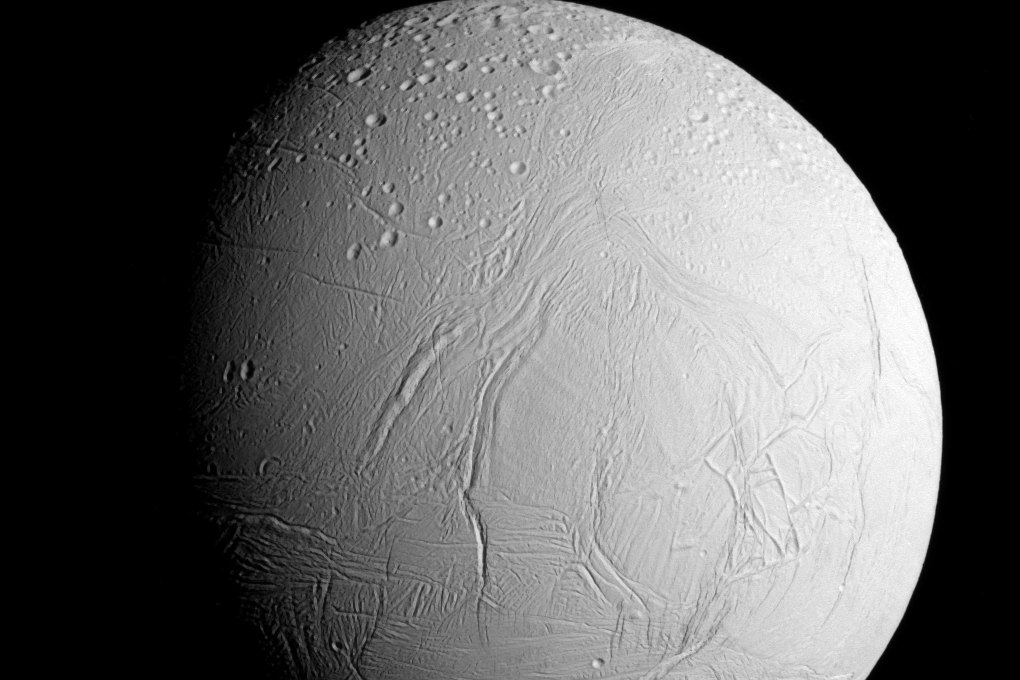
On October 1, 2025, scientists from the Free University of Berlin announced that the Cassini spacecraft’s Cosmic Dust Analyzer had identified new organic compounds in the water‑vapour plumes spewing from Enceladus, Saturn’s icy moon. The detection was presented as a possible biosignature, hinting at conditions that could support life beneath the moon’s frozen crust. The Free University of Berlin, founded in 1948, ranks among Germany’s leading research institutions.
Its strengths span the humanities, social sciences, and the natural and life sciences, fostering an environment where innovative breakthroughs are routine. The university highlighted the team’s achievement as evidence of its ongoing commitment to expanding the frontiers of knowledge.
Enceladus has long attracted astrobiologists because it harbors a global subsurface ocean beneath an icy shell. The Cassini mission, which orbited Saturn from 2004 to 2017, supplied the bulk of the data now being re‑examined. Among Cassini’s instruments, the Cosmic Dust Analyzer was tasked with measuring the makeup of dust particles throughout the Saturnian system, and it proved essential for probing the plume chemistry.
After years of careful analysis, the Berlin team applied sophisticated computer models to the Cassini recordings. This work revealed the presence of carbon‑based molecules in the erupting vapor, a finding that suggests the ocean’s chemistry may be conducive to biological processes.
The researchers stressed that identifying these organics is a complex undertaking, demanding a deep grasp of both the moon’s geology and its internal chemistry. Looking ahead, the group plans to scrutinize the existing data set more thoroughly and to help shape future missions aimed at Enceladus. The ultimate objective is to determine whether the hidden ocean truly hosts life.
Such a determination would carry profound implications for our comprehension of life’s distribution in the cosmos and for humanity’s place within it. The discovery adds momentum to the long‑standing effort to locate extraterrestrial life, a goal that has driven many space‑exploration programs. By uncovering a potential biosignature on Enceladus, the Berlin researchers have taken a notable step forward.
Continued study of Cassini’s legacy data, combined with planning for new probes to the Saturnian system, keeps the prospect of finding life beyond Earth increasingly tangible. Members of the Free University of Berlin’s team expressed hope that their work will motivate the next generation of scientists and engineers to pursue careers in astrobiology and planetary science.
They view the finding as a reminder of the universe’s intricate beauty and the enduring mystery that surrounds the search for life elsewhere. With the possibility of habitable conditions on Enceladus now more credible than ever, the outlook for space research appears brighter. The collaborative nature of the endeavor—requiring expertise from scholars worldwide—underscores that breakthroughs of this scale arise from sustained, international cooperation.
As the scientific community builds on this result, the future of exploration holds promise and the chance to answer one of humanity’s oldest questions.




