
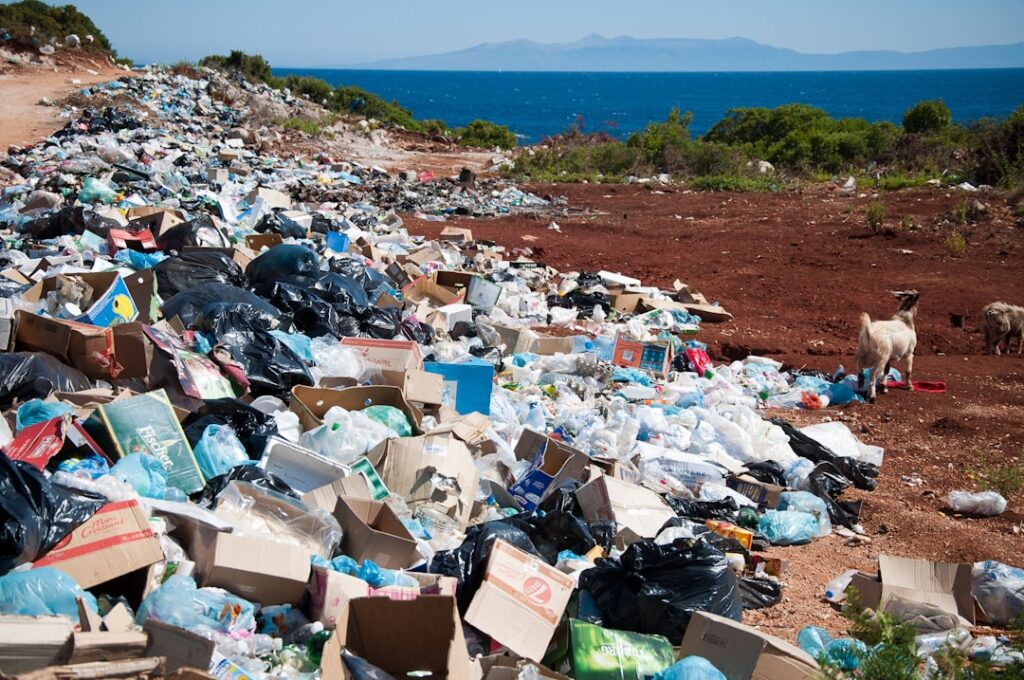
“I saw a light and crawled toward it in a hurry because I feared there would be more landslides… It was traumatic. I feared that it was my end.” That is how Jaylord Antigua, a 31-year-old office worker, described escaping the collapse of a garbage mound at the Binaliw landfill in Cebu City, in the Philippines, to the Associated Press.
The mound gave way on January 8, apparently without warning. It buried buildings that held company offices and a warehouse where workers sorted recyclables. The final body was recovered on the Sunday before the Jan. 20 report, bringing the death toll to 36. At least 18 other workers were pulled out alive, and four are still in hospital.
A slow, hand-dug search
Hundreds of rescuers dug through trash, soil and steel. It took a week and a half to account for every worker who died. Methane, a flammable gas given off by decomposing waste, ruled out equipment that could throw sparks, so much of the digging was done by hand. Further collapses were a constant threat.
Cebu Mayor Nestor Archival said the ground itself made the job harder. “This is not like other landslides that you can just excavate. If you pull from the top, the bottom is soft… it might get worse.”
Warnings before the collapse
Workers and local officials point to poor waste handling at the site. “We are just workers,” said Joey Boy Gealon, 28, an office worker at the facility. “We already felt it was dangerous because the garbage was very high.”
The Mines and Geosciences Bureau found the landfill had reached 35 meters, with unstable slopes and inadequate drainage. Inspections in 2024 and 2025 found the Binaliw site violating the Ecological Solid Waste Management Act and running as an open dump. The operator also faced accusations of water contamination and illegal earth-moving.
Cebu City Councilor Joel Garganera said the garbage had piled far past safe limits, and that prolonged heavy rain may have weakened the mound because trash soaks up water “like a sponge.” He also said operators had been cutting into the mountain, mining the soil, and piling garbage on top to build another one. “It’s not a sanitary landfill. It’s already an open dumpsite.”
The Philippines has had heavy rain through its wet season, and typhoons Fung-wong and Kalmaegi struck in November. Both are believed to have contributed to the disaster.
Local authorities said they had raised concerns about the landfill before, but argued that only the Department of Environment and Natural Resources (DENR) could act against the operator.
The operator
The facility handles 1,000 tons of municipal solid waste a day. Prime Integrated Waste Solutions Inc. (PIWS) runs it privately and acquired the site in 2023. PIWS is a subsidiary of Prime Infrastructure Capital Incorporated, which is owned by the billionaire Enrique K. Razon Jr. Prime Infrastructure reported a net income of PHP18.5 billion ($US312 million) on gross revenue of PHP55 billion ($US926 million) in 2024.
Earlier disasters
It is not the country’s first deadly garbage or landslide disaster. In July 2000, a garbage avalanche at a dumpsite in Quezon City, Metro Manila, killed 218 people by official count and left 300 missing. Many of the dead were scavengers living in a shantytown on its slopes. The tragedy led to the Ecological Solid Waste Management Act of 2000, which ordered open dumpsites closed.
In September 2018, a landslide in Naga, Cebu, set off by heavy rain and quarrying, killed 78 people. Officials had been warned beforehand. Then-president Rodrigo Duterte promised relocations and support.




