
The strangest product launch in computing history shipped no product. In 1843, a 27-year-old English mathematician named Ada Lovelace published a translation of an Italian engineer’s article about a machine called the Analytical Engine, appended her own notes, roughly three times the length of the original text, and buried in them a step-by-step method for computing the Bernoulli numbers. The Bodleian Libraries in Oxford describe that method as the first documented computer program; the Science Museum calls it the first algorithm published for any machine. The mechanics here are the part worth sitting with: the program was complete, and the computer did not exist.
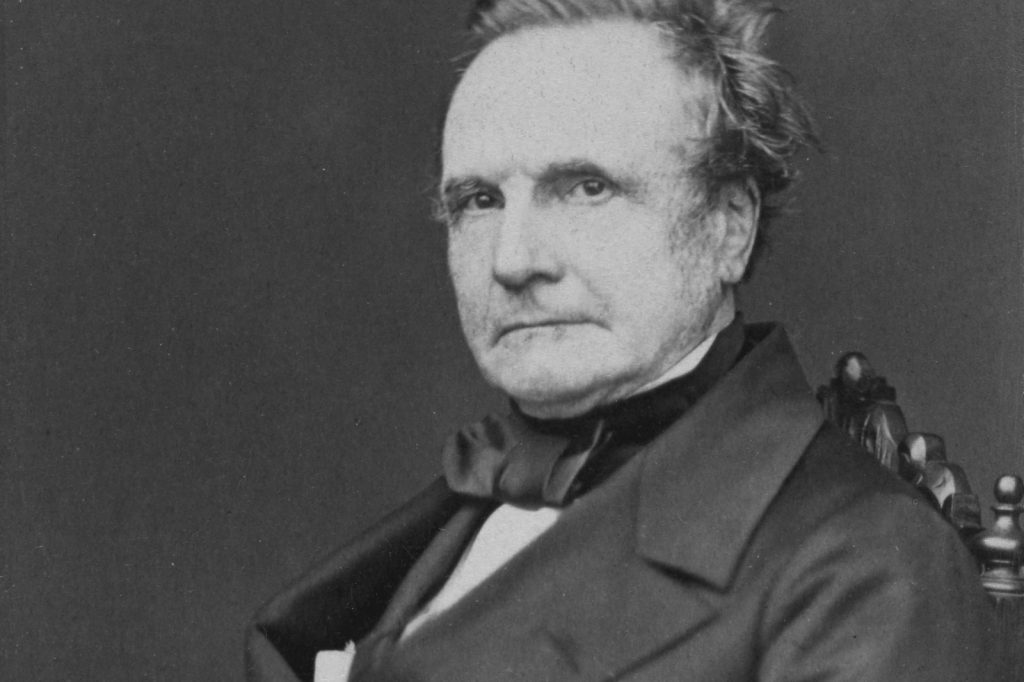
The absent machine was the work of Charles Babbage, mathematician, mechanical engineer, Lucasian Professor at Cambridge, born in 1791 and dead in 1871. His first design, the Difference Engine of 1821, was a mechanical calculator meant to grind out mathematical tables automatically, computing polynomial functions by the differences method and printing the results, the point being to take human hands and human error out of the tables that finance, insurance and navigation then ran on. The Analytical Engine was the leap: a general-purpose machine, mechanical rather than electronic, with a “store” to hold numbers and intermediate results and a “mill” to process the arithmetic, the direct ancestors of the memory bank and the central processor. Data went in and results came out on punch cards borrowed from the French Jacquard weaving looms, with printed output to finish. On closer reading, the design even anticipates conditional branching, looping and microprogramming, along with iteration, polling and parallel processing.
The catch was delivery. The engine was designed with extreme complexity, building it would have cost a fortune, and Babbage lacked both the funds and, on the record assembled by historians, the project management to carry a concept into metal. Parliament was never persuaded to finance construction; other projects competed for the money, and the value of a thinking machine was hard to sell to a Victorian exchequer. Part of the Difference Engine was completed. The Analytical Engine was not; at his death, Babbage was still tinkering with an experimental section of it.
Lovelace, born Augusta Ada Byron in London on 10 December 1815 to the poet Lord Byron and Anne Isabella Milbanke, raised by her mother after the parents separated, was trained in mathematics and physics at a time when women were not expected to study either seriously, and met Babbage as a teenager through British scientific circles. Her contribution was not the translation but what she saw in the machine. Babbage’s focus was calculation; she grasped that if information such as musical notes could be represented numerically, an engine could manipulate symbols and music as well as numbers, a general-purpose information machine rather than a fast abacus. The Computer History Museum adds a fair footnote: Babbage had explored similar techniques himself, yet her notebooks carry the first written descriptions of what are now called programs.
Follow the ledger forward and the irony compounds. Lovelace died in 1852, aged 36, before any part of the engine could be built; the hardware revolution waited close to a century, until physicist John Vincent Atanasoff, working with graduate student Clifford Berry at Iowa State, built and successfully tested the electronic Atanasoff-Berry Computer between 1939 and 1942. Punch cards, the engine’s input idea, carried straight into the twentieth century’s digital machines. What survived from 1843 was the insight Lovelace signed her name to: machines can follow sequences of instructions, and the instructions can govern any information that becomes numbers, the principle at work in every device that now handles words, pictures, music and money. The Victorians ordered the architecture a hundred years early. Only the delivery failed, and the software, as it turned out, was already correct.
Sources
- Analytical Engine | History | Research Starters | EBSCOhost
- In 1843, a 27-year-old woman wrote first-ever computer program. Mentored by Charles Babbage, her work still inspires modern technology nearly 200 years later – The Economic Times




