
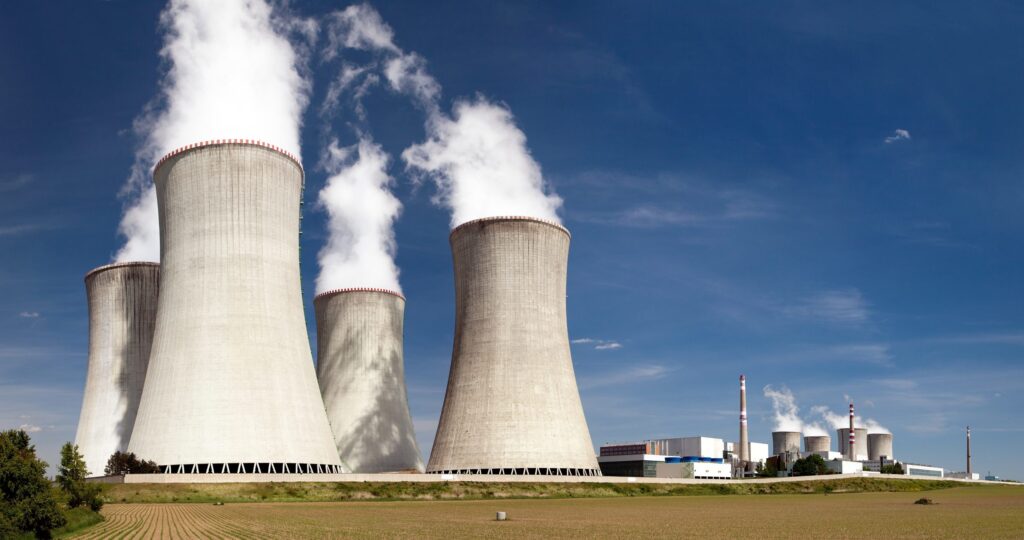
China plans to complete and commission seven new nuclear power units in 2026, according to official data reported by News.az in April. The country operates 58 units now.
Another 29 are under construction, and two of those started building this year. International estimates put China above half of all reactors being built worldwide, well ahead of traditional leaders such as the United States, France and Russia. A further 16 units have official approval and are waiting for construction to begin. Under the current development framework, total installed capacity is projected to reach around 60 GW, first in the world by that measure.
Coast first, then inland
Most of China’s plants stand in coastal provinces, among them Guangdong, Zhejiang, Fujian, Jiangsu and Shandong, where the largest industrial hubs and population centres are found. Daya Bay, Taishan, Haiyang and Tianwan are the major plants. Reactors need large volumes of cooling water, and the coast sits close to the biggest electricity users.
Newer projects are planned or under way inland, in Hunan, Hubei and Sichuan. The shift is meant to reduce reliance on long-distance transmission from the coast.
Home-built designs and exports
Chinese engineers developed the Hualong One (HPR1000), a third-generation reactor that is now used across multiple domestic projects. It is also being pitched as a flagship export.
China sells nuclear packages that cover financing, design, construction and long-term operation. That approach appeals to developing countries with energy shortages and little access to capital. Pakistan is the main example: Chinese companies built and commissioned units at the Karachi Nuclear Power Plant using Hualong One technology. China is also exploring the Middle East, Africa and Southeast Asia, where its firms are taking part in negotiations and tenders.
Developed markets have been harder. Projects with Chinese involvement were discussed in the United Kingdom and Argentina, but national security concerns and shifting politics slowed or stopped progress.
Beijing has committed to carbon neutrality by 2060, and the report describes nuclear as a key part of that plan next to wind and solar. Unlike those sources, a nuclear plant generates continuous, stable power. The same report says that official goals include reducing dependence on coal.




