
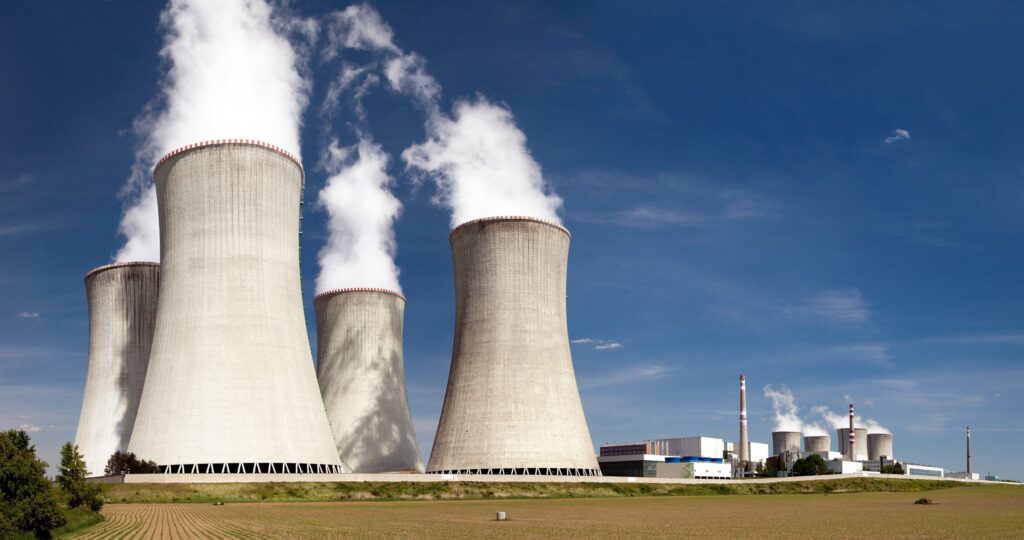
China now runs 60 nuclear reactors with a combined 58.7 GW of output, and 36 more are being built. That construction pipeline accounts for more than 49% of all reactors under construction worldwide.
The United States still generates more nuclear electricity, roughly 823 TWh a year against China’s 451 TWh. The direction of travel is what differs. The US has somewhere between 97 and 102 GW of installed nuclear capacity, but far more reactors are aging out than being built. China has nearly doubled its capacity since 2016 and is aiming for 110 GW by 2030. Since the start of 2025 alone, it has added approximately 3.3 GW.
A cautionary tale in Georgia
American builders point to one project more than any other as a warning. The Vogtle expansion in Georgia finished years behind schedule, at roughly twice the cost that had been expected.
Why crypto and AI are watching
Bitcoin mining and AI data centers rank among the most energy-hungry operations anywhere, and both are hunting for reliable power without carbon emissions. Proof-of-work mining rigs run around the clock. AI training clusters at Microsoft, Google and Amazon are projected to need more electricity in the coming years. A nuclear plant delivers steady baseload power whatever the weather or hour, which suits both.
If China reaches 110 GW by 2030, it would have plenty of stable, low-carbon electricity to direct at domestic tech operations, including any blockchain activity Beijing decides to allow.
In the US, crypto miners have started looking at nuclear partnerships. Several operations have set up next to existing plants or signed power purchase agreements with nuclear generators.
A token called USNS launched in May 2026 with a stated aim of tokenizing data across the US nuclear supply chain and uranium reserves. The idea is to use blockchain verification to bring more transparency to nuclear fuel logistics. The US also holds a significant share of Bitcoin’s mining hashrate, a position it gained after China’s 2021 mining ban.




