
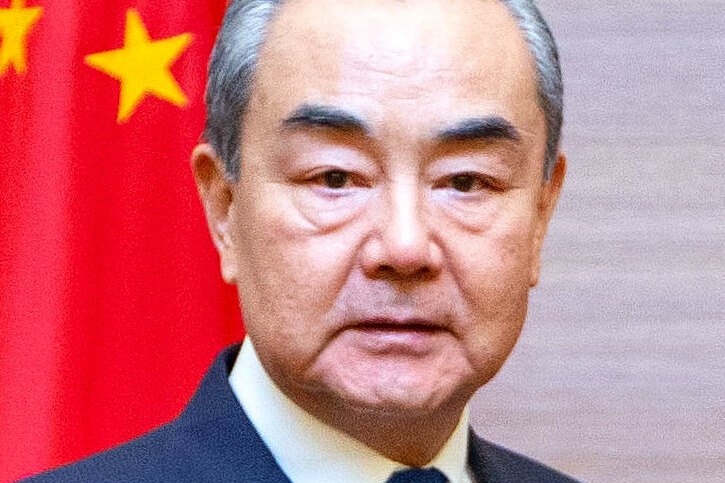
On 6 May, Beijing became the venue for a high‑level discussion that could reverberate through oil markets from Tokyo to Rotterdam. Chinese Foreign Minister Wang Yi met with Iran’s Foreign Minister Abbas Araghchi to examine the status of the Strait of Hormuz, a chokepoint through which roughly one‑fifth of the world’s oil passes each day.
The two ministers, who also represent China’s Central Foreign Affairs Commission, conducted what the Chinese Ministry of Foreign Affairs described as “in‑depth discussions” on issues of mutual concern. Araghchi arrived in the Chinese capital with Tehran’s official position on the strait, while Wang Yi signalled Beijing’s willingness to act as a mediator in a region where the United States maintains a heavy naval presence. For years the narrow channel separating Oman and Iran has been a flashpoint between Tehran and Washington.
The U.S. Navy’s stated mission in the waterway is to keep oil flowing, but any hint of a closure—real or imagined—has historically driven up tanker insurance premiums and forced buyers to seek alternative routes. Nations that rely on the passage, including U.S. allies Japan and the Philippines, monitor the situation closely, as does Taiwan, which depends on the same sea lanes for its energy imports.
Analysts note that the timing of the Beijing meeting is significant. It precedes possible direct Iran‑U.S. talks, suggesting that China is positioning itself as a third‑party broker capable of facilitating de‑escalation where Washington has struggled to do so. Dr. Bonnie Glaser, senior advisor for Asia at the Center for Strategic and International Studies, remarked that the strait’s situation is “complex” and will be watched closely by the international community.
China’s involvement is not merely diplomatic posturing. By offering to help keep the strait open, Beijing aims to demonstrate influence in a domain traditionally dominated by the United States.
The United States, while cautious about China’s expanding role, continues to rely on its alliances with Taiwan, Japan and the Philippines to safeguard regional stability. Should the talks lead to a reopening or a reduction in tensions, the immediate effect would be relief for global energy markets. Lower insurance costs for tankers and a steadier flow of oil would ease price pressures at fuel pumps worldwide.
Iran would gain a lifeline for its export revenues, while the United States would benefit from a de‑escalation that it has not achieved unilaterally. For Beijing, a successful mediation would constitute a diplomatic win, showcasing its capacity to act where Washington cannot—or will not—operate.
The outcome of the May 6 meeting, therefore, holds significance far beyond the confines of the conference room: it could reshape the dynamics of energy security, influence regional power balances, and underscore China’s growing role as a potential arbitrator in Middle‑Eastern disputes.




