
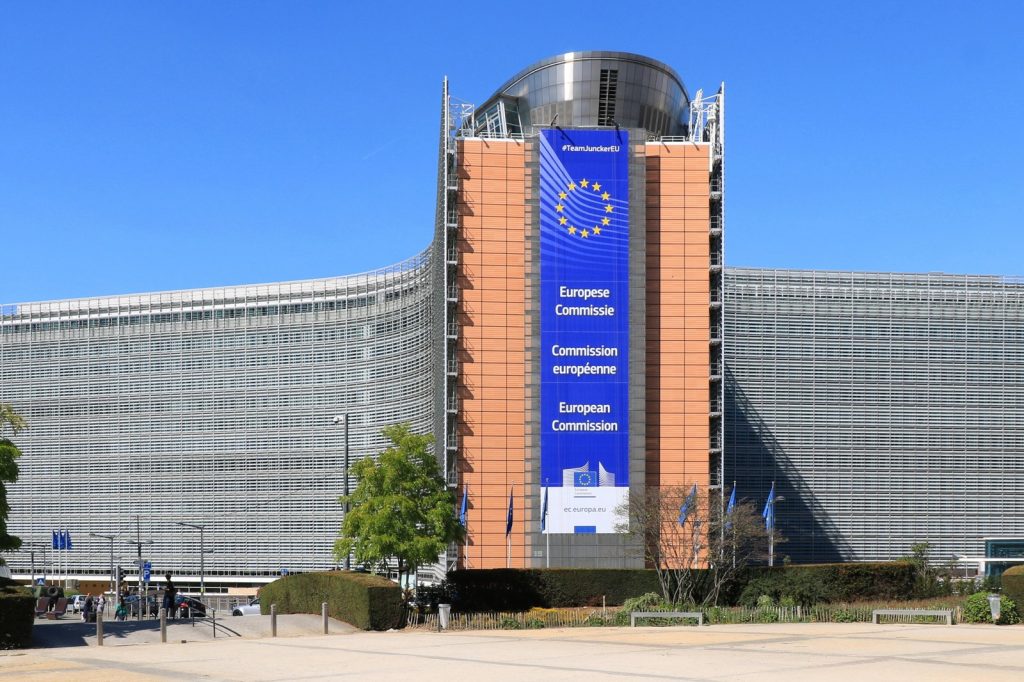
More than 10 million medical procedures a year in the European Union rely on radioisotopes, mostly in cancer care and cardiology. The European Commission now wants to make sure the supply behind them does not hinge on Russia.
Its answer is the European Radioisotope Valley Initiative, listed as C/2026/6132, published on September 10. The Commission calls it a strategic framework to keep Europe at the front of medical radioisotope production, secure supply, steer investment and cut dependence on third countries, Russia above all.
Strong position, exposed links
The starting point is healthy. The EU is the world’s leading producer of medical radioisotopes and ships about half of what it makes abroad, through a production and distribution network that serves patients across the bloc daily.
But the Commission points to weak spots. Some parts of the chain depend on foreign suppliers. Production facilities are ageing. Rival suppliers are competing for the same business, which risks pulling investment elsewhere and pushing costs up. Demand worldwide is growing, and so is the pace of innovation. The initiative also feeds into the REPowerEU roadmap for ending Russian energy imports.
Five priorities, 10 actions
The plan sets out five strategic priorities and 10 actions. On research, the Commission will back work on next-generation radioisotopes, radiopharmaceuticals and production technologies. A Strategic Research and Innovation Agenda, a tool used in other sectors, is meant to tie research more closely to market needs and to patients. Funding could come from the planned IPCEI for innovative nuclear technologies, the European Innovation Council and new European partnerships.
On production, the Commission wants to guide Member States and industry as they invest along the value chain. Named priorities include building EU-based capacity in metallic High Assay Low Enriched Uranium (HALEU), making stable isotopes that are now imported from Russia, upgrading existing reactors and building new production sites. Governments are urged to draw on the EU Startup and Scaleup Strategy, the SGEI State aid framework and the Critical Medicines Act, which reached political agreement this year.
The Commission will also work on visibility of supply and demand trends, building on the European Observatory on the Supply of Medical Radioisotopes. On the international side, it plans to deepen ties with trusted partners; cooperation with the UK and US is described as crucial for a resilient HALEU supply chain. It will work with the International Atomic Energy Agency on safe transport of radioisotopes and push to streamline EU and national procedures for radiation protection and waste management in nuclear medicine.
The framework follows a Council request in June 2024 and a feasibility study published in March 2026, and it builds on the 2021 SAMIRA agenda. The May 2025 REPowerEU roadmap had already named setting up the initiative as a key action.
Patients with questions about procedures that use radioisotopes should talk to their doctor.




