
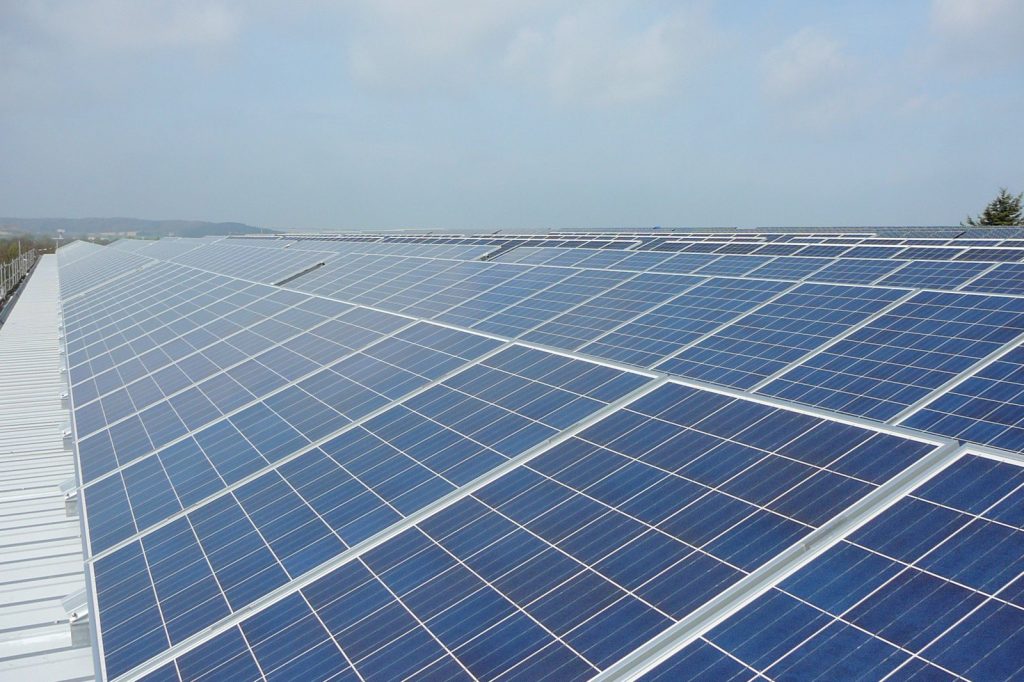
Two price tags tell this story before any minister does. The average electric vehicle in China sells for around $28,000; in the United States the figure runs to about $47,500. For families watching car lots and rooftop quotes, that arithmetic is the whole argument, and it exists because of one industrial fact: China builds roughly 80 percent of the solar panels sold worldwide, close to 60 percent of electric vehicles, and over 80 percent of the batteries that move them. A New York Times examination published January 15, 2024, and a statistics compendium on Chinese solar published March 30, 2026, together trace how that position was built and why every government trying to copy it keeps losing ground.
Washington has been here before, and it ended badly the first time. A surge of Chinese imports after the 2008 financial crisis undercut the Obama administration’s attempt to seed a domestic solar-manufacturing industry and pushed some American start-ups under, a fight that finished at the World Trade Organization. The next answer was money at a scale no predecessor had tried: more than $2 trillion committed to factories and infrastructure, meant to rebuild American industry while cutting emissions. The trouble is what the money meets on arrival, since Chinese factories keep shipping similar goods at prices American rivals cannot touch, and, in the paper’s accounting, Chinese state spending on industry still dwarfs Washington’s.
The pressure has spread from panels to chips. Bipartisan House members wrote on January 5 about Chinese semiconductors washing into the country, asking whether a chip imported inside another finished product could be taxed as a component; Trade Representative Katherine Tai pressed for working with US companies and unions to counter Beijing’s state-directed industrial targeting. On steel the response had already landed, with tariffs above 120 percent on Chinese imports.
How does one country hold four-fifths of anything? Wendy Cutler of the Asia Society Policy Institute ticked through the state’s helping hand, the tax credits, the cheaper energy, the equity infusions, then gave up enumerating: “The list goes on and on”. The result is overcapacity by design. Michael Carr, whose Solar Energy Manufacturers for America Coalition speaks for US-based makers, contrasted the two instincts: “That’s not the way it works in China”, where, in his words, “They’ve just continued to build and build and build.”
The building shows in the sales columns. Chinese buyers took home some 6.7 million fully electric cars last year, against roughly 1.2 million in the United States, and BYD, the Chinese automaker, out-delivered Tesla on electric vehicles for the first time in that year’s fourth quarter. Solar absorbed more than $130 billion of Chinese investment in the same stretch, enough new wafer, cell and panel capacity to cover annual global demand through 2032. One country is building the planet’s factory line, eight years in advance.
Inside China, the compendium’s own verdict is less triumphant than the export tables: “The Chinese solar industry is at a pivotal point”. In its telling, breakneck expansion overwhelms the grid, manufacturers knife one another for market share, and the big destination markets answer with tariffs that blunt the Chinese price edge. The installed base is still enormous, 887 GW of solar capacity, 834 TWh of generation in a year, energy-transition investment of 800bn USD, and much of the new construction has shifted to the country’s northwest, where the resource is richest. There, rapid growth outpaced the wires, and authorities pulled some price subsidies in 2024. Chinese manufacturers, having tooled up for the world rather than the home market alone, could price out competitors in most markets on labor costs and scale combined. Washington answered in kind, announcing higher solar import tariffs in May 2024, with further rounds on Chinese goods arriving in early 2025 after the change of administration.
The same worry now runs through semiconductors, where China has committed a new $40 billion support fund despite accounting for only about 7 percent of global chip production in 2022. Dan Hutcheson of TechInsights named the dread precisely: “the fear was that China would do for semiconductors what it did for shipping, solar cells or steel”. He did not dismiss it, either: “It’s a legitimate fear, because the weakness of Western companies is they have to be profitable”. And blocking the goods at one border does not dissolve them; they land elsewhere at prices US firms say they cannot match, crowding American companies out of third markets and the revenue those bring.
There is an honest counter-case, and the Times gave it room. Scott Lincicome of the Cato Institute saw no economic sense in trying to outspend China, especially for goods with no military use, and his alternative was blunt: “Actually, we’ll let foreign governments subsidize our consumption like crazy, we don’t really care”. Europe is finding its own middle position, opening an investigation into suspected illegal subsidies behind Chinese cars, while the American market stays shut to them by hefty tariffs and Washington pays its own buyers, with credits reserved for vehicles mostly sourced and assembled in the United States.
Closer to home, the compendium’s close holds both halves of the truth at once: China must keep expanding domestic solar to reach its climate target, world demand will not cease, its factories can meet it, and yet, in its own phrase, “the potential of the Chinese solar industry being a ray of hope cannot be denied” only if the industry finds a path to a sustainable future. A village wiring its first panels and a Michigan plant bidding against Xi’an and Ningde for its next contract are both living inside that sentence; for now only one of them is smiling.
Sources
- New U.S. Solar and Electric Car Factories Face Familiar Challenge: China – The New York Times
- Solar energy in China – Statistics & Facts | Statista




