
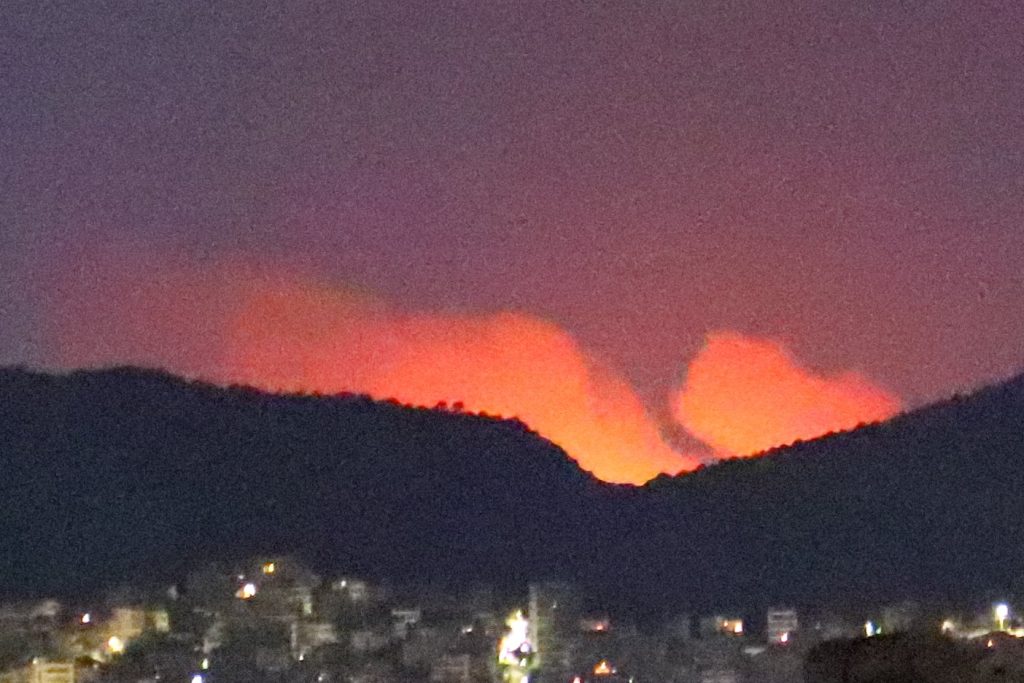
“The next risk, it’s already moving to Greece and also Central Europe.” That was the warning from Maria Zuber, head of the EU’s Emergency Response Coordination Centre, speaking to reporters in Brussels on Wednesday.
Wildfires were still burning in Spain and France. Zuber said the next few days would be “very difficult” in France, and that Greece, Italy and Central Europe should expect higher fire risk over the coming weeks.
“Greece for the moment was spared, and now we see that it will go to Greece. Italy will face risk at the beginning of August, and we will need to see what will happen with the Iberian Peninsula, because if (it is) there as well, we will have all Europe on fire,” she said.
A second record year
Last year was Europe’s worst wildfire season on record, with more than a million hectares burned. This year looks much the same so far, Zuber said. “We have the potential that this is another record.”
The forecast rests on the conditions that let fires start and run: high temperatures, dry air, wind and no rain. Climate change is making those hot, dry spells more intense, which helps fires spread faster and burn longer.
Planes and crews on the move
The centre coordinates aircraft and firefighters for countries that ask for help, using resources pooled by European states and rented by the EU. France has received seven planes and four helicopters. Spain has six planes and three ground firefighting teams.
Not every aircraft in the EU fleet is committed. Some have been parked ahead of time in eastern and central Europe, where the risk is climbing, Zuber said.




