
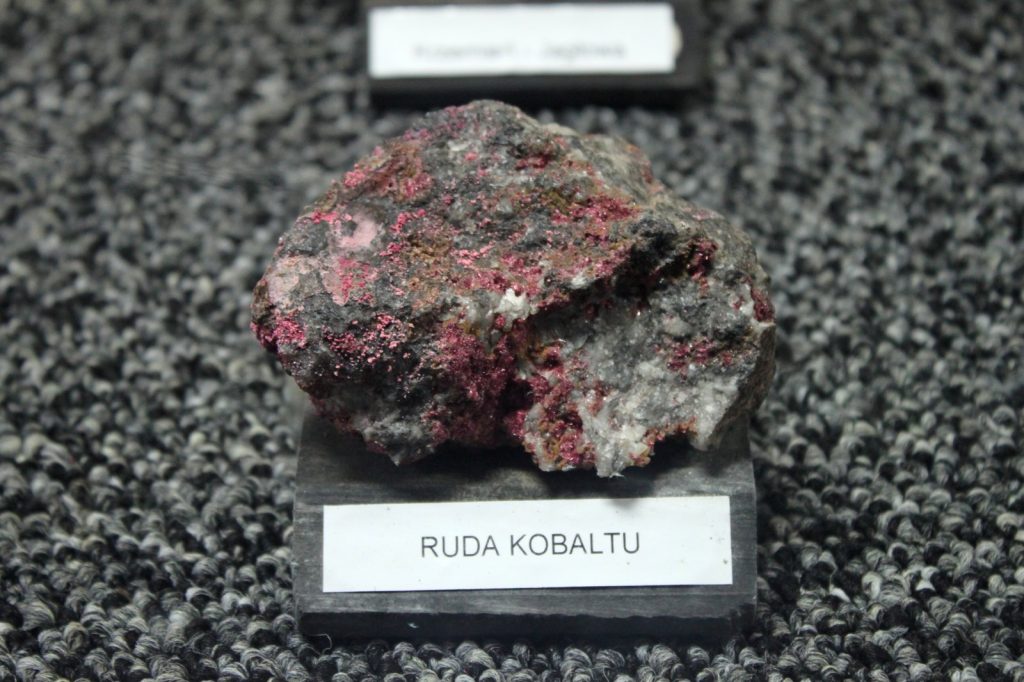
The chemical element cobalt, identified by the symbol Co and atomic number 27, exists naturally in the Earth’s crust almost exclusively in chemically combined forms. The only known exception involves small deposits discovered within alloys of natural meteoric iron. This hard, lustrous, and somewhat brittle gray metal is produced through a process known as reductive smelting.
For centuries, cobalt has been prized for its ability to create blue pigments, commonly called cobalt blue. These pigments have been used extensively in jewelry, paints, and glass production, giving these materials their distinctive blue tint.
The history of cobalt stretches back to ancient times, when miners referred to certain blue pigment-producing minerals as “kobold ore.” This name comes from the German word for goblin, chosen because the ores contained poor metal content and released poisonous arsenic-containing fumes during smelting. The breakthrough came in 1735, when researchers discovered these ores could be reduced to a new metal. This marked the first metal discovery since ancient times.
The metal was named cobalt, referencing the kobold ore from which it was derived. Today, cobalt production primarily occurs as a by-product of copper and nickel mining.
It can also be extracted from various metallic-lustered ores, including cobaltite (CoAsS). The Democratic Republic of the Congo and Zambia’s Copperbelt region stand as the world’s leading producers, accounting for the majority of global cobalt output. This region plays a crucial role in meeting worldwide demand for this versatile metal.
Cobalt’s unique properties make it essential across multiple industries. Beyond its historical use in blue pigments, its durability and resistance to corrosion have led to applications in construction materials and electronics.
As new technologies emerge, demand for cobalt is expected to remain steady or increase. The extraction process for cobalt is complex, typically involving reductive smelting to produce pure metal. The discovery of new deposits and development of more efficient extraction methods will be vital for ensuring a stable supply in coming years. Researchers continue exploring new ways to utilize this metal, driving innovation and economic growth.
Monitoring the global cobalt market, particularly in the DRC and Zambia, will be essential as the world becomes increasingly reliant on this metal. Any disruptions to supply chains or changes in demand could significantly impact industries dependent on cobalt.
Developing more sustainable and responsible mining practices will be critical for the long-term viability of cobalt production. As technology evolves, cobalt will remain a vital component in shaping future industries.




