
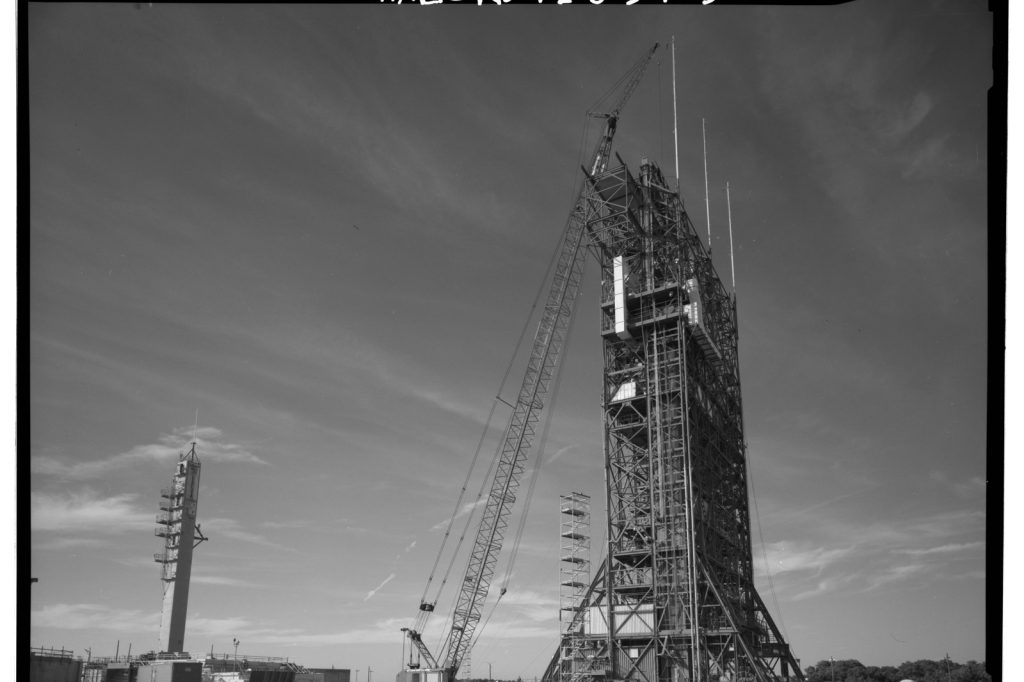
CAPE CANAVERAL, July 8 — The launch pad at Cape Canaveral sits quiet this morning, a concrete monument to a rivalry that once held the world’s breath. The Space Race, a direct extension of Cold War tensions between the United States and the Soviet Union, spanned from roughly 1947 to 1991. Both superpowers poured resources into space, each launch a bid to prove technological and ideological superiority.
On the ground here, engineers and historians still trace the outlines of that contest in the rusting gantries and the archived telemetry data. The race began with a shock.
On October 4, 1957, the Soviet Union launched Sputnik 1, the first artificial satellite. Americans watched it streak across the night sky, a beeping signal that felt like a threat to national security. The U.S. response was swift and structural.
On July 29, 1958, Congress created NASA, a civilian space agency tasked with catching up. Just over a month later, on September 2, 1958, President Eisenhower signed the National Defense Education Act, funneling federal money into science and math education.
The message was clear: the Cold War would be won in classrooms and laboratories as much as on battlefields. The Soviets struck again on April 12, 1961. Cosmonaut Yuri Gagarin launched aboard Vostok 1, becoming the first human in space.
The achievement was a propaganda triumph for Moscow. Residents of small towns across the American heartland describe the mood that spring as one of anxious urgency. President John F.
Kennedy responded on May 25, 1961, standing before a joint session of Congress and committing the nation to landing a man on the Moon before the decade was out. It was a promise that would reshape the federal budget and the American scientific enterprise.
Tensions escalated dramatically in October 1962. The Cuban Missile Crisis brought the United States and the Soviet Union to the brink of nuclear war. For thirteen days, the world watched as ships and missiles squared off in the Caribbean.
The crisis underscored the stakes of the Space Race: space was not just a frontier but a high ground for military and ideological advantage. By nightfall of those October days, the fear was palpable in Washington and Moscow alike.
Treaties and Handshakes
Amid the competition, there were attempts at cooperation. On January 27, 1967, the United States, the Soviet Union, and other nations signed the Outer Space Treaty. The agreement banned weapons of mass destruction from orbit and declared space a province of all humankind.
It was a rare moment of accord in a decades-long struggle. The treaty remains a cornerstone of international space law today.
The most visible symbol of détente in space came in July 1975. The Apollo-Soyuz Test Project saw an American Apollo spacecraft dock with a Soviet Soyuz capsule. Astronauts and cosmonauts shook hands in orbit, a gesture broadcast live around the world.
For a few hours, the Cold War seemed to pause. The handshake was symbolic, but it proved that the two systems could work together when the political will existed.
The cost of the race was staggering. U.S. space spending peaked at 4.41 percent of the federal budget in 1965. That figure reflects the priority the White House and Congress placed on beating the Soviets to the Moon.
The money built rockets, trained astronauts, and created a network of contractors and universities that still drives American spaceflight today.
The Soviet Struggle
The Soviet space program, though initially ahead, suffered from a lack of transparency and repeated technological setbacks. Between 1969 and 1972, the Soviet N1 rocket — designed to carry cosmonauts to the Moon — failed in four consecutive test launches. Each failure was a secret, hidden from the world and from the Soviet public.
The program never recovered. While American astronauts walked on the Moon in July 1969, Soviet engineers buried their ambitions in classified reports and wreckage.
The Space Race ended not with a final launch but with the dissolution of the Soviet Union in 1991. The ideological contest that had driven both nations to the Moon and beyond simply collapsed. But the infrastructure and the partnerships built during those decades did not vanish.
The International Space Station, first launched in 1998, is the direct legacy of that rivalry turned to cooperation. It orbits the Earth today, a laboratory and a home for astronauts from former adversaries.
What to watch next: As the United States and Russia navigate renewed tensions in the 2020s, the question is whether space remains a domain of cooperation or becomes another arena for competition. The Outer Space Treaty still governs activity in orbit, but new players — private companies, other nations — are changing the calculus. The Cold War may be over, but the space it opened remains contested ground.




