
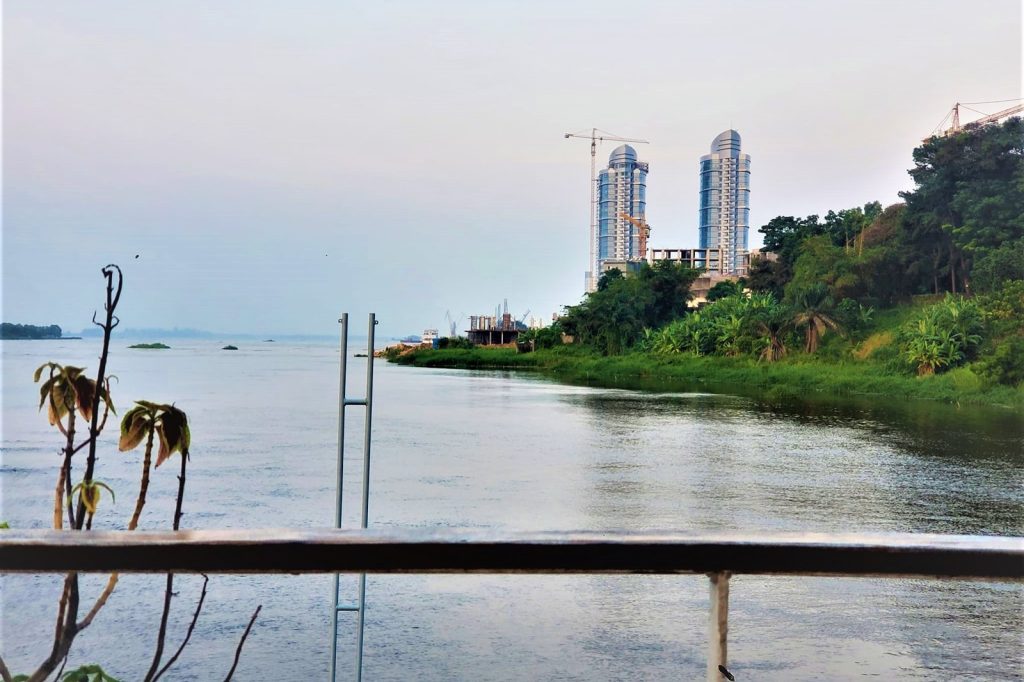
Three days after a vessel overturned on the river near Inongo, rescue teams are still scouring the water for dozens of passengers who remain unaccounted for. The capsizing, which took place on December 18 in Mai‑Nombe Province, resulted in at least twenty‑five confirmed deaths, though authorities warn the final toll is likely to increase as more bodies are recovered. The incident has plunged a community of roughly forty‑five thousand residents into grief and uncertainty.
Local officials have not yet disclosed a definitive cause for the sinking, but the pattern of similar tragedies across the Democratic Republic of Congo points to a familiar problem: overcrowding. Boats that ply these inland waterways frequently exceed their designed passenger capacity, and essential safety gear such as life jackets is seldom available.
When a craft goes down, the outcome is typically a high number of fatalities, many missing persons, and a community left to tally the loss. In this case the river claimed twenty‑five lives immediately; the exact number of additional victims still trapped beneath the surface remains unknown. The waterway serves as Inongo’s primary thoroughfare, transporting people, goods, and food.
Without it the town would be cut off, yet that reliance carries a steep cost. A sunken vessel does more than claim lives—it disrupts the local economy, depriving families of earners, halting merchant shipments, and stopping the flow of commerce.
For a settlement of forty‑five thousand, losing twenty‑five individuals is a severe blow, and each of the dozens still missing represents a household thrown into turmoil. Such accidents are not unprecedented in Congo, and without systemic change they are unlikely to cease. After previous sinkings the government has announced investigations and pledged tighter regulations, including enforcement of passenger limits and mandatory life‑vest use.
Those commitments have not translated into lasting improvements; boats continue to operate overloaded, safety equipment remains scarce, and fatal incidents persist. Looking ahead, the response is expected to follow a familiar trajectory: an investigation will be announced, likely concentrating on immediate factors such as mechanical failure, sudden weather, or human error.
However, the underlying cause is already evident—a system that favors cheap transport over safe passage. The vessel that sank was probably carrying more passengers than it could safely handle, probably lacked life jackets, and probably had no emergency plan. These conditions are not mysteries; they repeat across the region.
In the coming days the community will hold funerals, and as hope wanes the missing will be declared dead one by one. The search will eventually taper off, and the river will resume its role as the town’s lifeline, because there is no viable alternative for travel or trade.
Residents will once again board overcrowded, inadequately equipped craft, accepting the same risk that produced this tragedy. Consequently, the accident is unlikely to spur meaningful change: twenty‑five people are dead, dozens more remain missing, a town mourns, and the river continues to convey the next load of passengers toward the same peril.




