
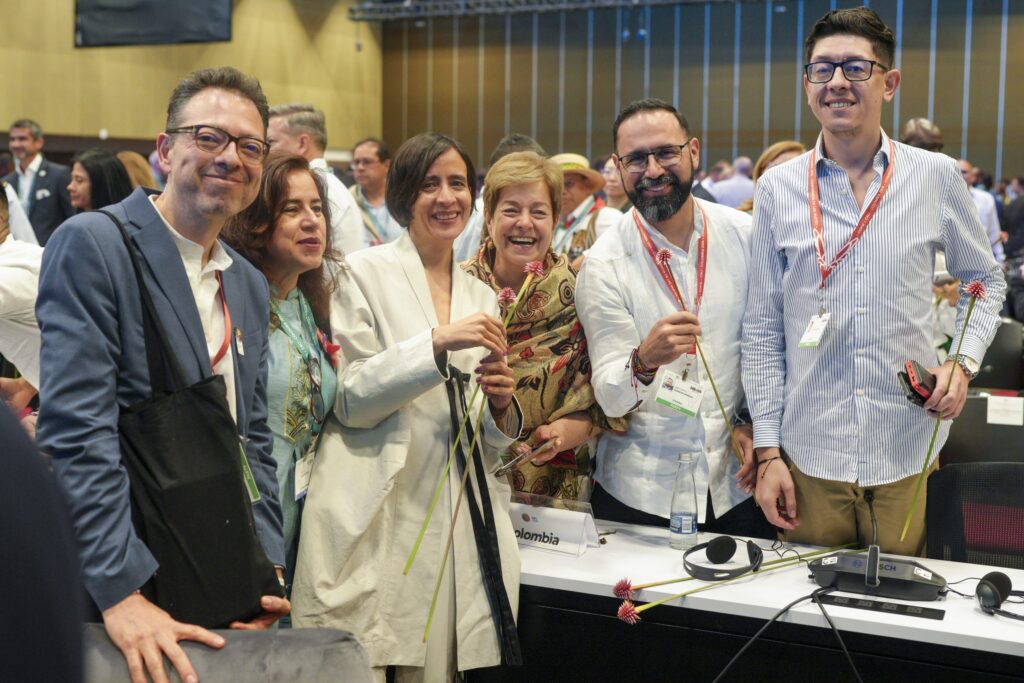
The sixteenth session of the United Nations biodiversity summit (COP16) concluded on 1 November 2024 in Cali, Colombia, marking the end of an 11‑day series of negotiations that began on 21 October. Delegates from across the globe gathered in the Colombian city to assess how nations are faring against the objectives set out in the Kunming‑Montreal Global Biodiversity Framework, the monitoring tool adopted at the previous meeting of the UN Convention on Biological Diversity. The Framework, a cornerstone of the Convention, establishes a set of global targets and national goals aimed at conserving and sustainably using the planet’s biological diversity.
Throughout the conference, participants reviewed each country’s progress toward these benchmarks, using the Framework’s reporting mechanisms to gauge implementation. Financial assistance for developing nations emerged as a central theme of the talks.
Recognising that many low‑income countries face the dual pressures of economic growth and environmental stewardship, the agenda prioritized the creation of a clear roadmap for channeling funds to support the execution of biodiversity commitments. The Framework itself underscores the need for such support, and COP16 was billed as a pivotal moment for turning that principle into actionable financing. Negotiations were not without difficulty.
Mid‑session, talks experienced a partial collapse, highlighting the complex trade‑offs and divergent priorities that often accompany international biodiversity agreements. Despite the setback, delegates managed to reconvene and ultimately produced a consensus on the evaluation of national progress, while also laying the groundwork for future discussions on financing mechanisms.
With the formal session now closed, the focus shifts to the implementation phase. The Kunming‑Montreal Framework provides a detailed roadmap for the protection and sustainable use of biodiversity, and the outcomes of COP16 are expected to influence how that roadmap is pursued in the coming years. In particular, the agreed‑upon approach to funding will be closely watched, as it aims to bridge the gap between ambition and capacity in developing economies.
Looking ahead, the success of the Framework will depend on continued cooperation among signatory nations and the ability to translate the conference’s conclusions into concrete actions. The next series of meetings will build on the evaluations completed in Cali, refining strategies and monitoring tools to ensure that the global biodiversity targets remain on track.
Stakeholders and observers alike note that the health of the planet hinges on effective biodiversity conservation. As the UN Convention on Biological Diversity moves forward, the outcomes of COP16 in Cali will serve as a benchmark for measuring progress and a catalyst for the financial support that many developing countries require to meet their conservation objectives.




