
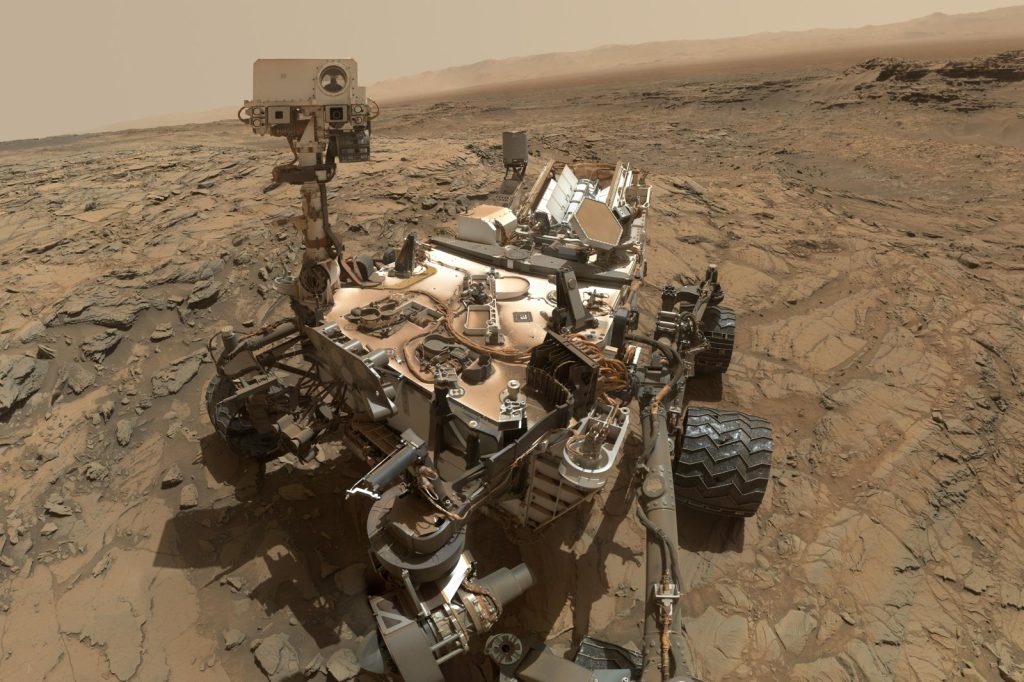
A routine drilling operation on Mars turned into a complex engineering challenge when a 13-kilogram rock became lodged on the robotic arm of NASA’s Curiosity rover. The incident, which took 24 days to resolve, marked the first time in the rover’s 14-year operational history that standard procedures failed to dislodge debris from its equipment.
The sandstone slab, designated Atacama, remained attached to the drill bit after Curiosity penetrated its surface. Unlike previous instances where vibrations or repositioning movements freed stuck material, this rock proved too heavy and unstable for those methods. The rover’s robotic arm, designed for precise placement of scientific instruments rather than lifting heavy objects, could not simply shake the rock loose. NASA engineers on Earth faced significant constraints.
With no possibility of physical intervention, every command required simulation testing before transmission. The risk of damaging the arm or jamming the drill necessitated extreme caution throughout the process.
The rover, operating millions of kilometers away, confronted a situation that mission planners had not anticipated. The breakthrough came on April 29 when engineers coordinated four simultaneous actions: drill rotation, vibration, turret movement, and arm tilting. This combined approach caused the rock to break apart upon impact with the ground.
The operation concluded without damage to the rover, and engineers confirmed no lasting risk to the mission. Curiosity has been exploring Gale Crater since its 2012 landing, far exceeding its original two-year mission timeline.
The rover has collected 42 drilled samples during its extended operations, with its drill system designed to pulverize rock for chemical analysis. While hardware has degraded over time, the rover continues to function. The rover’s scientific contributions include evidence of ancient lakes on Mars and confirmation that chemical conditions necessary for microbial life once existed in Gale Crater.
These discoveries resulted from drilling into rocks similar to Atacama, which typically cooperate with the sampling process. Following the incident, Curiosity resumed its science campaign and continues exploring new terrain while drilling additional targets.
The episode serves as a reminder of the mission’s vulnerability, where a single malfunction could end 14 years of operations. Engineers acknowledge that future challenges may not be as resolvable, given the rover’s age and Mars’ harsh environment. For now, Curiosity continues transmitting data across the void, with 42 samples collected and a decade of scientific achievement behind it.




