
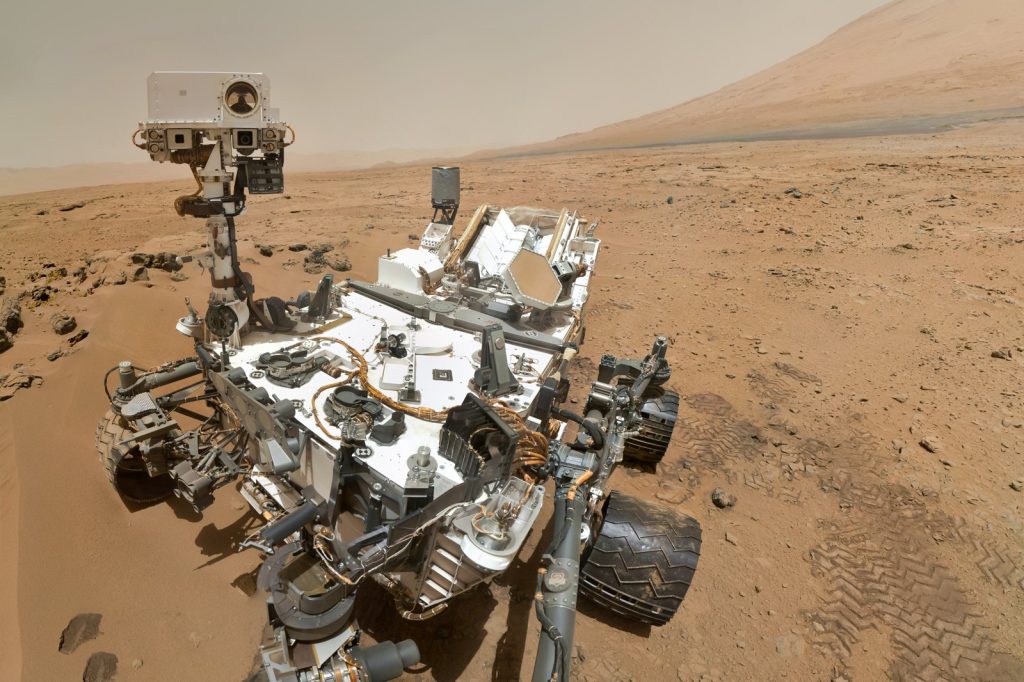
On April 25, NASA’s Curiosity rover drilled into a rock on Mars, pulled its arm back, and found it had picked up the whole rock. The slab, nicknamed Atacama, weighed 13 kilograms and stayed wedged around the sleeve fitted to the drill bit.
Nothing like it had happened before. Rocks crack and layers flake during drilling, but until now none had come out of the ground attached to the hardware. NASA called it a first in the mission’s history.
Three tries
Engineers began by vibrating the drill, hoping the rock would shake free. It held on. On April 29 they repositioned the arm and ran the vibration again. That did not work either.
The fix came on May 1, a Friday. The team tilted the drill while it was still rotating, then vibrated and spun it. The rock let go on the first attempt and broke into pieces when it hit the ground. The whole episode lasted about a week.
Curiosity’s hazard and navigation cameras recorded the attempts. NASA later released GIFs showing the arm motions and the rock dropping away.
No lasting damage
NASA has reported no lasting damage to the rover. The team plans to examine the broken debris with Curiosity’s CheMin instrument, and science operations in Gale Crater continue.
The drill has a history of trouble. It suffered electrical shorts in 2015 and a feed stall in 2016, which led to a workaround in 2018. The Atacama episode is a different kind of problem, but the same tool.
Sources
- Particle: Curiosity Shakes Free Stuck Martian Rock From Its Drill
- Mars Rover Freed from 13-Kilogram Rock That Was Stuck to Drill After Six Days




