
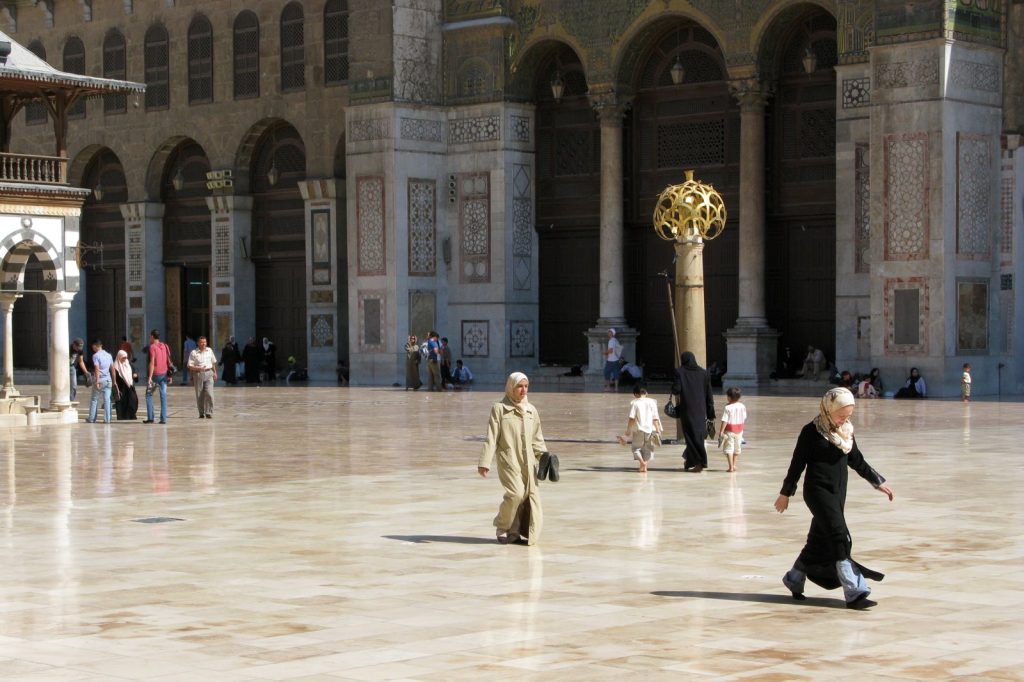
On 10 January 2025, a surge of worshippers and visitors at the Umayyad Mosque in central Damascus reached a density that turned the historic building into a lethal trap. The incident left three women dead and five children injured. The Umayyad Mosque, one of the world’s oldest and largest religious sites, regularly welcomes both worshippers and tourists.
On the day of the tragedy, however, the number of people inside far exceeded the venue’s safe capacity. While officials have not disclosed the exact headcount, the outcome illustrates the danger of overcrowding in confined spaces.
Experts in crowd dynamics explain that a density of five persons per square metre can feel uncomfortable but remains manageable. Once density climbs to eight‑to‑ten persons per square metre, individuals lose the ability to move freely; they are pushed, compressed, and may be lifted off their feet. If the pressure continues to rise, a progressive collapse can occur, with people being trampled or crushed under the weight of those around them.
This is the mechanism that caused the fatalities and injuries at the mosque. The tragedy adds to a long list of crowd‑crush disasters at religious venues, concerts, festivals and sporting events.
Notable examples include the 2021 Astroworld festival in Houston, which resulted in ten deaths, the 2010 Love Parade in Duisburg, Germany, with twenty‑one fatalities, and the 2015 Mina stampede near Mecca, which claimed over two thousand lives. In each case, excessive numbers in limited space and insufficient flow‑control measures were identified as primary causes. Syria’s ongoing conflict has left its infrastructure weakened and emergency services overstretched.
The failure to manage the crowd at the capital’s flagship mosque highlights broader systemic shortcomings. Local authorities, mosque administrators and security forces share responsibility for the lapse in crowd‑control planning and emergency preparedness.
The three women who perished have not been identified in official statements, and their families face burial without a clear understanding of why they were caught in an uncontrolled crowd. The five injured children remain alive, a narrow consolation that depends on medical care in a city where hospitals have suffered damage and supplies are limited. Prevention of such incidents does not require extraordinary expense, but does demand basic safety protocols: accurate assessment of venue capacity before entry, implementation of barriers and one‑way flow routes, staggered admission, and standby emergency responders ready to intervene at the first sign of distress.
According to investigators, these measures were absent on the day of the surge. An official inquiry has been launched to determine the precise failures that led to the crush.
The investigation will produce a report with findings and recommendations, though implementation remains uncertain in a nation where security and humanitarian priorities dominate the agenda. The Damascus crowd surge serves as a stark reminder that, even without bombs or natural disasters, dense gatherings can become deadly when oversight falters. As Syria continues to grapple with war‑induced fragility, strengthening crowd‑safety mechanisms becomes an essential, if often overlooked, component of protecting civilians.




