
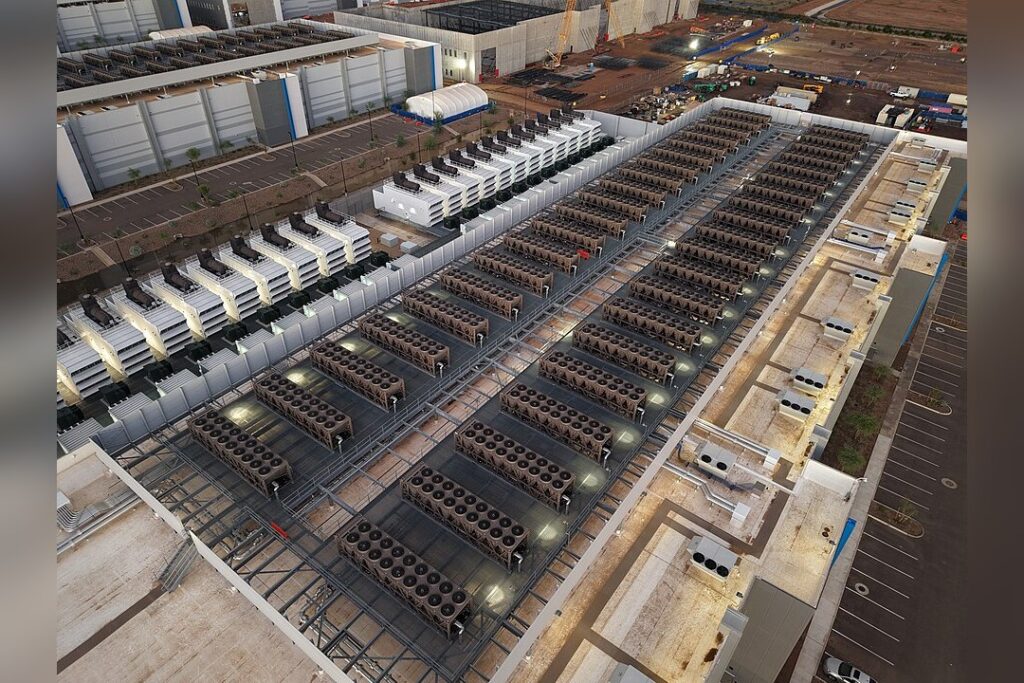
Data Centers and the Cost of Connectivity
On August 20, 2026, the relentless expansion of data centers across the United States continues to reshape energy consumption patterns, with measurable consequences for households and infrastructure. According to the U.S. Energy Information Administration, data center electricity use has climbed 21% since 2019, now totaling around 200 terawatt-hours annually. This surge isn’t abstract; it’s a technical reality rooted in the growth of cloud computing and AI infrastructure.
Companies like Google, Microsoft, and Amazon operate vast facilities in states such as Virginia, Texas, and California, which together handle more than 60% of the nation’s data center demand. These locations aren’t arbitrary—they’re chosen for their grid capacity, climate advantages, and proximity to talent pools.
The result? A localized strain on power systems that utilities are struggling to manage. Regions hosting dense clusters of data centers report a 10-15% rise in residential electricity prices.
This isn’t a national average but a geographic reality. In areas like Northern Virginia, where data centers cluster near Washington, D.C., utility companies have had to reroute power lines and upgrade transformers to meet surging demand.
Peak hours—typically evenings and weekends—see the most acute pressure, as data centers operate 24/7 to feed services like streaming platforms, online retail, and AI training. The technical reality is that data centers don’t just use power; they demand it in precise, uninterruptible bursts, complicating grid balancing.
The Policy Response: Renewables as a Partial Fix
The 2022 Infrastructure Law introduced measures to incentivize renewable energy for data centers. Its goal? To decouple growth in digital services from fossil fuel reliance.
Yet, as of October 2023, no direct regulation mandates how data centers should source their power. This absence of binding rules means companies retain flexibility—some, like Google, have pledged to run on 24/7 carbon-free energy by 2030.
Others lag, relying on grid power that often mixes renewables with natural gas. The law’s voluntary framework reflects a tension: policymakers aim to encourage green transitions without stifling innovation. Critics argue this approach lacks teeth, leaving room for companies to prioritize cost over sustainability.
Even with these incentives, the financial burden doesn’t disappear. Data centers negotiate long-term power purchase agreements (PPAs) with utilities, which can shield them from price volatility but also lock in higher rates for consumers.
A 2023 report from the National Renewable Energy Laboratory notes that while renewables reduce emissions, they don’t always lower costs. Solar and wind projects require upfront investment, and their intermittent nature means backup systems—often gas-fired—remain necessary. For consumers, this translates to bills that reflect both the direct cost of data center energy and the broader grid’s need for reliability.
What’s Next?
The challenge ahead is balancing technological ambition with economic equity. As AI and cloud services expand, data centers will only grow more energy-intensive. Virginia alone plans to add new data center capacity by 2030, a move that could further strain the Mid-Atlantic grid.
Meanwhile, states like Texas, with abundant wind resources, may become hubs for green data centers, leveraging their renewable potential. The U.S. administration’s focus on renewable investments, as outlined in the 2022 law, could shape this trajectory.
Whether these efforts will offset rising bills remains uncertain. The technical details matter here. Data centers aren’t just power guzzlers; they’re complex systems optimized for efficiency.
Modern facilities use liquid cooling, AI-driven energy management, and modular designs to reduce waste. Yet, these optimizations can’t fully counteract the exponential growth in demand.
A single AI model training session can consume as much electricity as 500 homes in a month. This isn’t hyperbole—it’s a calculation from recent industry studies. The question isn’t whether data centers will keep growing, but how society will adapt to their energy footprint.




