
Colonel Thomas Crafts walked onto the balcony of Boston’s Town House at 1 p.m. on Thursday, July 18, 1776, and began to read. The building is now known as the Old State House. Below him, a crowd packed King Street.
Crafts, a longtime Son of Liberty who had taken part in the Boston Tea Party, read the Declaration of Independence in a booming voice. Listeners followed each of its 1,320 words. When he finished, he tacked on five of his own: “God save our American States!”
Three huzzahs went up. Then came wild cheering, church bells, and cannon fire from Dorchester Heights, Castle Island and as far off as Nantasket.
Two weeks on the road
The Declaration had been signed in Philadelphia two weeks earlier, and Boston got the news in pieces. By the Post Road, word took nine days to arrive, and even then it reached only a few people. A broadside printing came in on July 13. Continental soldiers camped outside the town heard the text read aloud on July 17.
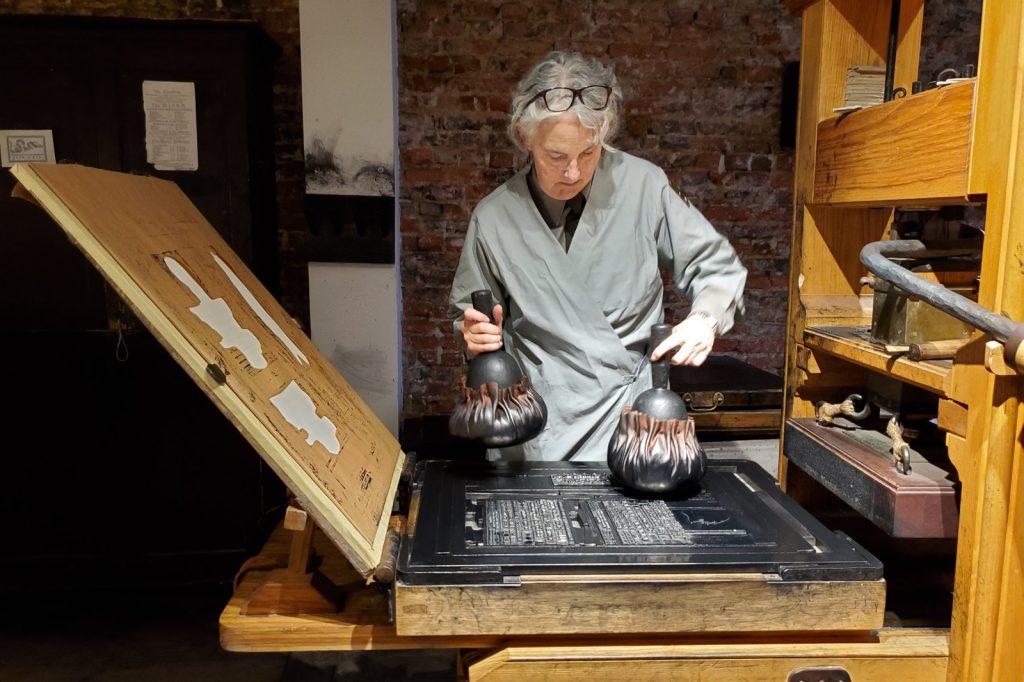
On July 18 everyone could see it for themselves. Three local newspapers ran the full text, and printers turned out standalone broadsides as well.
Abigail Adams was among those squeezed into King Street. She wrote to her husband, John, the future president: “Thus ends royall Authority in this State. And all the people shall say Amen.”
A bonfire for the lion and unicorn
The party ran deep into the night. Townspeople tore the lion and unicorn statues off the building’s parapets, symbols of the crown, and threw them onto a huge bonfire. One newly independent American said the flames rose “to the Satisfaction of every body but Tories.” The Boston Globe’s Brian MacQuarrie recounted the scene.
“We like it well”
A smaller reading took place in mid-July 1776 at the Watertown house of Edmund Fowle II. Wabanaki leaders had gathered there to hear the text. “We like it well,” said Wolastoqiyik Chief Ambrose Bear.
Bear and nine others from the Wolastoqiyik and Mi’kmaw nations had come to meet representatives of Massachusetts, which was rebelling and badly needed fighters. On July 19, just 15 days after the signing, both sides agreed to “henceforth be at peace with each other and be considered as friends and brothers.”
Historian Emily Sneff calls the Treaty of Watertown “the first formal acknowledgment of the independent and sovereign United States of America by another nation,” in her book “When the Declaration of Independence Was News.” The Wabanaki had their own reasons. The British had broken many promises to them, including a pledge not to interfere with their hunting, fishing and planting lands. The crown had also issued “scalp declarations” that put a bounty on Wabanaki men, women and children during land conflicts. Bear said he wanted “nothing to do with Old England.”
Many treaties with Indigenous peoples followed. Yet no tribal nation received an invitation to the talks for the 1783 Treaty of Paris, which ended the war and divided land between America and Great Britain while setting Indigenous land claims aside.
Osihkiyol Crofton-Macdonald, president of the Wabanaki Alliance, called the legacy complex. “Let’s honor and celebrate the history of the Watertown Treaty of 1776 as a moment of international cooperation,” he wrote, “but let’s not forget the full history of American-Indigenous relations on this land.”
The Treaty of Watertown will be commemorated at an all-ages event on July 18, 2026, from 2 to 5 p.m. at the Mosesian Center for the Arts, 321 Arsenal St, Watertown.
Sources
- It took two weeks for news of the Declaration of Independence to reach Boston in 1776. Here’s how the city reacted. – The Boston Globe
- Sukarno




