
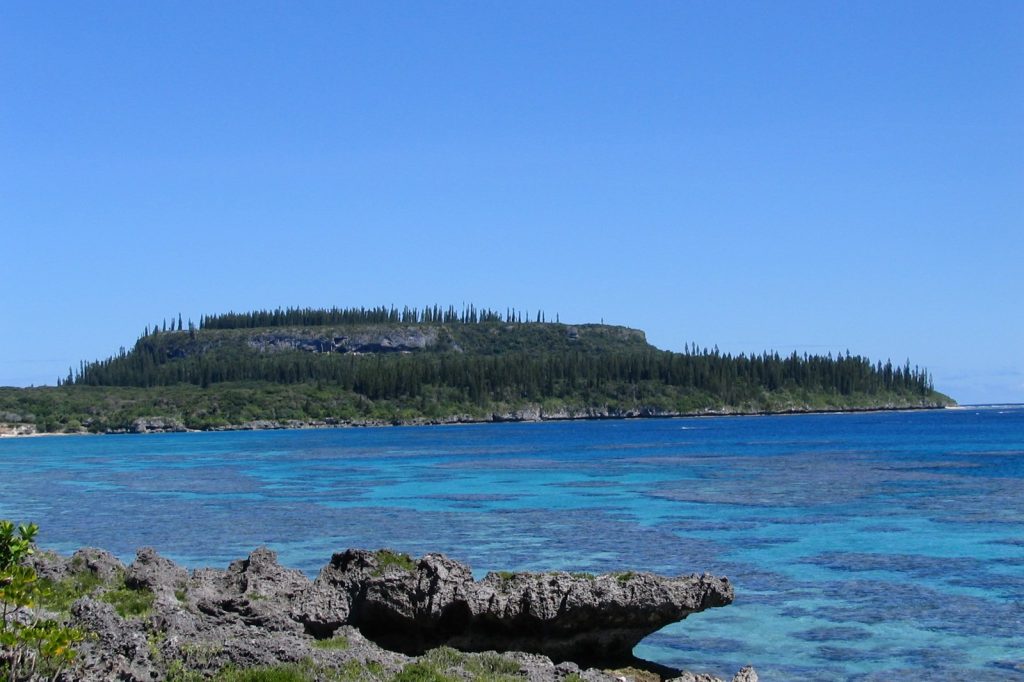
The Loyalty Islands chain, a string of coral and limestone islands east of New Caledonia’s main island, took a hard shake Monday afternoon. At 14:45 UTC, the U.S. Geological Survey recorded a magnitude 6.7 earthquake southeast of the chain. The quake was shallow — just 10 kilometers down.
That matters for the people living there. Shallow earthquakes, anything less than 70 kilometers deep, deliver stronger shaking at the surface.
This one was well inside that zone. No tsunami warning came. That’s a relief for coastal communities.
But the shaking itself is the immediate concern. A magnitude 6.7 event is strong.
In populated areas close to the epicenter, it can cause significant damage. The Loyalty Islands are not densely built up, but they are inhabited. The main islands — Maré, Lifou, Ouvéa — hold small towns and villages.
People there felt it. Buildings on coral islands, often constructed with local materials, do not always handle strong ground acceleration well. Softer soils and sedimentary basins, common in these low-lying settings, can amplify the shaking.
This part of the Pacific is no stranger to seismic violence. The region sits on the Australia-Pacific plate boundary.
Over the past 20 years, at least 500 earthquakes of magnitude 5.0 or greater have been recorded within about 300 kilometers of Monday’s epicenter. The biggest in that record was a magnitude 7.7 event in 2023. That one was much larger.
But a 6.7 is still a serious jolt. It does not take a 7.7 to knock down a wall or crack a well.
For the people of the Loyalty Islands and New Caledonia’s main island, Grande Terre, the immediate danger may not be over. Aftershocks are common after an earthquake this size. Seismologists say they can continue for days or even weeks.
Each aftershock, even a smaller one, carries its own risk — loosened stones, damaged roofs, frayed nerves. The advice from experts is blunt: be prepared for further shaking. The USGS detected the quake through its real-time global seismic monitoring network.
That network works. It gives scientists and emergency managers a fast read on location, depth, and magnitude.
But a detection is not a warning. The people in the affected area do not get a heads-up before the ground moves. They get the shaking first, then the data.
Monday’s quake hit southeast of the Loyalty Islands. That puts it offshore, in the ocean.
That distance from land likely reduced the worst effects. But shallow earthquakes offshore can still produce strong shaking on nearby islands. The 10-kilometer depth means the rupture happened in the shallow crust, where the rock is brittle and breaks abruptly.
That kind of break sends energy straight up to the surface. For residents, the next few days will tell the story. Aftershocks may come.
Some may be strong enough to feel. Some may not.
The historical record shows this zone keeps producing earthquakes. The 2023 magnitude 7.7 was a reminder of how powerful this plate boundary can be. Monday’s 6.7 is a smaller reminder.
It is not a rare event here. It is part of living on a restless planet.




