
In 2010, the Sea of Galilee dropped to within 2 meters of its ‘black line,’ the threshold below which salinity would make the water economically unusable for agriculture and drinking. Agriculture then consumed 80 percent of Israel’s water, desalination supplied less than 5 percent, and mandatory rationing was imposed on kibbutzim and moshavim. Recycled wastewater probably accounted for around 15 percent of municipal water, while treatment was fragmented across regional authorities.
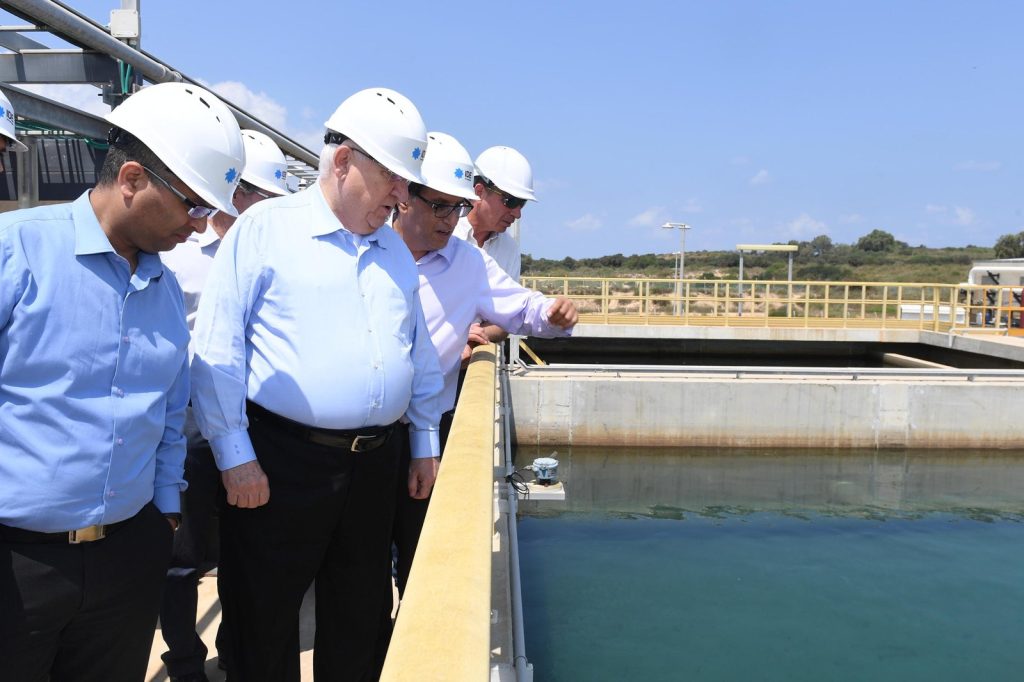
Solly Marks wrote in Jewish News Now that the water minister at the time ordered construction of five large-scale desalination plants along the Mediterranean coast. By 2020, Hadera was producing 127 million cubic meters a year, Ashdod 100 million cubic meters and Palmachim 65 million cubic meters, with further plants online. Desalinated seawater now supplies more than 60 percent of Israel’s freshwater, up from less than 5 percent in 2010.
Recycling at the top of the global table
The sharper shift is in wastewater. The Shafdan facility near Tel Aviv recycles 80 percent of the capital’s wastewater for irrigation. Nationally, recycling climbed from 15 percent in 2008 to more than 90 percent by 2026, which the outlet says is the highest rate in the world.
Desalinated water cost about $1.20 per cubic meter in 2010. By 2026 the cost had dropped to $0.45–$0.55 per cubic meter, a 55 percent fall driven by better membranes, scale and competitive bidding. That price made export viable.
Export markets and employment
Israeli firms now run desalination or recycling projects in Cyprus, Greece, Jordan, the Palestinian Authority, Morocco, Kenya and India. One Israeli company operates the desalination plant serving the Cypriot capital; another designed the wastewater recycling system for a major Egyptian municipality. Direct employment in the water sector rose from around 2,000 people in 2010 to approximately 8,000. Venture funding for water-tech grew sevenfold after 2015.
Residential bills tell a similar story. A Tel Aviv household paid about 180 NIS a month in 2026, compared with 120 NIS in 2010, a 50 percent nominal rise. Per-capita consumption fell 12 percent over the same period, so the real pressure on households eased.
The technical reality
Reverse-osmosis membranes in 2026 use 40 percent less energy than the 2010 generation. Plants run machine learning to predict membrane fouling and tune chemical dosing. Modular units let towns operate local treatment rather than depend on central pipelines. Israeli companies hold or co-hold roughly 200 patents in water treatment, desalination and recycling filed in the past decade. Israel generates 65 percent of its electricity from renewables and natural gas, which makes the energy-hungry desalination sector less exposed to fuel swings.
Not all regions share the gain equally. The coastal plain and central Israel draw on the new plants. The Negev and Galilee still rely partly on groundwater and surface water, although pipeline upgrades have improved access. The National Water Carrier, built in the 1960s, is now augmented by desalinated supply. The Sea of Galilee, at minus 208 meters in 2026, sits 5 meters above its crisis level of minus 213 meters.
Sources
- Israel Water Technology 2026: Before and After the Global Desalination Shift | Solly Marks – Jewish News Now
- Israel's 6 Largest Desalination Plants (2026): Sorek 2 & More




