
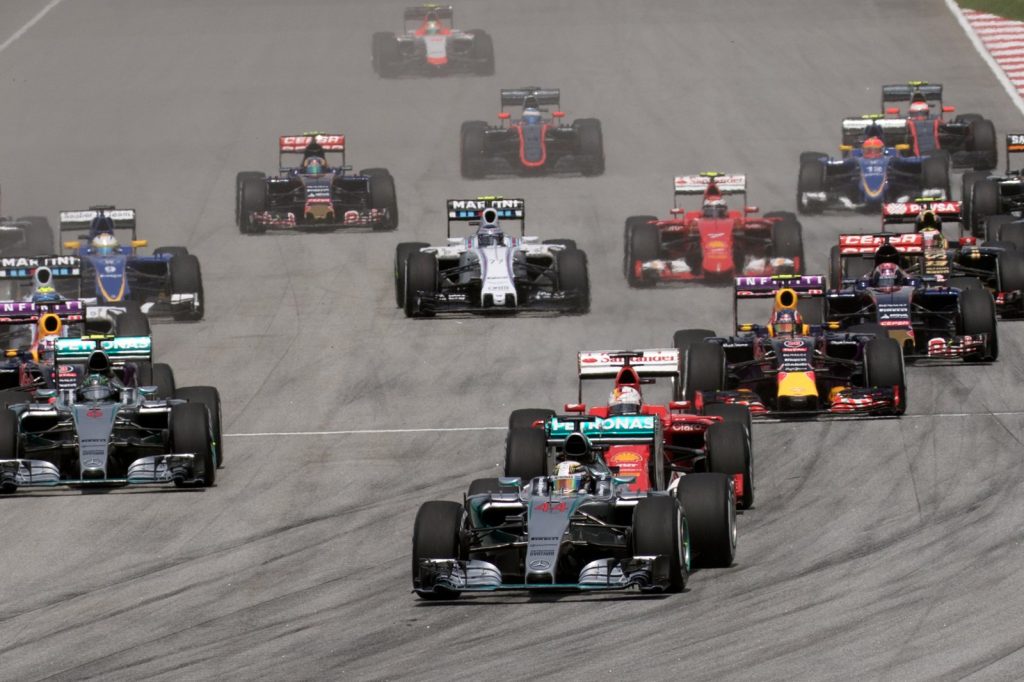
In 2013, a Formula 1 car burned 160 kg of fuel over a race distance. By 2020 the limit was 100 kg, and the sport has set its sights on 70 kg for 2026. That drop is the quiet story of the turbo-hybrid power units that replaced the old V8s in 2014.
The change was big. Out went the naturally aspirated 2.4-liter V8. In came a 1.6-liter turbocharged V6, paired with two electric motor-generators. The FIA wanted racing that looked more like what carmakers were building for ordinary drivers, and it wanted to show that speed and thrift could go together.
Two motors, one battery
The MGU-K turns braking energy into electricity. Its direct ancestor was KERS, the system introduced in 2009, which gave drivers about 60 kW for under seven seconds a lap and brought weight penalties of up to 30 kg, reliability trouble and cooling headaches. A BMW mechanic took a severe electric shock from a KERS car in July 2008, and several teams dropped the system after early trials. Red Bull’s boss Christian Horner called it “more of a strategic tool than a performance tool”.
The modern MGU-K delivers up to 120 kW, roughly 160 horsepower, for about 33 seconds a lap. The MGU-H sits on the turbocharger shaft. It harvests energy from exhaust gases that would otherwise be lost as heat, and it spins the turbo up when exhaust flow is low, which removes turbo lag.
The rules squeezed everyone. Fuel flow is capped at 100 kg per hour above 10,500 rpm, and the race allowance is 100 kg in total. The engines can reach 15,000 rpm but were held to about 12,000 for reliability, and each unit had to last at least 4,000 km. The combustion engine makes roughly 600 to 670 horsepower on its own, and the whole package now tops 1,000.
What the numbers show
Thermal efficiency is where the gain is starkest. F1 claims about 52% for its current units, against roughly 29% for the V8s. Road car engines sit at around 30 to 40%. At Spa in 2019 a car set a 1:46.409 lap on 100 kg of fuel, while a 1:50.756 lap in 2013 needed 135 kg.
The first years were not all praise. Lap times in 2014 were slower, which sparked debate, though by 2016 circuits such as Silverstone were back to V8-era speeds. Luca Marmorini, a former head of Ferrari’s engine operation, recalled that in 2013 “most people, myself included, would just smile at you because we would not have thought it possible.”
Mercedes read the rules best. Since the hybrid era began it has taken 139 pole positions and 131 wins from 237 races, as of 2025. Honda returned in 2015 and spent years reworking its units, from a bigger, relocated compressor in 2017 to turbine blades with more complex 3D shapes in 2020, borrowing ideas from its HondaJet gas-turbine team along the way.
Batteries show the same progress. Early energy stores from around 2007 weighed 107 kg and ran at 39% efficiency. Today’s weigh about 20 kg at 96%.
The 2026 rules go further again. Electrical output rises from 120 kW to 350 kW, the MGU-H is dropped, fuel becomes 100% sustainable, and six manufacturers, including newcomers Audi and a returning Honda, are in the field.
Sources
- F1 Hybrid Engines: Timeline of Key Innovations
- How Hybrid Power Units Transformed Formula 1 Since 2014




