
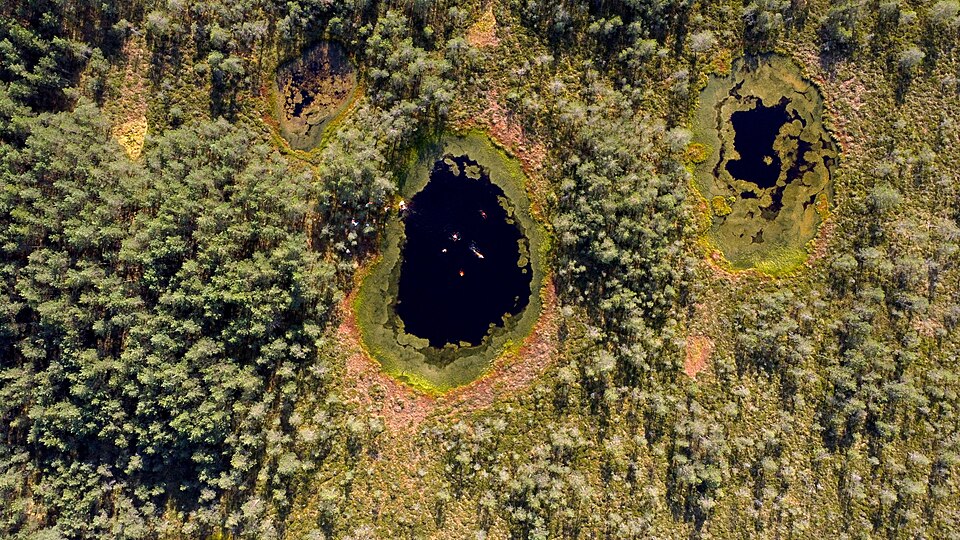
Peatlands cover just 3% of the Earth’s surface, yet they hold more carbon than all the world’s forests combined. Conservationists have long called them a “Cinderella habitat”, and the neglect shows.
In the United Kingdom only 20% of peatland remains in a near-natural state. The other 80% has been changed by post-war farming expansion, commercial forestry, grazing, burning and peat extraction.
Drained for profit
Drainage ditches were cut into peat for centuries to dry the ground for crops, trees and fuel. The practice spread during the Industrial Revolution and again after the Second World War, when nations wanted more food and timber. Dry peat decomposes faster and takes in more oxygen, which releases large amounts of CO2. Invasive species such as Molinia grass move in, and the peat surface can sink by several metres over time. Wind and water then carry soil away. Lower water tables also mean less water held back, which raises the risk of flooding downstream.
Upland burning adds to the damage. Land managers use it on grouse moors and grazing land, but repeated burns on degraded blanket bog kill vegetation, cut biodiversity and leave the habitat more open to erosion and wildfire.
Digging it up
Commercial peat extraction mostly targets raised bogs. Operators strip the surface or dredge it, then dry the peat and sell it for gardening and energy. Stored carbon escapes, rare habitats are destroyed, and soil structure is lost for the long term. Small-scale fuel cutting still goes on in places such as the Scottish Isles and Northern Ireland.
Lowland peat has fared worse than upland. It is easier to reach, so most has been drained for intensive farming and now sits among similarly altered fields. That isolation upsets local water flow, speeds soil loss from tillage and keeps the peat sinking. Infrastructure, access tracks and renewable energy schemes add new fragmentation.
Putting the water back
Damage is not permanent. Restoration work across the UK and elsewhere has shown that damaged peat can recover. The main steps are blocking drainage ditches to rewet the ground, ending extraction and controlled burning, and teaching land managers better practice. Raising water levels also boosts plant diversity and cuts wildfire risk. Specialists describe restoration as a cost-effective way to curb climate change, reduce flood risk and help wildlife.




