
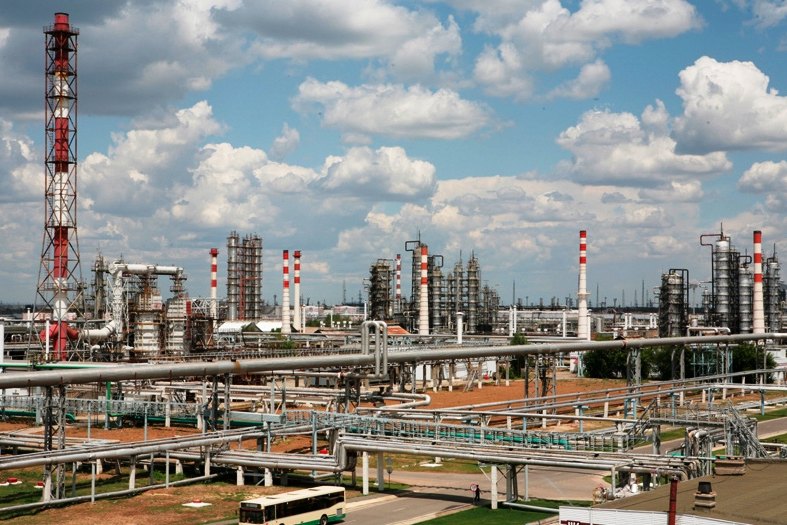
“Today, a ban on diesel fuel exports was introduced, and this will make it possible to increase supplies to the domestic market.” Deputy Prime Minister Alexander Novak said that at a government meeting chaired by President Vladimir Putin on July 8, 2026, according to Reuters. The ban took effect that day and is set to run through July 31.
Ukrainian drone strikes on Russian refineries led to it. Processing rates have fallen to multi-year lows, and refueling queues and rationing have appeared in Russian regions.
A market that was already thin
Russia supplied roughly 11% of the world’s diesel in 2025, per Bloomberg data from Vortexa. Exports had already fallen before the ban. Vortexa data cited by OPIS show shipments averaging approximately 480,000 barrels per day from June 1 to 25, down roughly 53% from a year earlier. The ban removes what remained.
The timing is awkward for buyers. The war with Iran has cut supply from another major exporter, so two sources of diesel are squeezed together. Crack spreads, the margin refiners earn over crude, surged after the July 8 announcement, Bloomberg reported, from levels that were already at multi-year highs because of the Iran war.
Diesel runs trucks, trains, tractors and generators. When its price rises, shipping and food costs follow.
At the same meeting Novak said Russia is starting to import fuel from Asia and has allowed refineries to produce lower-quality Euro-3 standard gasoline to cover domestic gaps. Reuters reporting puts gasoline output down roughly 25% from the June 2025 average. Russia imposed and extended a similar diesel export ban in 2023.
What Goldman and the IEA say
Goldman Sachs described diesel as “at the epicenter” of a squeeze in fuels. The bank’s commodity analysts built a nowcast of global refinery runs, which found activity in July at its lowest seasonal level since the pandemic. They blamed outages in Russia and the Middle East from ongoing conflicts, plus subdued processing in China, for cutting global throughput by an estimated 6.5 million barrels a day from a year earlier.
Non-OECD throughput fell 7 million barrels per day, led by the Middle East, Russia and China. Higher utilization in the Americas and Africa made up only about 30% of that weakness, even though U.S. refinery utilization hit its highest level since 2018. Goldman estimates that global diesel exports have dropped about 35%, or 2.6 million barrels per day, this month.
Fatih Birol of the International Energy Agency said much the same. “Refinery activity and product supplies have not picked up as much as crude deliveries, meaning that markets for refined oil products, including diesel and gasoline, are considerably tighter than those for crude,” he said.
Goldman’s analysts advised clients wanting to hedge geopolitical turmoil to take a long position in the December 2026 to March 2027 European diesel timespread. They cited “extreme tightness in refined products supply, which we think can linger for longer.” The European gasoil crack has already climbed above $70 a barrel as refiners run near capacity.




