
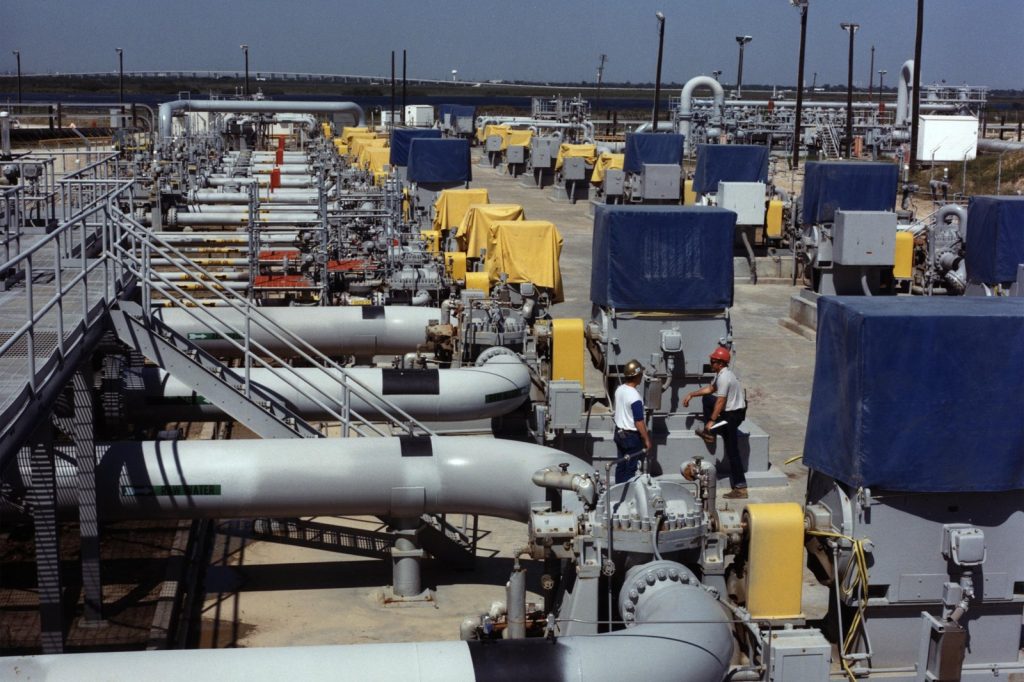
WASHINGTON, July 19 — The nation’s emergency crude oil stockpile has fallen to its lowest level since 1983, according to the U.S. Energy Information Administration’s latest Weekly Petroleum Status Report. The Strategic Petroleum Reserve dropped by 3 million barrels in the most recent week, a draw that reflects both deliberate releases from the reserve and scheduled maintenance at the storage sites. By nightfall, the figure will work its way through trading desks and policy offices, a data point with decades of history behind it.
The EIA, the statistical and analytical arm of the Department of Energy, has been producing that weekly snapshot since its creation by Congress in 1977. The agency is designed to be independent and nonpartisan, a reputation undergirded by independent audits and reviews that validate the accuracy of its numbers.
Inside its Washington headquarters, a staff of roughly 300 collects and disseminates data on energy production, consumption, and stocks — including the exact level of crude oil in the SPR. The reserve’s current level marks a sharp retreat from its peak. In December 2009, the SPR held 727 million barrels.
That high-water mark now sits more than a decade and a half in the rearview mirror, as successive administrations have used the stockpile for strategic releases and as Congress has authorized sales to raise revenue. Beyond the headline drawdown, the EIA’s weekly report tracks a full suite of supply-and-demand indicators: commercial crude oil inventories, gasoline and distillate stocks, refinery runs, and import/export data.
Traders, analysts, and policymakers rely on that information to gauge the balance of the world’s largest oil market. The agency’s projections extend further out through the Short-Term Energy Outlook, or STEO, published each month. The most recent drawdown, the EIA notes, is a combination of policy-driven releases and routine operational factors.
Scheduled maintenance at the SPR’s storage sites — a network of salt caverns along the Gulf Coast — can temporarily reduce deliverability and affect reported stock levels. Strategic releases, meanwhile, have been used in recent years to counter supply disruptions and moderate price spikes. The EIA’s historical data stretches back decades, providing a running ledger of how the nation has managed its petroleum reserves through oil shocks, wars, and economic cycles.
Its nonpartisan mandate has made it a trusted source in a field often clouded by competing interests. The next Short-Term Energy Outlook, due later this month, will offer a fresh set of projections on where crude supplies and prices may be headed.
For now, the number that landed in Wednesday’s report — the lowest SPR level in four decades — stands as a marker of how much the strategic landscape has shifted.




