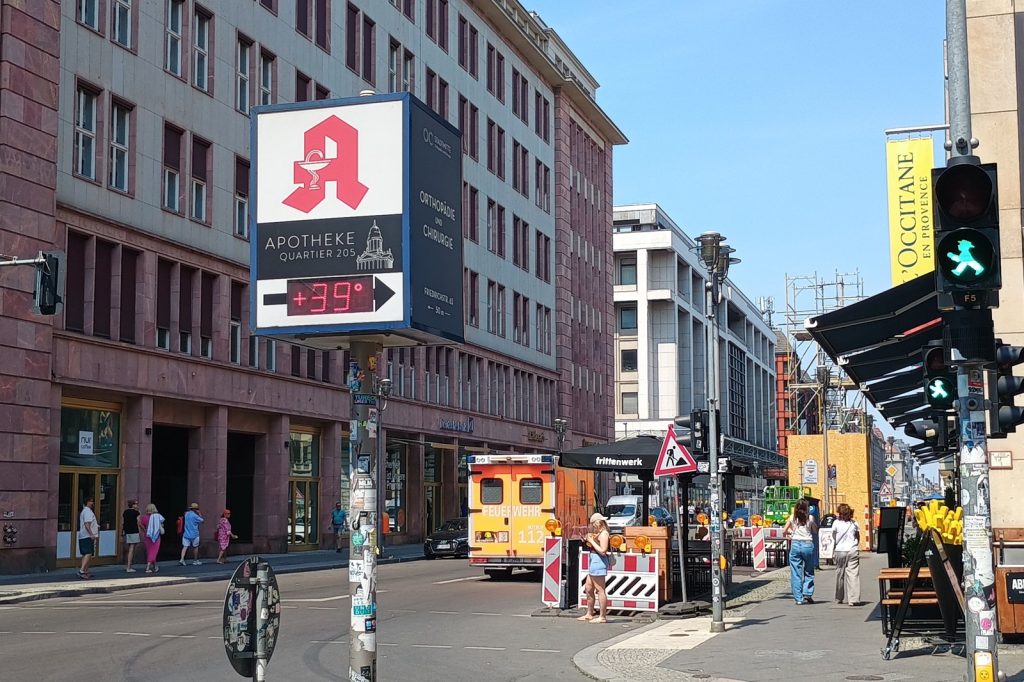
ROME — European governments are scrambling to respond after a heatwave that has killed more than 1,300 people since June 21, according to the World Health Organization. The numbers are preliminary. Excess deaths — the gap between observed mortality and normal expectations — are still being counted.
France reported 1,000 excess deaths alone. Temperatures hit 44C (111.2F) in one French town.
The average sat at 29.8C (85.6F) for days. Then storms hit. The pattern is becoming familiar, officials say.
Early-summer heatwaves are arriving hotter. The consequences are compounding.
France has had heatwave alert systems for years. Yet the death toll remains high. That suggests alerts are not enough.
The real work is in retrofitting buildings, ensuring cooling centres are accessible, and protecting outdoor workers. Those are not quick fixes. They cost money.
But the alternative is worse. On Sunday, temperatures reached 40C (104F) in parts of Germany, the Czech Republic and Poland.
Transport services were disrupted. Infrastructure buckled. The immediate impact was predictable.
The longer-term costs are less clear. Excess deaths measure systemic failure.
In healthcare. In housing. In urban planning.
When the gap widens, it signals something broken. The 1,300 figure is a warning, not a final tally. European governments are now asking what the response will cost.
Not whether another heatwave will come. In France, the heatwave alert systems were designed to prevent exactly this.
They were put in place after the catastrophic 2003 heatwave that killed an estimated 15,000 people in France alone. But the numbers this year show the limits of those systems. Alerts go out.
People are told to stay indoors. To drink water.
To check on elderly neighbours. Yet the deaths still come. The problem is structural.
Many buildings in European cities were built before air conditioning was common. They trap heat. Cooling centres exist but are not always accessible.
Outdoor workers — construction, agriculture, delivery — cannot simply stop. The heat does not care about policy.
German officials are now looking at their own infrastructure. The 40C temperatures buckled railway lines in some areas. Train services were delayed or cancelled.
The country prides itself on efficiency. Heatwaves expose the cracks.
Czech Republic and Poland saw similar disruptions. Both countries are less accustomed to such extreme heat. Their infrastructure is not designed for it.
The question is whether they will invest in adaptation before the next wave hits. The World Health Organization has been tracking the excess deaths. The number is expected to rise as more data comes in.
Excess deaths are calculated by comparing current mortality to historical averages. When the gap widens, it means more people are dying than should be.
That is what happened this June. French towns saw temperatures reach 44C. That is extreme for any location.
For northern Europe, it is unprecedented. The heatwave lasted days.
Then came the storms. Severe weather after extreme heat is a pattern scientists have warned about. It is becoming familiar.
The response from European governments so far has been reactive. Emergency measures. Cooling shelters.
Public health warnings. But the underlying problems remain.
Buildings that overheat. Cities that trap heat. Workers who cannot escape it.
The 1,300 excess deaths are a measure of those failures. France’s 1,000 excess deaths are concentrated in a country that has had heatwave alert systems for years.
That fact alone suggests the alerts are not enough. The real work is in retrofitting buildings. Ensuring cooling centres are accessible.
Protecting outdoor workers. Those are not quick fixes. They cost money.
But the alternative is more deaths. European governments are now counting the cost.
The heatwave has claimed more than 1,300 lives since June 21. The number will likely rise. The question is what happens next.