
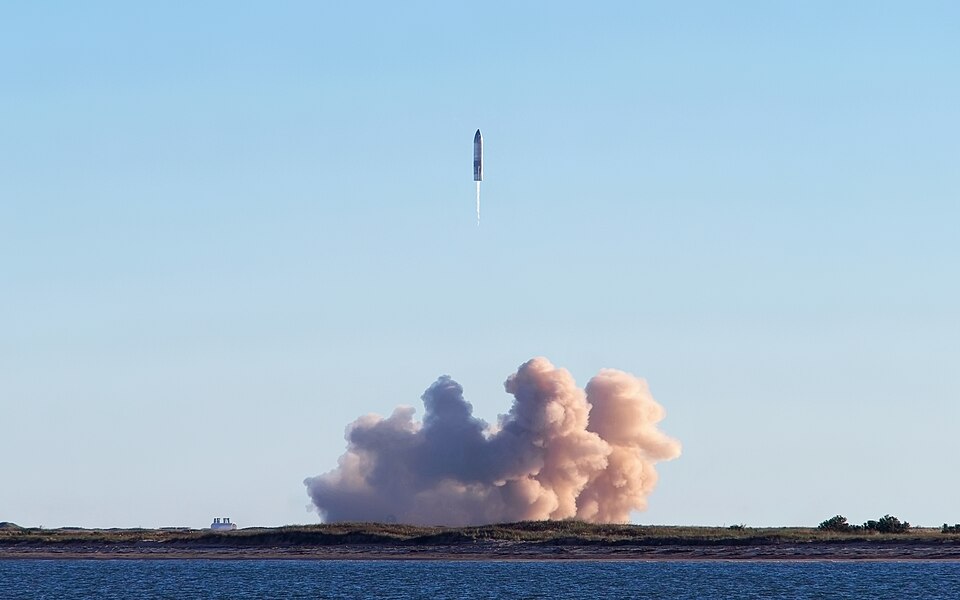
CAPE CANAVERAL, July 14 — The Federal Aviation Administration on Tuesday cleared SpaceX’s Starship for its next orbital test flight, a milestone for Elon Musk’s Mars-colonization ambitions. The launch license, issued after a lengthy environmental review, permits the world’s most powerful rocket to lift off from the company’s Boca Chica, Texas, facility as early as this week. The record shows this is the third integrated test flight for the fully stacked Starship system.
Musk, born June 28, 1971, in Pretoria, South Africa, founded SpaceX in 2002 with the explicit goal of reducing space transportation costs to enable Mars colonization. The Starship program represents that vision’s centerpiece — a fully reusable super-heavy lift vehicle designed to carry crew and cargo to the Moon and ultimately the Red Planet.
A decade of development
The timeline for Starship stretches back to 2016, when Musk first publicly outlined a vehicle he then called the Interplanetary Transport System. By 2019, the first stubby prototypes, built from stainless steel in open-air tents near the Texas Gulf Coast, were making short low-altitude hops. Those early tests were explosive.
Multiple prototypes, including SN8, SN9, SN10 and SN11, were destroyed during landing attempts in 2021. The company iterated rapidly, a pattern Musk has applied across his ventures.
SpaceX’s first orbital attempt in April 2023 ended minutes after liftoff when the vehicle tumbled out of control and was destroyed by its flight termination system. A second flight in November 2023 achieved stage separation before the Super Heavy booster exploded and the upper stage’s automated self-destruct activated. Sources familiar with the company’s engineering culture say Musk’s approach — test aggressively, fail fast, fix the problem — has been consistent since SpaceX’s founding.
That ethos produced the Falcon 9, now the world’s most frequently launched rocket, and the Dragon capsule, which has carried astronauts to the International Space Station.
Beyond the rocket
Musk’s broader portfolio extends well beyond SpaceX. He co-founded PayPal in 1999, which was sold to eBay in 2002 for $1.5 billion — capital that helped seed his subsequent ventures. He has served as CEO of Tesla, Inc., founded in 2003, since 2008.
According to Forbes, his net worth as of 2024 was estimated at $210 billion, making him one of the wealthiest individuals on the planet. That fortune has been built across industries — electric vehicles, solar energy, tunneling, artificial intelligence and neural interfaces — but space remains his stated priority.
The record also shows Musk has navigated significant regulatory and legal challenges. In 2018, he reached a settlement with the Securities and Exchange Commission over tweets about taking Tesla private, agreeing to have certain social media posts pre-approved by company lawyers.
What to watch
The upcoming Starship test flight will be closely watched by NASA, which has selected a modified version of the vehicle as the human landing system for its Artemis program to return astronauts to the Moon. A successful flight would bring that timeline closer to reality. For Musk, the stakes are existential.
He has repeatedly stated that making humanity a multi-planetary species is the defining purpose of his life’s work. Each Starship launch — whether it ends in fire or a controlled landing — provides data the company says brings that goal incrementally closer.




