
The Tennessee Valley in 1933 was a landscape of eroded soil and yearly floods. Average income in the seven-state region was half the national level, and most rural homes had no electricity.
On May 18, 1933, President Franklin D. Roosevelt signed the Tennessee Valley Authority into law. The new agency was designed as a federal authority with the operating flexibility of a public corporation. It had a mandate to control floods, generate hydroelectric power, improve navigation, conserve soil, and put people to work. Roosevelt’s philosophy was blunt: “People did not need charity. They needed work.”
Dams as national infrastructure
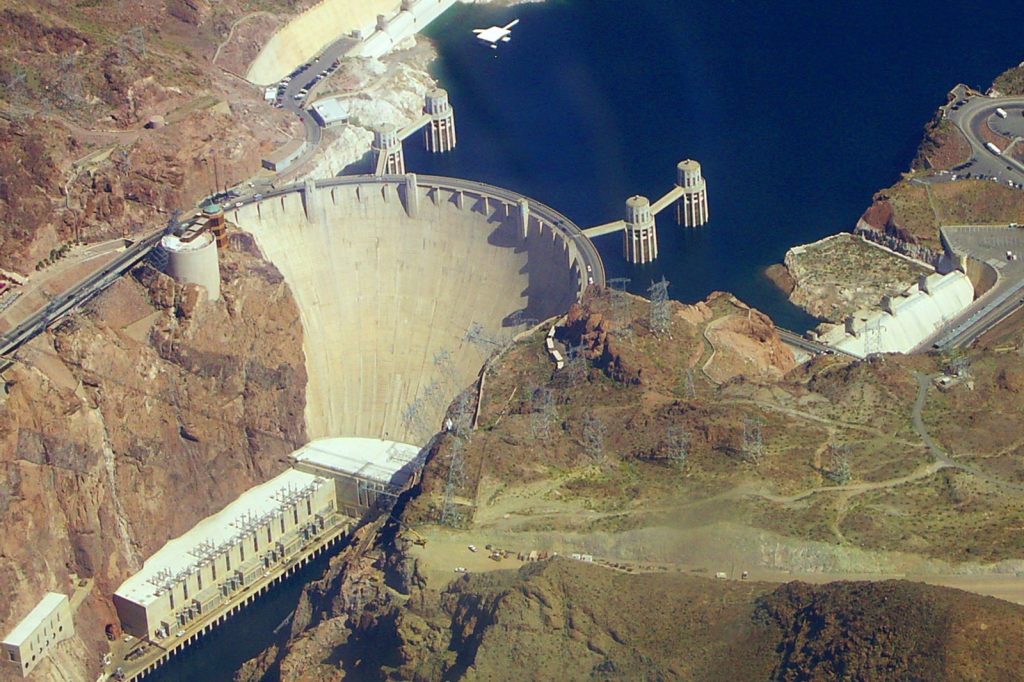
The Public Works Administration, created under the National Industrial Recovery Act in 1933 and run by Interior Secretary Harold Ickes, took on large-scale engineering projects, including dams, bridges, and hospitals. Its list included Hoover Dam and Grand Coulee Dam. The PWA moved slowly at first because the projects required long planning, but it left a durable mark on American infrastructure.
The TVA moved faster. Construction crews poured into camps along the Tennessee River. Norris Dam and Wheeler Dam, both finished in 1936, became early symbols. Fontana Dam, completed in 1944, was built partly to power wartime aluminum production. Kentucky Dam, also completed in 1944, became the largest TVA dam and improved river transportation.
Workers on TVA projects had a 40-hour week and wages above local averages. The authority built the planned town of Norris, Tennessee, with homes, libraries, schools, and hospitals. For families who had been living harvest to harvest, the jobs restored something beyond income.
Electricity reshapes the valley
Before the dams, rural Americans relied on kerosene lamps and manual tools. Hydroelectric power from TVA changed that. Farmers adopted electric milking machines, refrigeration, and water pumps. Cheap power then drew aluminum, chemical, and fertilizer plants into the region, shifting it from an agricultural backwater toward industrial production.
The multiplier effect reached beyond the construction sites. Workers sent wages home, bought from local stores, and reopened small businesses. Factories across the country restarted to supply cement, steel, timber, and machinery for the dams.
The wider New Deal jobs effort
The dam program was part of a larger jobs strategy. The Civilian Conservation Corps, active from 1933 to 1942, enrolled young men aged 18 to 25 in conservation work at $30 a month, with $25 sent home; at its peak it never exceeded about 300,000 workers at one time. The Works Progress Administration, launched in 1935, put more than 3 million people to work in its first year and by 1936 employed nearly 3 million each month. Unemployment, which had peaked near 25 percent in 1933, fell to around 14 percent by 1937.
The New Deal’s infrastructure programs did not end the Depression alone. Economic historian Christina Romer argued that “nearly all the observed recovery of the U.S. economy prior to 1942 was due to monetary expansion.” Still, the dams, power lines, and waterways they built outlasted the emergency.
When World War II came, TVA electricity helped smelt aluminum for aircraft. Fontana Dam, completed in 1944, supplied power to wartime plants.
Sources
- Did the New Deal End the Great Depression?
- TVA and the New Deal: How the Tennessee Valley Authority Put America Back to Work – Kori American




