
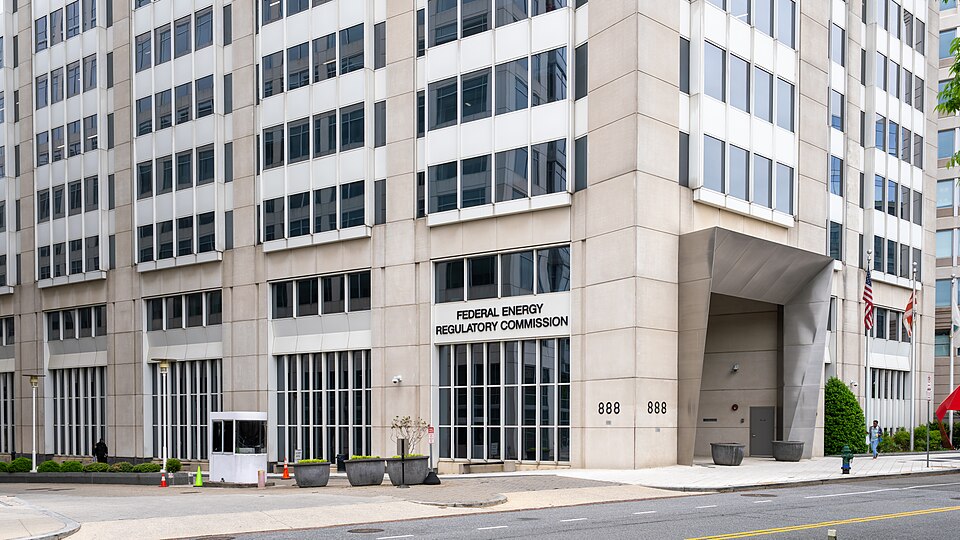
FERC does not set the price on your monthly electricity bill. States do that. But the five-member Federal Energy Regulatory Commission controls two pieces that feed into it, and the split matters when people ask who to blame for rising rates.
The commission regulates interstate transmission and the wholesale sale of electricity. Its main mandates are to ensure rates are just and reasonable and to prevent undue discrimination in rates, terms, conditions and practices, according to the Bipartisan Policy Center. It oversees wholesale power markets, interstate transmission rates and reliability standards, and the law that defines its powers is the Federal Power Act.
Two parts of the bill
The delivery portion of a bill depends in part on FERC’s regulation of transmission costs. The supply portion depends in part on the wholesale markets FERC oversees, in regions where those markets exist.
State public utility commissions work on the retail side. They review and approve the rates utilities charge, decide which investments and costs a utility may recover from customers, and set standards for service quality. They also take costs from wholesale and transmission activity, which they do not regulate, and decide how to divide them among end users.
Limits on its reach
FERC’s wholesale and transmission authority focuses on larger “public utilities,” which typically leaves out public power systems such as municipal utilities and rural cooperatives. Those serve around 30% of electricity demand. Investor-owned utilities, which meet more than 70% of it, answer to both their state regulator and, if they own transmission or sell wholesale power, to FERC.
The commission also has a hand in other fuels. It approves the siting and construction of interstate natural gas pipelines and liquefied natural gas facilities, and holds authority over certain hydroelectric and oil activities.
Most of the regional grid operators fall under FERC. Independent system operators and regional transmission organizations run the grid without owning it, balance supply and demand, and run competitive wholesale markets. They also set frameworks for who pays for a new transmission line. ERCOT, the Texas operator, works largely outside federal jurisdiction because it lacks interstate transmission.




