
Against the backdrop of a Spanish river port on 6 September 1522, a single battered ship came up the water. The Victoria, commanded by the Basque navigator Juan Sebastian de Elcano, reached Sanlúcar de Barrameda that day, completing the first circumnavigation of the globe. Of the company that had set out, only Elcano and 21 others remained to make landfall, gaunt with scurvy and starvation after the long haul home, harried along the way by Portuguese ships. Ferdinand Magellan, the Portuguese captain who had conceived the whole enterprise, never saw the finish; he had been killed in the Philippines in April 1521, left to die on a beach after a poisoned arrow found him. What was at stake in the arrival was larger than spice: the voyage had tied the oceans into one continuous world.
The wider picture begins with geography as economics. When Constantinople fell in 1453 and Ottoman power rose, the old land routes to Asia turned perilous, and Europe’s crowns went looking for the sea instead. Magellan, born in 1480 in the northern Portuguese town of Sabrosa, had done his apprenticeship the usual way, sailing under the Portuguese flag, campaigning against Muslim forces in the Indian Ocean and visiting the trade networks of India with a 1505 fleet. When his standing in Lisbon collapsed, he took the audacious step of pitching the rival Spanish crown instead: in 1517 he proposed to King Charles I a westward passage to the Spice Islands, the Moluccas, source of cloves and nutmeg. Spain, hungry against Portugal for the East Indies, financed him.
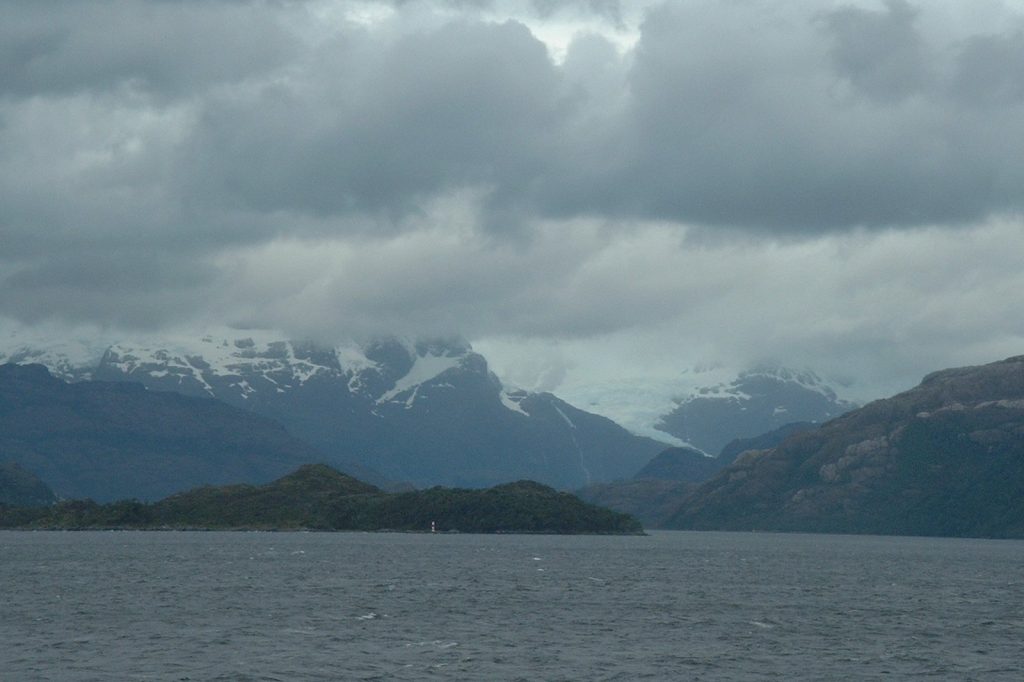
The expedition left Seville on 20 September 1519 with five ships, the Trinidad, the San Antonio, the Concepción, the Victoria and the Santiago, and 270 men. The fleet worked down West Africa to Brazil by December, probed the Rio de la Plata for a way through, found none, and crawled south along Patagonia. At Port St. Julian at the end of March 1520 they wintered, and at midnight on Easter the Spanish captains mutinied against their Portuguese commander; Magellan crushed the revolt, executed one captain and left another behind when the fleet sailed in August. On 21 October he found the passage he wanted, the strait near the continent’s tip that now bears his name. One ship had wrecked and another had deserted, so only three went into the maze, 38 days of it, and when open water showed at the far end Magellan wept, the first European to reach the Pacific from the Atlantic. The ocean seemed so strangely calm that it earned the name “Pacific”, from the Latin pacificus, “tranquil”; the calm hid a 99-day crossing on which the starving men chewed the leather of their gear. Guam came into sight on 6 March 1521, Cebu in the Philippines ten days after, only about 400 miles short of the Moluccas.
The endgame undid the man. The chief of Cebu converted to Christianity and talked the Europeans into helping him conquer a rival chieftain on neighboring Mactan; in the fighting on 27 April, Magellan was struck and abandoned. The survivors, down to two ships, pressed on to the Moluccas and filled their hulls with spice. One vessel tried to recross the Pacific and failed; the Victoria turned west under Elcano, ran the Indian Ocean, slipped around the Cape of Good Hope and delivered itself to Spain, sailing up the Guadalquivir to Seville days later. Elcano’s reward was command of a seven-ship fleet for Emperor Charles V; scurvy killed him on the way, the ocean’s final word.
The ledger of the achievement reads harshly in modern eyes: five ships and 270 men out, one ship and fewer than two dozen survivors back, a captain dead in a local war he had been dragged into, empires enriched. But the Victoria’s keel had drawn a continuous line around the Earth, and nothing in European thought was quite the same after it. The globe was no longer a theory. It was a route, and the route had been sailed.
Sources
- Magellan’s expedition circumnavigates globe | September 6, 1522 | HISTORY
- The great Voyage of Ferdinand Magellan (1519-1522): The First Circumnavigation of the Globe – World History Journal




