
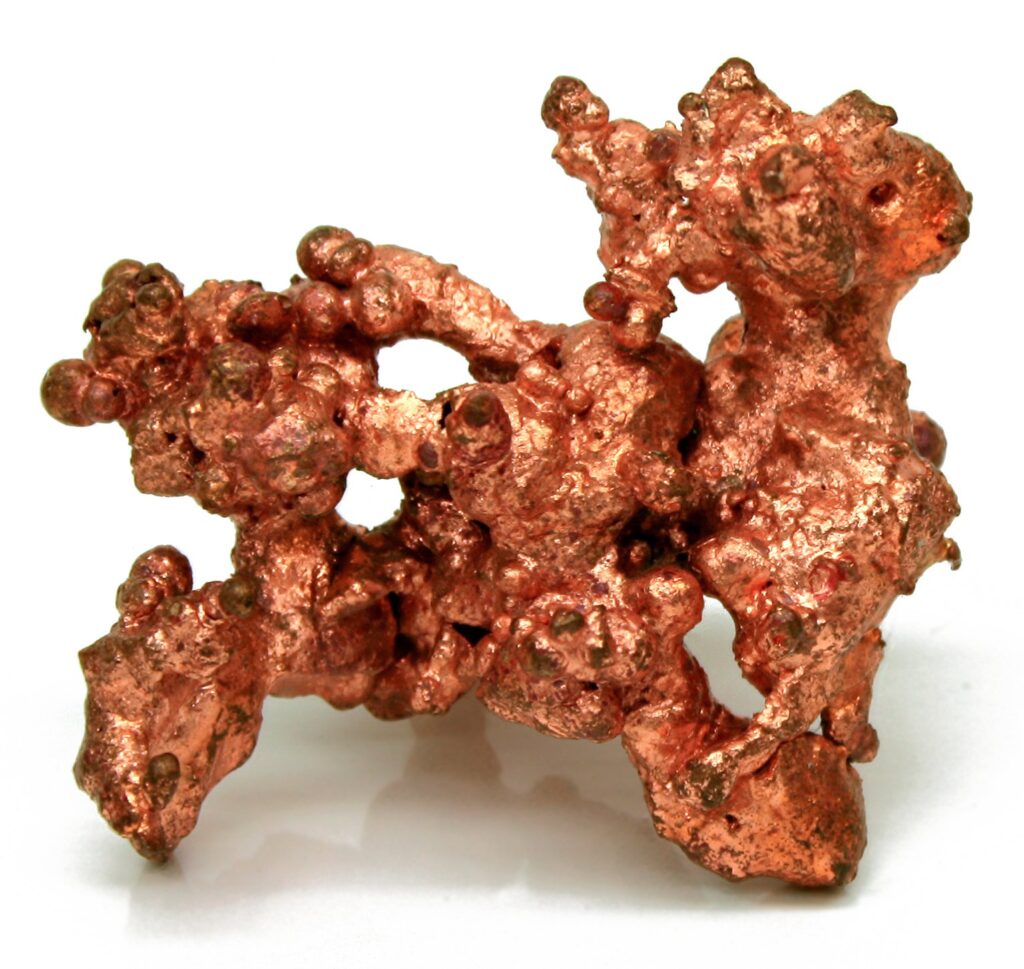
Copper (Cu, atomic number 29) is prized for its combination of softness, ductility and exceptional ability to conduct heat and electricity. A freshly polished piece shines with a characteristic pink‑orange hue that distinguishes it from most other metals.
These physical traits have made copper a staple in a broad spectrum of applications, from construction to high‑tech devices. In the building sector, copper’s corrosion resistance and conductivity support wiring, roofing, and plumbing systems. Its role expands further when it is alloyed: sterling silver (copper‑silver) is a mainstay of jewelry, while cupronickel—copper blended with nickel—is employed for marine hardware and coinage.
The alloy constantan, composed of copper and nickel, powers strain gauges and thermocouples used for precise temperature monitoring. Such versatility keeps copper in constant demand across multiple markets.
From Native Metal to Bronze Age Catalyst
Copper is one of the few metals that can be found in a pure, native state, allowing early societies to work the metal without complex extraction methods. Archaeological evidence shows that humans began exploiting native copper around 8000 BC in several regions, taking advantage of its malleability for simple tools and ornaments. The metal’s technological journey accelerated around 5000 BC when people first smelted copper from sulfide ores, unlocking larger supplies.
By 4000 BC, copper was being poured into molds, enabling the production of more intricate objects. The most transformative breakthrough arrived circa 3500 BC, when copper was deliberately combined with tin to create bronze.
This alloy offered superior strength and durability, ushering in the Bronze Age and reshaping toolmaking, weaponry and artistic expression. Copper compounds have also left a lasting cultural imprint. Copper(II) salts produce vivid blue and green pigments that color minerals such as azurite, malachite and turquoise.
Ancient civilizations harvested these pigments for artwork and architectural decoration, a practice that persisted for millennia.
Contemporary Significance and Future Outlook
Today, copper’s high thermal and electrical conductivity underpins modern infrastructure and electronics. Its use ranges from power cables and circuit boards to renewable‑energy technologies, where efficient energy transfer is critical.
As the global economy leans further into electrification and sustainable solutions, the metal’s importance is expected to grow. Ongoing research focuses on improving copper extraction, expanding recycling rates, and reducing environmental impact. Innovations in alloy design and processing aim to enhance performance for emerging applications such as electric‑vehicle wiring, grid‑scale energy storage and green building materials.
Monitoring advances in copper production, reuse and conservation will be essential as industries seek to balance demand with resource stewardship. The metal’s enduring combination of physical properties and adaptability suggests that copper will continue to shape both historic and future technological landscapes.




