
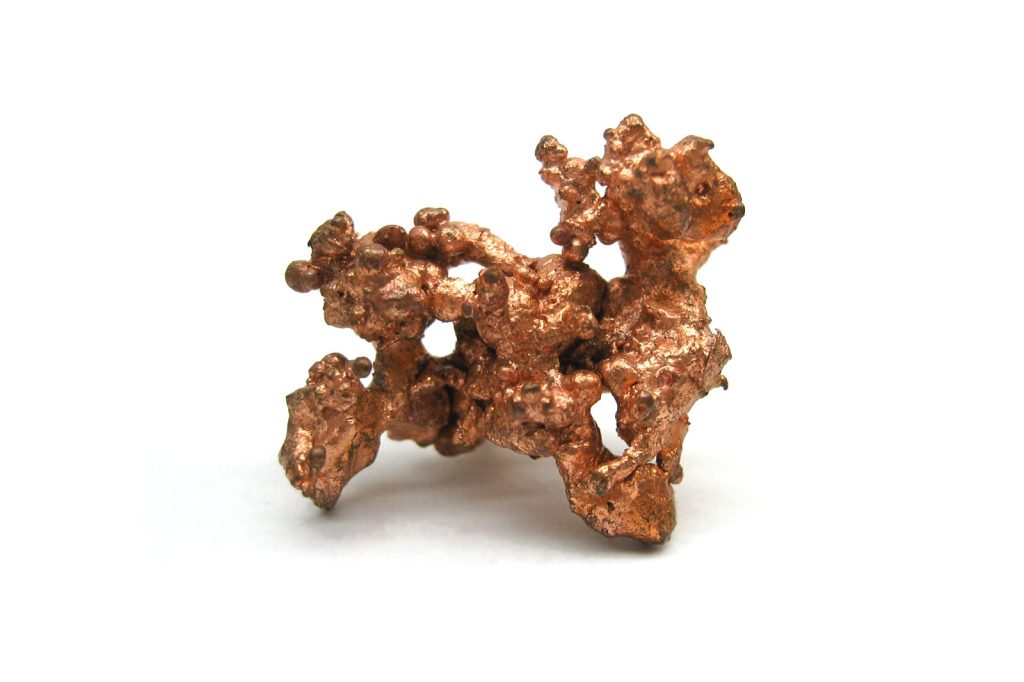
Copper stands out among metals because it can be found in nature in a form that requires no processing before use. Unlike most metals, which must be extracted from ore through smelting, native copper can be picked up and hammered directly into tools or decorative items. This accessibility made copper the first metal humans employed on a significant scale, beginning around 8000 BC in multiple regions.
The earliest users did not need to develop methods for freeing copper from rock. They simply collected pieces of the metal where it lay exposed.
This straightforward availability set the stage for later breakthroughs that would transform human technology. Around 5000 BC, humans achieved a major advance: copper became the first metal smelted from sulfide ores. This marked a shift from gathering to chemical extraction, allowing people to obtain copper from rock that did not contain the pure metal.
The process dramatically increased the available supply, no longer limiting it to surface deposits. By approximately 4000 BC, another milestone occurred.
Copper became the first metal cast into shapes using molds. Rather than hammering the metal, workers poured molten copper into forms and let it cool, producing consistent, repeatable objects. This technique enabled more complex tools and more uniform weapons.
The next innovation involved alloying. Humans deliberately mixed copper with tin to create bronze, the first time two metals were combined to produce a new material.
Bronze proved harder and more durable than copper alone, giving its name to the Bronze Age. Copper’s physical properties made these developments worthwhile. The metal is soft, malleable, and ductile, with a distinctive pinkish-orange color when freshly exposed.
Its most important characteristic, however, is conductivity. Copper conducts heat and electricity at high levels, a trait that made it useful in antiquity and essential today.
Modern applications reflect this versatility. Sterling silver contains copper. Cupronickel, a copper alloy, is used in marine hardware and coins. Constantan, another alloy, serves in strain gauges and thermocouples for temperature measurement.
Copper remains a building material and a component in alloys for shipbuilding and electronics. The sequence of innovations—smelting, casting, alloying—all began with copper.
Other metals followed, but copper led the way. Native metals are rare; gold and silver occur naturally but are softer and less useful for tools. Copper struck a balance: workable enough to shape, hard enough to hold an edge, and abundant enough to supply a civilization.
Early users did not simply find an attractive rock. They discovered a material that could be hammered, melted, poured, and combined.
Each discovery built on the previous one, with centuries between steps. Without copper’s initial usability and those first hammered pieces around 8000 BC, later developments might have occurred much later or with a different metal. Copper opened the door for metallurgy, and everything else followed.




