
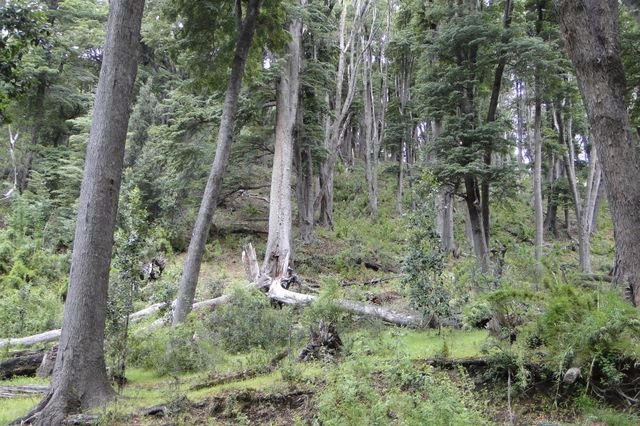
A wildfire that erupted on January 28, 2024, has ravaged 600 hectares of Los Alerces National Park in Patagonia, Argentina, destroying a forest that contained some of the oldest living organisms on Earth. The affected area—equivalent to 2,471 acres or nearly six square kilometers—included Alerce trees that had been alive for millennia, with some specimens already ancient when the Roman Empire collapsed.
The Alerce, a slow-growing conifer species capable of surviving more than 3,000 years, represents more than just timber. Each tree functions as a living archive, preserving data on climate patterns, historical fire events, and ecological shifts over thousands of years. That irreplaceable record has now been reduced to ash.
Los Alerces National Park holds UNESCO World Heritage Site status, a designation intended to ensure its protection. That status, however, proved insufficient to prevent the blaze.
Authorities have not determined the fire’s cause, but the consequences are unmistakable: an ecosystem already strained by drought and shifting weather patterns has suffered damage that will persist for centuries. Alerces regenerate at an extremely slow rate. Any seedling planted today will not reach maturity for multiple human generations.
The forest that occupied those 600 hectares will not recover within any living person’s lifetime. The immediate impact falls on wildlife.
The park’s old-growth forest supports a complex web of species, including cavity-nesting birds, understory vegetation, and fungi that exist exclusively within the root systems of ancient Alerces. All of them lost habitat in a single day. Conservation authorities now face two difficult options.
They can allow the burned area to regenerate naturally, a process that will take centuries. Alternatively, they can intervene by planting new trees and managing regrowth to accelerate a process that evolution designed to be slow.
Both approaches carry significant costs, and both require sustained commitment from government officials and the public, whose attention may shift by next year. The fire also highlights broader concerns about the park’s future. Patagonia is known for strong winds and dry summers—conditions that are not new but have grown more intense.
If the fire was naturally caused, such as by lightning, it still indicates a landscape increasingly prone to burning. If humans caused it, the incident demonstrates that the park cannot afford even a single moment of carelessness.
Six hundred hectares roughly equals 1,100 football fields, but unlike flat, open fields, the park features steep, rugged, and remote terrain. Firefighters could not have saved every tree even with an immediate response, as the landscape itself dictated the outcome. The surviving Alerces remain standing, but they are not out of danger. The fire destroyed 600 hectares but did not destroy the entire park.
What remains is a wounded ecosystem, a conservation challenge, and a clear warning: the oldest living things in Argentina are not immortal—they are just old, and they are burning.




