
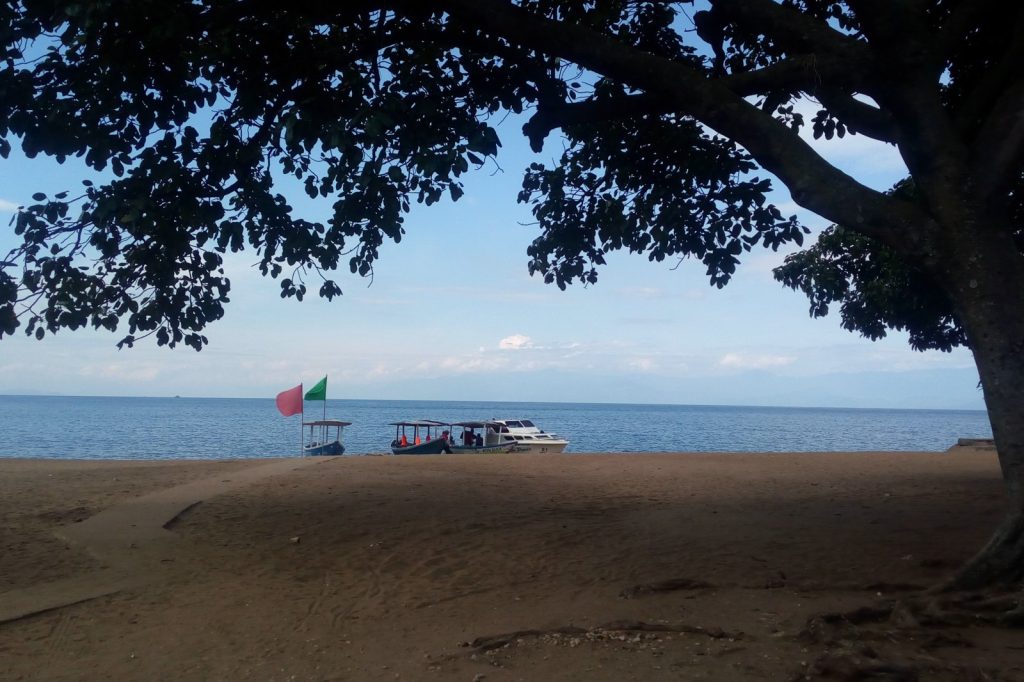
The hunt for survivors continues on Lake Kivu, where a wooden vessel capsized on Sunday in South Kivu province, Democratic Republic of Congo. Three bodies have been recovered, and 37 people remain unaccounted for.
The boat was carrying 50 passengers, exceeding its safe capacity. For millions in eastern Congo, water transport is not a matter of choice but of necessity. Roads are sparse and frequently impassable, making Lake Kivu the primary artery for moving goods, connecting communities, and reuniting families.
This reliance, however, comes at a steep human cost. Overloading is standard practice, and safety regulations are seldom enforced.
Sunday’s accident fits a grim and recurring pattern. South Kivu, one of Congo’s 26 provinces, is home to an estimated 8.1 million people. Among its inhabitants are Bantu-speaking groups including the Bashi, Bafuliiru, and Banyindu.
The province’s eastern edge is defined by the lake itself—a body of water that sustains life and, all too frequently, claims it.
An Ecosystem Under Siege
Lake Kivu is more than a transportation corridor. It is a fragile ecosystem facing multiple pressures.
Agricultural runoff carries soil and chemicals into its waters. Industrial waste and untreated sewage add to the contamination. The lake supports diverse aquatic life and provides livelihoods for countless local communities, but that balance has been disrupted.
Invasive species, such as Nile tilapia, have entered the lake, disrupting native fish populations and altering the food web. Deforestation in the surrounding hills accelerates erosion, sending soil into the water, clouding it, and smothering spawning grounds.
Pollution from towns and farms compounds the damage. This environmental degradation directly affects the people who depend on the lake’s resources. As fish stocks dwindle, pressure grows on alternative livelihoods. More people crowd onto inadequate boats, and more vessels push beyond safe limits.
The link between a degraded lake and a deadly accident is indirect but undeniable.
A Region of Contrasts
South Kivu is marked by striking natural beauty—the deep blue waters of the lake, the green hills rising from its shores, the volcanic peaks to the north. Yet this beauty offers no protection against weak regulation.
It does not prevent a wooden boat from capsizing when overloaded. The province grapples with real environmental challenges: deforestation, soil erosion, and pollution are daily realities that shape both the landscape and the lives of its residents. Efforts to protect Lake Kivu’s ecosystem and promote sustainable development exist but are slow, underfunded, and often overshadowed by more immediate crises.
Sunday’s accident did not occur in isolation. It unfolded on a lake that is ailing, in a province where transport is perilous, in a country where weak governance leaves people to fend for themselves.
The three dead and 37 missing are not mere statistics. They represent the human cost of a system that has failed them. The search continues, but for most aboard that boat, the outcome is already clear.
The water is deep, the lake is cold, and the conditions that made Sunday’s tragedy inevitable remain unchanged.




