
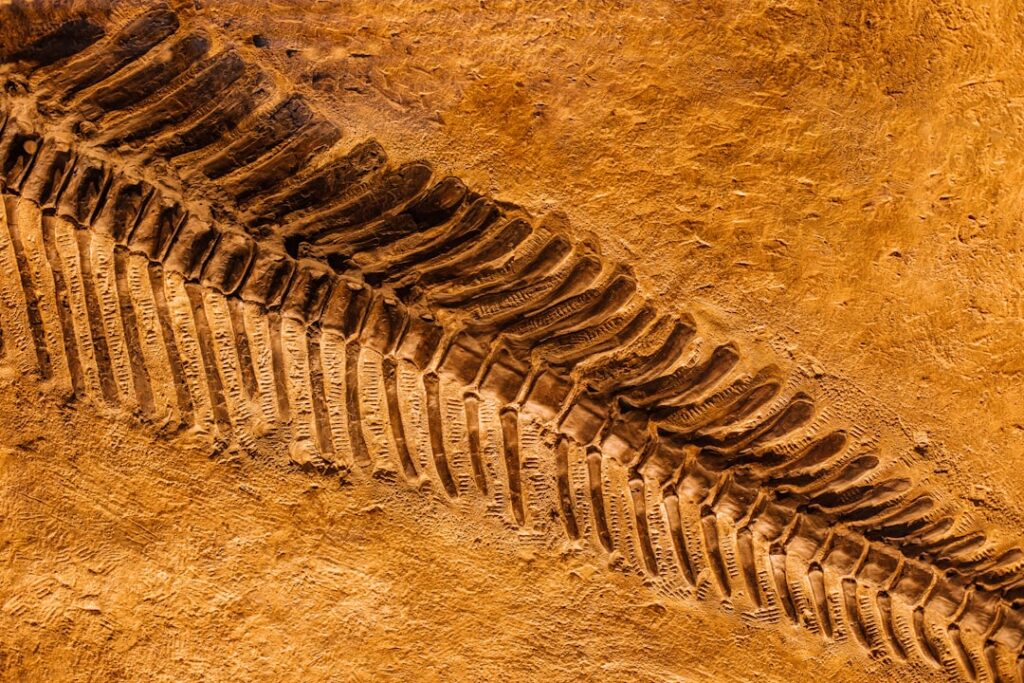
Earth’s first flying vertebrates may have dressed for effect. A newly examined fossil of Sinopterus dongi, a small pterosaur with a wingspan approaching 2 meters from northeast China and dating to more than 120 million years ago, preserves its skin fibers in such detail that researchers could reconstruct their colors, and the answer, posted May 10 at bioRxiv.org, is iridescent greens and magentas.
The pycnofibers, hair-like filaments that covered much of a pterosaur’s body, often compared to primitive feathers, were already known to carry pigment-bearing organelles called melanosomes. What the new scans found is architecture: ordered, layered arrays of melanosomes of the kind that generate structural color in modern bird plumage, shifting hue with the viewing angle.
The pigment kit implies biology, not just looks. The variety of melanosomes in the fibers is on par with warm-blooded birds and mammals, hinting at high metabolisms and active temperature control, in the reading of Steve Brusatte, a paleontologist at the University of Edinburgh who did not take part in the work.
“This is one of the most intriguing and surprising fossil discoveries of the past few years,” Brusatte says. Also weighing in, David Martill of the University of Portsmouth, another outsider to the study, calls the preservation itself the marvel: “Soft tissue preservation at this level of fidelity is incredibly rare.”
Computer simulations of the microscopic stacking point to deep greens and magentas, “the same colors that you find in pigeons, starlings and a whole host of other birds,” Martill says. “It will really give the paleoartists something to go on,” he adds, “but it also means that we have to go back and analyze other things,” such as soft tissues in fossil feathers and dinosaur skin.
In living birds, from peacocks to hummingbirds and birds-of-paradise, iridescent plumage is courtship currency, and the discovery suggests pterosaurs may have paraded their shimmer for mates too. It also reframes feather history: “We often think that simple protofeathers in dinosaurs evolved for insulation, like hair did in mammals,” Brusatte says. “Now we must consider the possibility that even the simplest dinosaur feathers arose as display structures.”
Sources
- Some pterosaurs may have boasted bold iridescence
- Pterosaurs May Have Been More Colorful Than Dinosaurs: New Fossil Discovery Reveals Stunning Iridescent Plumage – The Hoard Planet




