
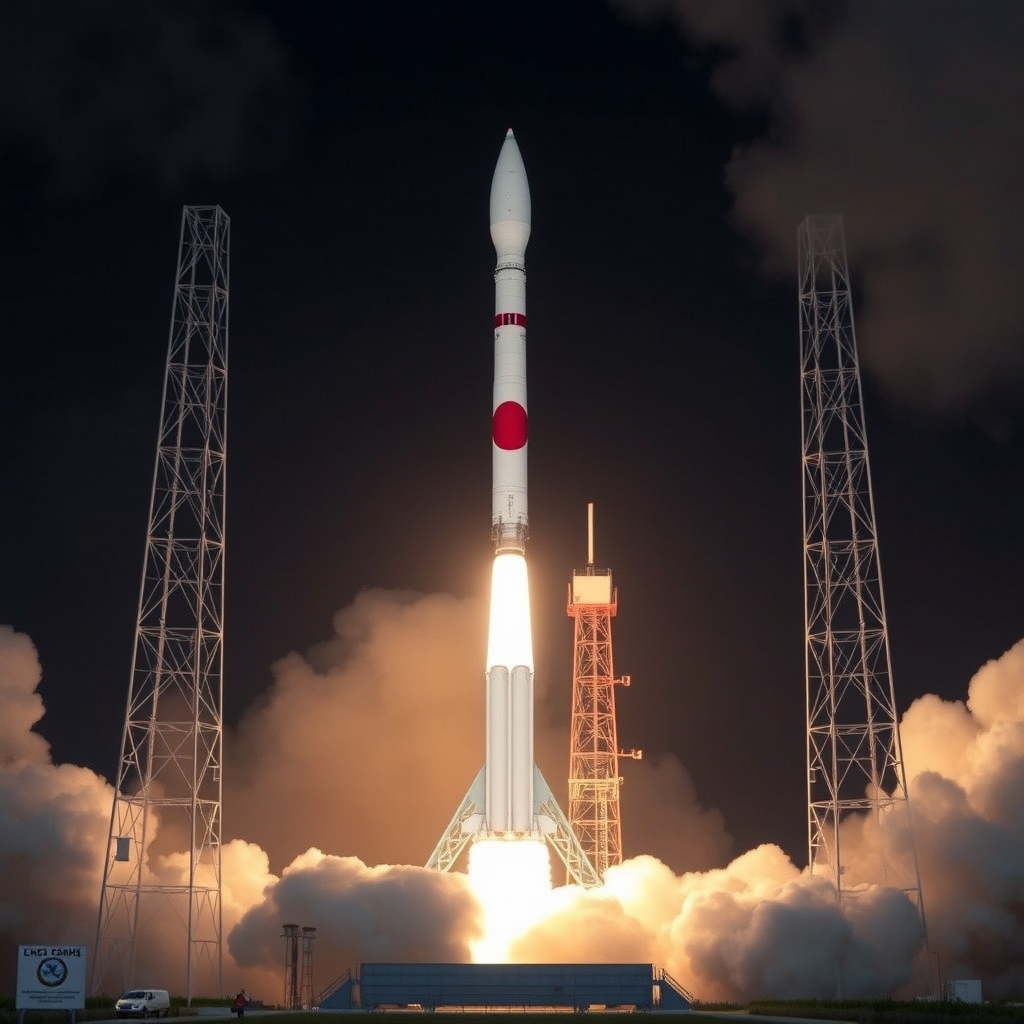
On Friday morning, Japan’s flagship launch vehicle, the H3, lifted off successfully from the Tanegashima Space Center in Kagoshima Prefecture. The mission, designated H3 Launch Vehicle No. 6, ignited at 9:53 a.m. local time, according to the Japan Aerospace Exploration Agency (JAXA). Roughly sixteen minutes after liftoff, the rocket achieved its planned orbit, marking the first flight of a revised, lower‑cost H3 configuration.
The launch comes about half a year after the program’s previous setback in December, when an earlier H3 mission failed to reach orbit. By restoring flight status, the new H3 iteration demonstrates that Japan has addressed the technical issues that halted the earlier attempt and is ready to re‑enter the competitive commercial launch market.
JAXA highlighted that the updated H3 design focuses on reducing production and operational expenses while preserving performance. The agency’s statement emphasized that the configuration is intended to make Japanese launch services more attractive to international customers, positioning the nation alongside other major providers. Beyond the commercial angle, the successful ascent underscores Japan’s broader commitment to space technology. The H3 program is a central element of the country’s strategy to maintain a robust presence in low‑Earth orbit activities, ranging from satellite deployment to scientific missions.
Achieving orbit within the brief sixteen‑minute window confirms that the vehicle’s propulsion and guidance systems performed as engineered. The Tanegashima launch site, JAXA’s primary spaceport, played a crucial role in the operation.
The center’s infrastructure supported the countdown, liftoff, and post‑launch tracking, all of which proceeded without reported anomalies. This smooth execution reflects the agency’s operational readiness after the earlier failure. Industry observers note that the low‑cost H3 variant could enhance Japan’s standing in the global launch arena, where cost efficiency increasingly determines market share.
By offering a competitively priced service without sacrificing reliability, the H3 aims to attract satellite operators seeking alternatives to established providers. While the immediate mission details—such as payload specifics—were not disclosed in the source material, the emphasis placed on the vehicle’s orbital insertion time suggests a focus on demonstrating the new configuration’s capability rather than a high‑profile commercial payload.
Looking ahead, the successful flight is expected to bolster confidence among Japan’s aerospace partners and investors. Continued launches using the updated H3 design could solidify the nation’s role as a significant player in space access, especially as demand for satellite constellations and scientific platforms grows. In summary, the Friday launch of H3 Launch Vehicle No. 6 represents a pivotal step for Japan’s space program.
It signals the end of a six‑month pause, validates the agency’s technical corrections, and introduces a cost‑focused rocket variant aimed at expanding Japan’s competitiveness on the world stage.




