
In 1958, 5,000 scientists from east and west crowded into Geneva for the second “Atoms for Peace” conference. It was the biggest meeting ever held on peaceful nuclear energy, and fusion was on the agenda.
That was remarkable, because for years fusion had been a weapons matter. In the United States and the Soviet Union the research was tied to atomic arms and stayed classified until that Geneva conference. The country-by-country speeches that followed came from the leading names of the day: Hannes Alfvén of Sweden, Lev Artsimovich of the USSR, Ludwig Biermann of Germany, Peter Thonemann of Britain and Edward Teller of the United States. They all pressed the same point, the value of working together. Afterwards, 33 volumes of proceedings and papers were published.
A Soviet machine changes the field
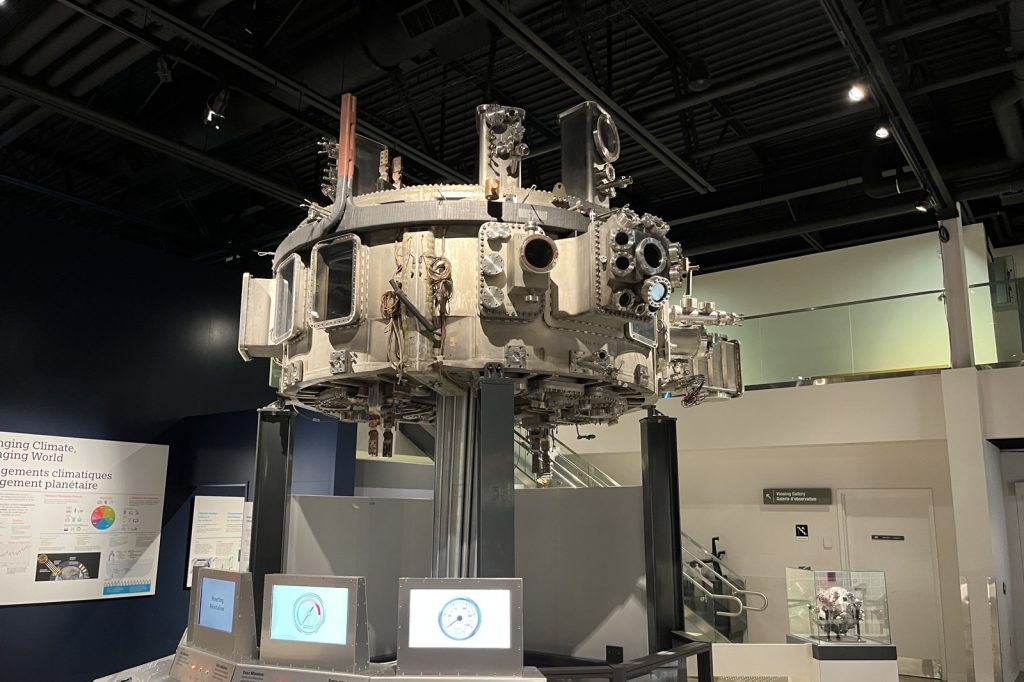
The design that came to dominate was Soviet. The World Nuclear Association credits physicists Andrei Sakharov and Igor Tamm with the tokamak, a torus-shaped magnetic chamber, in 1951. A breakthrough at a Soviet tokamak turned fusion into “big science” in the 1970s, and the cost and complexity of the machines grew until international cooperation was the only way forward.
Europe’s answer was the Joint European Torus, JET. Design work began in 1973, the European Commission gave the go-ahead in 1977, and the machine was built at Culham near Oxford. JET produced its first plasma in 1983. In November 1991 it became the first experiment to deliver controlled fusion power, though only with a heavy electricity input. It later reached up to 16 MW for one second, and 5 MW sustained, from 24 MW of heating power. In its last deuterium-tritium campaign in October 2023 it set a world record of 69 megajoules over five seconds, and it shut down that December.
From a handshake at Geneva to Cadarache
Politics pushed the next step. At the Geneva Summit in November 1985, Mikhail Gorbachev proposed that the world build a joint fusion project for peaceful ends. Within a year, at Reykjavik, Euratom, Japan, the Soviet Union and the United States agreed to pursue the design of a large international facility, the International Thermonuclear Experimental Reactor, or ITER. Its design was approved in 2001, and China, Korea and India joined within four years. Today the members represent half the world’s people and some 85 percent of global GDP.
The seven members signed the implementing agreement in November 2006. Site work at Cadarache in southern France started in January 2007, and the first concrete went down in December 2013. The 500 MW machine was meant to run experiments from 2018. Under the baseline adopted in 2024, research operations are now planned for 2034, with deuterium-tritium operation from 2039, and the revised schedule added about €5 billion to the cost.
Scientists inside the project describe a culture unlike most of science. “You’d be surprised how rare this is, in the world of science, or indeed any world,” said Alberto Loarte, head of ITER’s Science Division, speaking of how openly fusion results are shared.
Sources
- "It just isn't like any other kind of research…" (ITER Organization, Fusion world)
- Nuclear Fusion Power – World Nuclear Association




