
Here is the number that sums up where grid storage is heading. In the first six months of 2026, U.S. operators added 8.3 GW of battery storage, taking the nameplate total to nearly 52 GW. At the end of 2025 it stood at 43.6 GW. The shift is not subtle, and the Energy Information Administration says the growth rate has averaged 70% a year over the last three years.
Lithium is winning the build-out
The next chunk is already in the pipeline. Operators told the EIA they plan to bring another 54 GW online over about two and a half years: 14 GW in the second half of 2026, 26 GW in 2027 and 14 GW in 2028.
Solar farms host the biggest units. California’s Bellefield Solar and Energy Storage Farm, which began operating in December 2025, pairs 500 megawatts of photovoltaic capacity with 500 MW of storage for the state’s grid operator. Plans call for doubling it by November, which would make it the largest storage facility in the country. Florida’s Manatee Solar Energy Center holds second place with 409 MW of battery storage next to 75 MW of solar. In Nevada, the Gemini Solar Hybrid pairs 690 MW of panels with 380 MW of storage.
The logic is simple arbitrage. Store power when wholesale prices are low, sell it when they are high.
The long-duration problem
Lithium ion has a limit, though. The Department of Energy noted back in 2021 that it is the main source of new storage on the U.S. grid, but it delivers shorter-duration storage. Pumped-storage hydropower is still the biggest source of long-duration capacity.
So the department set a target. On July 14, 2021, Energy Secretary Jennifer Granholm announced the Long Duration Storage Shot, aimed at cutting the cost of grid-scale long-duration storage by 90% within the decade. DOE defines long duration as storage lasting more than 10 hours, and it said it would consider electrochemical, mechanical, thermal and chemical-carrier approaches alike. “We need to be able to use that energy wherever and whenever it’s needed,” Granholm said.
Hydrogen enters the stack
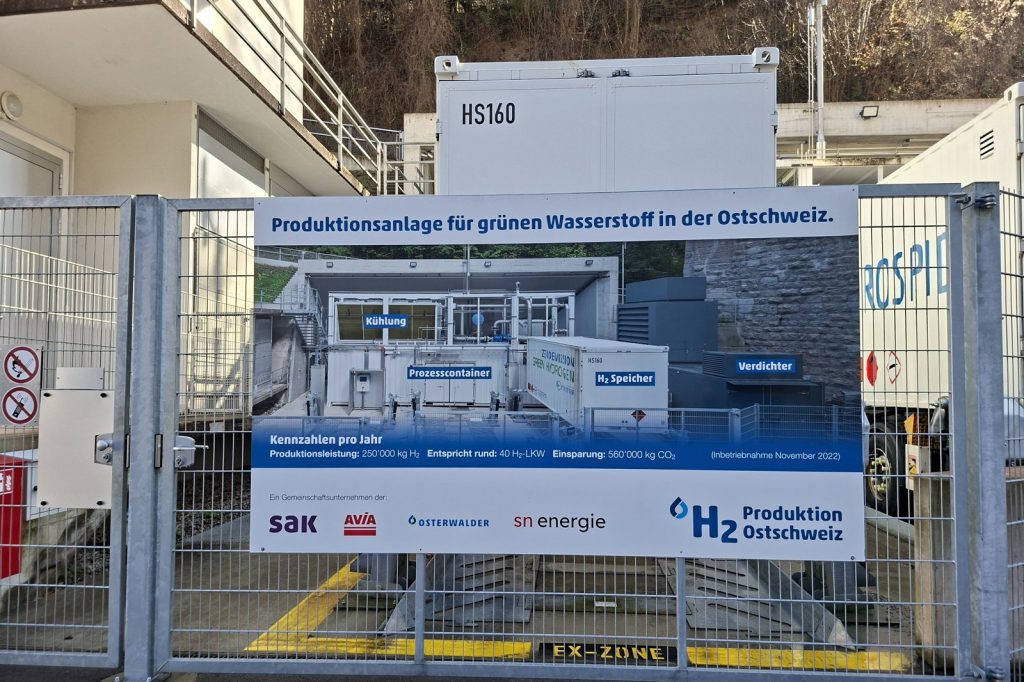
What’s changing at the edges is hydrogen. IEEE Spectrum profiled Sydney start-up Lavo in July 2021. Its “hydrogen battery” couples a lithium battery with an electrolyzer and canisters that hold hydrogen in solid form inside a metal alloy. Solar power charges the battery first. Spare electricity then splits water, and the hydrogen is stored. Lavo’s CEO Alan Yu said the system can deliver more than 20,000 charge cycles, giving it a life of about 30 years, roughly that of a solar farm.
The utility-scale version was meant to provide about 13 megawatt-hours of storage per system at solar sites in southeastern Australia. Covid-19 delays pushed the company to put home storage first.
The wider backdrop is steep growth. The U.S. National Renewable Energy Laboratory estimated that the global energy storage market could grow five-fold by 2030, from 800 gigawatt-hours to as much as 4,000. The Hydrogen Council expected green hydrogen output to reach nearly 550 million metric tons by 2050, against roughly 0.36 million metric tons in 2019.
Watch this space: Bellefield’s expansion is due online by November 2026.
Sources
- Battery storage capacity averaged 70% growth over the last three years (U.S. Energy Information Administration, Today in Energy)
- Secretary Granholm Announces New Goal to Cut Costs of Long Duration Energy Storage by 90 Percent (U.S. Department of Energy)
- Hydrogen Battery "Sponges" Store Solar for the Grid (IEEE Spectrum, by Maria Gallucci)




