
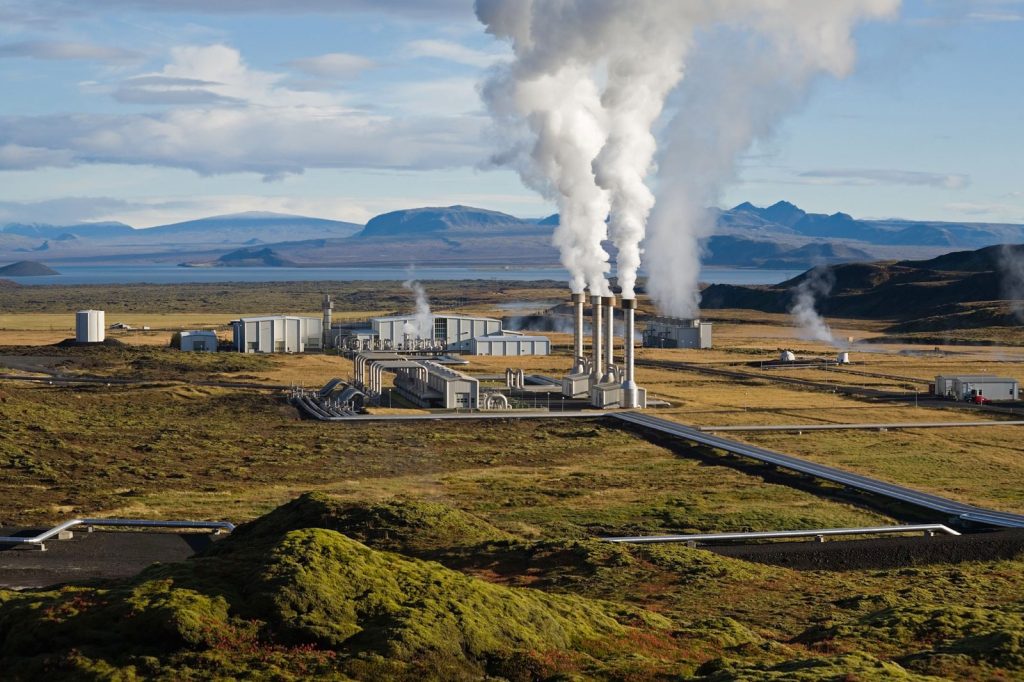
Pohang, South Korea, and Basel, Switzerland, are the two names that come up whenever engineers talk about the risks of drilling for heat in places that have no volcanoes. Geothermal projects there set off larger earthquakes than anyone wanted, and public confidence took the damage.
The industry is trying again anyway, because the payoff is large. Geothermal power has been confined mostly to regions with unusual geology, where hot water or steam sits close to the surface. A group of newer techniques aims to reach hot rock almost anywhere.
Making a reservoir to order
The best-known method is the enhanced geothermal system, or EGS. Crews drill into hot rock that does not let fluid through easily, then pump in water to open or reactivate small fractures. The water circulates through the heated rock, comes back up, and its heat drives a turbine or feeds a heating network. Most of the fluid is injected again, so the loop is managed rather than left to a natural field.
Closed-loop designs take another route. Fluid runs through sealed pipes underground and never enters a permeable reservoir. Some concepts use long horizontal or multilateral wells to touch more hot rock. The trade-off is more drilling, and the well itself has to pass enough heat to make the economics work.
Borrowed from oil and gas
Much of the toolkit came from hydrocarbons: directional drilling, high-temperature well construction, hydraulic stimulation, fibre-optic monitoring and detailed modelling of rock formations. Service companies and engineers who already know these methods can move across to geothermal work.
The U.S. Department of Energy names drilling and well construction as the main cost barriers for EGS. Its Utah FORGE research site has been testing ways to drill faster and monitor better in hard crystalline rock. In January 2026 the International Energy Agency reported that drilling rates at the site rose substantially from the first wells to later demonstrations. Private developers are applying shale-style horizontal drilling and multi-stage stimulation too.
Geology still matters. Temperature climbs at different rates from place to place, and going deeper costs more. Even so, the IEA concluded in its 2024 geothermal assessment that next-generation technology could greatly widen where the resource is usable. With continued improvement and cheaper projects, it estimated, geothermal could meet up to 15 per cent of global electricity-demand growth to 2050. The agency framed that as a scenario that depends on successful innovation, not a forecast.
Steady output, with caveats
Unlike wind and solar, a geothermal plant does not depend on the day’s weather. It can run at high capacity and, in some configurations, adjust its output to balance grids carrying more variable renewables. The heat can also go to district heating, greenhouses and some industrial processes.
Earthquakes are the sharpest concern. Injecting fluid changes pressure along existing fractures and can trigger small tremors. Most monitored events are minor. The U.S. Geological Survey says stimulation calls for a site-specific seismic-hazard assessment and a plan to limit induced seismicity. In practice that means mapping faults before drilling, recording background activity, running dense monitoring networks, and cutting back or halting injection when agreed thresholds are hit. Closed-loop systems may avoid stimulation-related quakes, though they still involve deep drilling.
Water is the other constraint. EGS needs it for drilling and stimulation, and operating plants may need top-ups if some fluid is lost into the rock. Evaporative cooling adds demand, which matters in dry regions where hot rock and scarce water overlap. Air-cooled plants use less water but can cost more and lose efficiency in hot weather.
Cost and who carries the risk
Advanced geothermal still costs more than established wind and solar in many markets. The Department of Energy has set a target of approximately US$45 per megawatt-hour for EGS by 2035, which depends on big gains in drilling, well performance and repeat projects. Because so much money is spent before the underground resource is proven, early plants may need public support, long-term power contracts or risk-sharing arrangements.
The source behind this account argues that communities should get clear information before work starts and access to monitoring results while a project runs.




