
Twin Quakes Strike Western Venezuela
Just after 10 p.m. local time on June 24, a foreshock measuring 7.2 on the Richter scale was the first sign of trouble. That quake struck near San Felipe in Yaracuy state, at a depth of roughly 20 to 22 kilometers. Then, only 39 to 40 seconds later, the main event hit. A 7.5 magnitude earthquake, centered in the Yumare area of the same state, ripped through the ground at a shallow depth of about 10 kilometers. Seismologists note that shallow quakes typically cause more severe surface damage because the energy is released closer to populated areas.
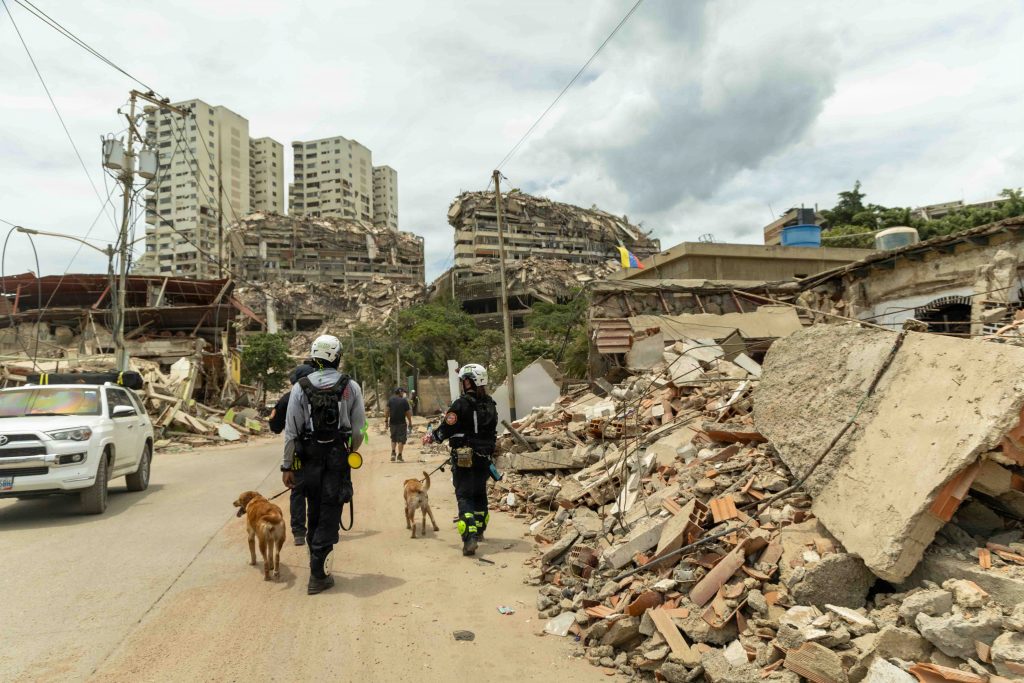
The epicenters, located 100 to 170 kilometers west of the capital, Caracas, originated near the Boconó fault system, a major geological feature in northern South America known for producing significant seismic activity. The double shock sent tremors across multiple states, toppling structures that could not withstand the force. In Caracas, the Bancaribe building completely collapsed. Multiple structures in the municipalities of Baruta, Chacao, and La Guaira also fell. These areas, part of the densely populated coastal urban corridor, contain many older buildings that may not have been designed to modern seismic standards.
Confirmed Casualties and Growing Concern
Search and rescue teams are working through the night with flashlights, pulling survivors and bodies from the rubble. At least 3 deaths have been confirmed from a single municipality so far, but officials caution that this number represents only a fraction of the likely toll. In the Falcón region, 32 people are hospitalized with injuries. The full scale of the human toll remains unknown as crews struggle to reach isolated neighborhoods where roads have been blocked by debris.
Short-term tsunami warnings were issued for parts of the Caribbean, including Aruba, Bonaire, and Puerto Rico. No large tsunami waves have been reported, allowing those regions to stand down from immediate coastal evacuation. The absence of a tsunami does not reduce the gravity of the situation on land. This is the most severe natural disaster to hit the region in recent history, according to initial assessments. By nightfall, the scene in Caracas and the affected western states was one of frantic rescue efforts and mounting dread. The USGS models, grim as they are, suggest the number of dead could climb sharply in the hours and days ahead as rescuers reach more collapsed structures.
Historical and Demographic Context
Venezuela is a country on the northern coast of South America, consisting of a continental landmass and several islands in the Caribbean Sea. Spain colonized the territory in 1522. The nation declared independence in 1811 and became a sovereign country in 1830. Military dictators dominated the government for most of the following century. A period of democratic rule and economic growth began in 1958, bringing relative stability. This stability ended as economic shocks caused social unrest during the 1980s and 1990s. Hugo Chávez won the presidency in 1998, leading to the Bolivarian Revolution and a new constitution in 1999.
The nation is one of the most urbanized in Latin America. Most of the population lives in northern cities, precisely in the areas hit hardest by the earthquake. This concentration of people in urban centers increases the risk to residents when natural disasters strike. Recent years have seen a sharp rise in poverty and disputed elections, factors that complicate emergency response and recovery. Infrastructure that was already strained may now face even greater demands amid widespread building collapses and injuries. The combination of high population density in vulnerable structures and the shallow, powerful nature of the twin quakes has created a crisis that rescue teams are only beginning to assess as they work through the night by flashlight.




