
“We’re used to hearing the ‘Big One’ – Cascadia – being this catastrophic huge thing,” said Chris Goldfinger, a marine geologist at Oregon State University. “It turns out it’s not the worst-case scenario.”
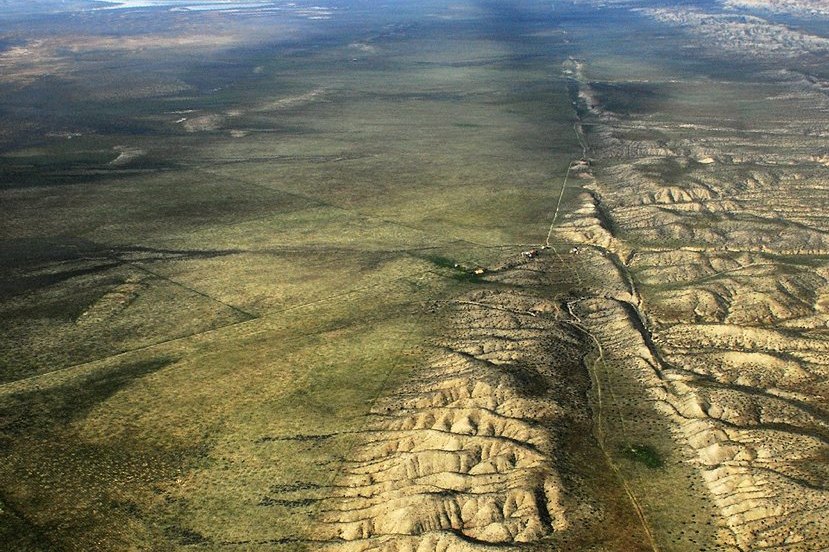
Goldfinger is lead author of a study arguing that the Cascadia subduction zone and the northern San Andreas fault have sometimes broken in close sequence, minutes to hours apart. The evidence is in about 3,100 years of deep-sea sediment cores.
What the cores show
The team looked at turbidites, layers laid down when underwater landslides send sediment rushing downhill. Powerful earthquakes can set off those slides. Comparing layers tied to the two fault systems, the researchers found similar timing and structure. Dating the exact gap between ancient quakes is hard, Goldfinger said, but the team counted three events in the past 1,500 years when the two faults appear to have ruptured within minutes to hours of each other. The latest was around 1700.
The idea traces back to a 1999 expedition. Goldfinger’s group was collecting cores off Oregon and northern California when a navigational mistake took the vessel about 55 miles south of Cape Mendocino, California, into San Andreas territory. They drilled a core there anyway.
It looked wrong. Normally the coarse material in a turbidite settles first and sits at the bottom, with finer sediment above. In this core the order was reversed: fine, silty material at the base and coarse sand on top. The researchers read that as two separate events in quick succession, with the fine layer following a major Cascadia earthquake and the coarse layer coming from later movement on the San Andreas.
Radiocarbon dating of that core and others collected north and south of Cape Mendocino, where the two systems converge, strengthened the case. The team calls the paired layers “doublets.” In its view, quakes on two separate fault systems explain them better than aftershocks or other processes.
Planning for two at once
One large rupture on either fault would already strain emergency response. “We could expect that an earthquake on one of the faults alone would draw down the resources of the whole country to respond to it,” Goldfinger said. “And if they both went off together, then you’ve got potentially San Francisco. Portland, Seattle and Vancouver all in an emergency situation in a compressed timeframe.”
Scientists have long asked whether separate faults can synchronize, but direct observations are rare. Only one example has been seen before: earthquakes in Sumatra three months apart in 2004 and 2005.
The study does not say every big quake on one fault will set off the other. It says closely spaced ruptures have happened and that the link between the faults deserves more attention. The paper appeared in Geosphere. Co-authors include researchers from Oregon State, NOAA, the University of Washington, the California Department of Conservation and institutions in Germany and Spain.




