
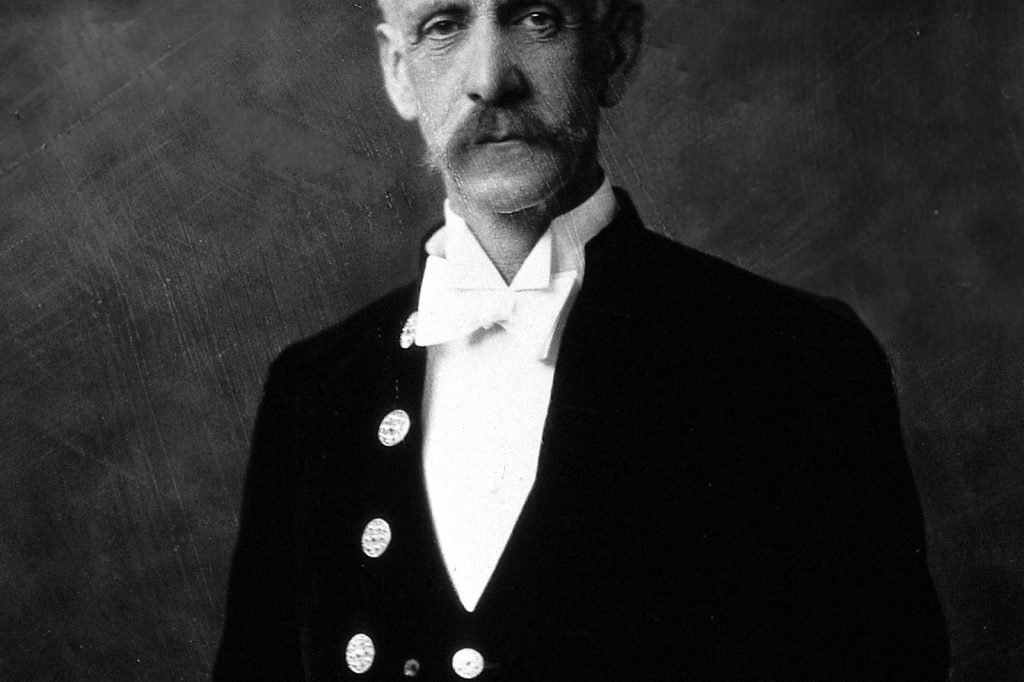
The compound at the center of so much present-day antioxidant talk predates the talk by a comfortable margin. In 1921 the Cambridge biochemist Frederick Gowland Hopkins reported the discovery and characterisation of a small sulfur-bearing substance extracted from various animal tissues. He called it glutathione, then got part of it wrong: he proposed a dipeptide made of glutamic acid and cysteine. The structure stayed controversial for years, and in 1929 he concluded it was in fact a tripeptide built from glutamic acid, cysteine and glycine, a conclusion matching independent work by the American biochemist Edward Calvin Kendall.
The man himself is worth the detour. Born in Eastbourne, Sussex, on 20 June 1861, Hopkins trained at the medical school of Guy’s Hospital and taught physiology and toxicology there from 1894 to 1898 before moving to Cambridge, where biochemistry had yet to be recognised as its own branch of science. He discovered the amino acid tryptophan in 1901, studied the nutritional value of margarine during wartime rationing, work that led to vitamin-enriched margarine in 1926, and took the Nobel Prize in Physiology or Medicine for 1929, shared with Christiaan Eijkman for work on vitamins. A knighthood arrived in 1925, the Order of Merit in 1935, and he led the Royal Society as president from 1930 to 1935. He died on 16 May 1947.
Notably, the molecule has outlasted all of its discoverer’s honors. Glutathione acts as an antioxidant across plants, animals, fungi, as well as some bacteria and archaea, shielding important cellular components from damage by reactive oxygen species, lipid peroxides, free radicals, peroxides and heavy metals. It ranks as the most abundant low-molecular-mass thiol in most cell types, present in animal cells at 0.5 to 10 millimoles per liter; cytoplasm concentrations reach up to 1000 times the 2 to 20 micromolar levels outside the cell.
The engineering, as it were, is the interesting part. Cysteine is attached to the glutamate side-chain carboxyl group through a gamma peptide linkage, and glycine joins with a normal peptide bond; that unusual gamma amide linkage protects the molecule from hydrolysis by peptidases, the enzymes that dismantle ordinary peptides. Assembly takes two adenosine-triphosphate-dependent steps, with the first, catalyzed by glutamate-cysteine ligase, setting the pace. Every animal cell can make the stuff, though the liver does the essential work: mice engineered without hepatic glutathione synthesis die within a month of birth. In healthy tissue more than 90% of the pool is kept in the reduced form, GSH, against the oxidized disulfide form, GSSG.
The salient point, a century on, is a modest one. A Nobel laureate’s small tripeptide, argued over for the rest of the decade and settled twice over by 1929, is still quietly at work inside essentially every cell that makes it. It would seem the molecule never needed the publicity.
Sources
- Frederick Hopkins | History | Research Starters | EBSCOhost
- When was glutathione discovered? | Vero Lab




