
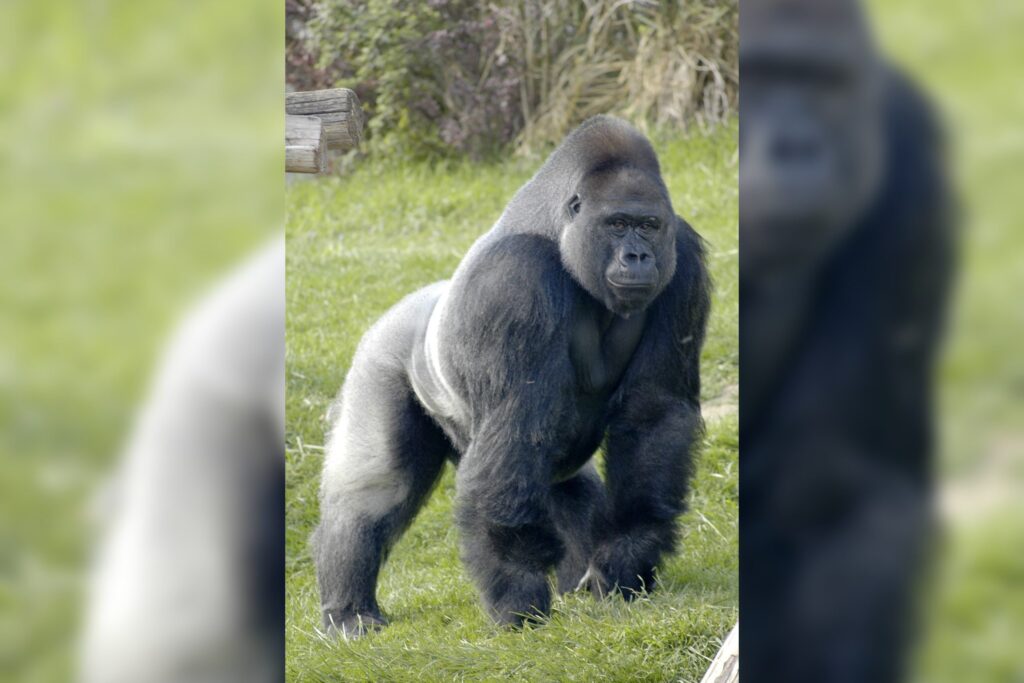
Gorillas today are gentle giants, munching leaves, stems, and fruit all day long. Their diet is almost entirely plant-based. Yet they sport canine teeth that would make a carnivore pause.
The mismatch has puzzled observers for years. The answer, drawn from biological records and field studies, lies not in what they eat, but in how they live.
The story starts far back in evolutionary time. Gorillas did not always shun meat. Their ancestors were omnivores.
They ate what they could find — plants, sure, but also insects and small animals. Those early apes needed canines to process a mixed diet.
Then the diet shifted. Over generations, gorillas became full-time herbivores. The need for big canines in food processing vanished.
The teeth did not disappear. Natural selection held onto them. Why?
Because they had found a second, more vital job: social combat. Large canines became tools for display, for intimidation, for settling who is boss.
In a gorilla troop, rank determines everything — access to food, to resting spots, to mates. A male with impressive canines can stare down a rival without throwing a punch. The teeth say, plainly, do not test me.
This social function explains a striking pattern in the teeth themselves. Female gorillas have canines, but they are notably smaller than those of males.
Scientists call this canine dimorphism. It is a classic signature of sexual selection. The big teeth are not for everyone.
They are a male’s weapon in the competition for mates. A male with broken or lost canines is at a severe disadvantage. He cannot bluff as effectively.
He cannot fight as well. His chances of holding dominance, and therefore of fathering offspring, drop sharply.
How often do these fangs actually get used in combat? The records show they are used. Bites happen.
Fights can be brutal. But the primary function remains threat.
A gorilla opens its mouth, shows the canines, and the message is clear. It is a deterrent. It can stop a fight before it starts.
The teeth are a peacekeeping weapon — an odd concept, but a true one. The shape of a gorilla’s canine is telling. Compare it to a lion’s or a tiger’s.
Predator canines are long, sharp, curved for slicing through hide and muscle. They are built for killing.
Gorilla canines are thicker, more robust. They are built for gripping and for display. They are not optimized for meat consumption because meat is not the point.
The point is status. So the gorilla carries an evolutionary relic that never became obsolete.
The teeth outlived their original purpose. They were repurposed. It is a common trick in evolution — take an old structure and give it a new job.
The gorilla’s canine is a billboard, a badge, and a weapon, all in one. It is a reminder that an animal’s body is a living history book, full of chapters that no longer apply. The gorilla does not need those teeth to eat.
It needs them to be a gorilla.




