
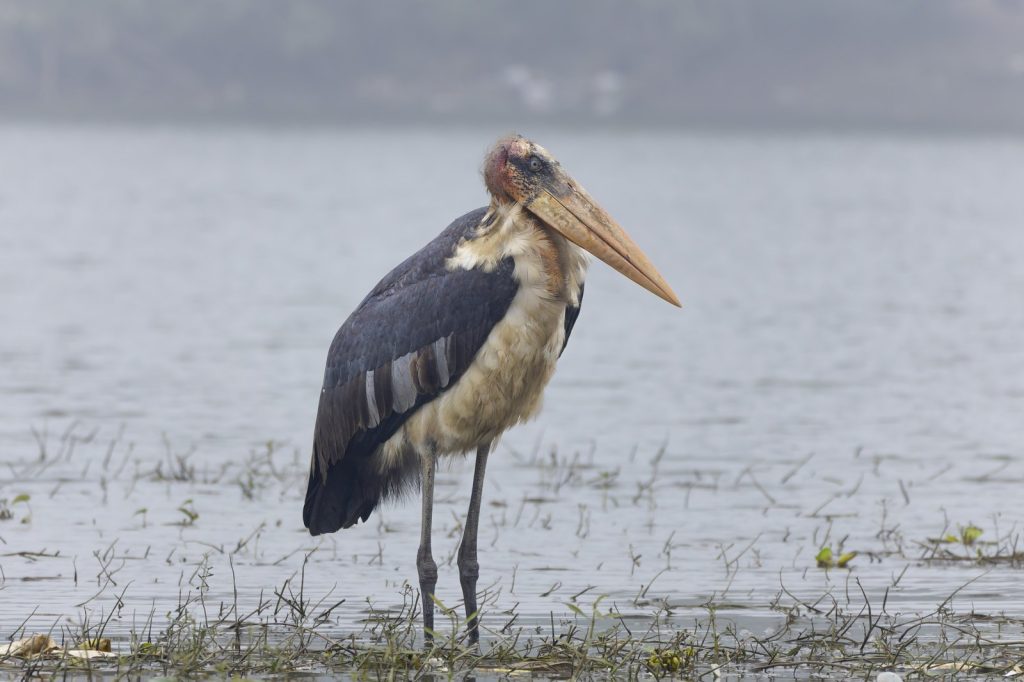
SIEM PANG, Cambodia — The GPS trackers are the quiet revolution here. Two captive-bred greater adjutant storks, released into the Siem Pang Wildlife Sanctuary on November 19, 2025, are now carrying tiny transmitters. The devices will tell conservationists things no one has ever known about this bird in the wild.
The greater adjutant is a stork. It has a bare, scaly head and a massive wedge of a bill.
It was once common across Southeast Asia. That changed. Habitat loss pushed the species to the edge.
Now, with a wild population that has shrunk drastically, Cambodian groups took a step they had never taken before. They bred the birds in captivity and let them go.
Dr. Sok Ko, a leading conservationist in Cambodia, called the release a crucial step. He said the GPS data will provide valuable insights into the birds’ behavior and habitat use. That is the core of this story.
Not just that two birds flew free, but that for the first time, researchers will get a granular, hour-by-hour look at where an adjutant goes, what it eats, and where it tries to nest. The sanctuary itself is a patch of protected lowland in a country defined by water. Cambodia’s landscape is dominated by the confluence of the Mekong River and the Tonlé Sap, Southeast Asia’s largest lake.
The tropical climate and vast plains create a rich but fragile ecosystem. The sanctuary holds birds, mammals, and reptiles.
It is considered an important site for conservation. It is also a place where a released bird, fitted with a tracker, can be followed without the interference of roads or dense human settlement. This is not a large release.
Two birds. But it is the first.
Every first establishes a baseline. If the trackers show the birds are thriving, more releases can follow. If the birds struggle, the data will show why.
Predators. Food scarcity. Human encroachment.
The trackers will not lie. The greater adjutant is not a flashy species.
It is a scavenger, a stork that looks ancient and awkward on the ground. But its decline signals deeper problems in the wetlands and forests it needs to survive. Restoring its population means restoring those places.
The release at Siem Pang is a test. A small, heavily monitored test.
Conservationists are cautiously optimistic. Dr. Sok Ko expressed that optimism plainly. The trackers are the reason.
They turn a single release into a long-term study. They turn hope into data. For now, the two birds are out there, somewhere in the sanctuary.
Their transmitters are pinging. Researchers are watching screens.
The birds do not know they are carrying the weight of a species’ recovery on their backs. But they are.
{“@context”: “https://schema.org”, “@type”: “NewsArticle”, “headline”: “GPS Trackers Reveal Unknown Behaviors of Released Greater Adjutant Storks”, “description”: “SIEM PANG, Cambodia u2014 The GPS trackers are the quiet revolution here. Two captive-bred greater adjutant storks, released into the Siem Pang Wildlife Sanctuary o”, “datePublished”: “2025-11-19T15:00:00+00:00”, “author”: {“@type”: “Person”, “name”: “InfoPulse Today”}, “publisher”: {“@type”: “Organization”, “name”: “InfoPulse Today”}}




