
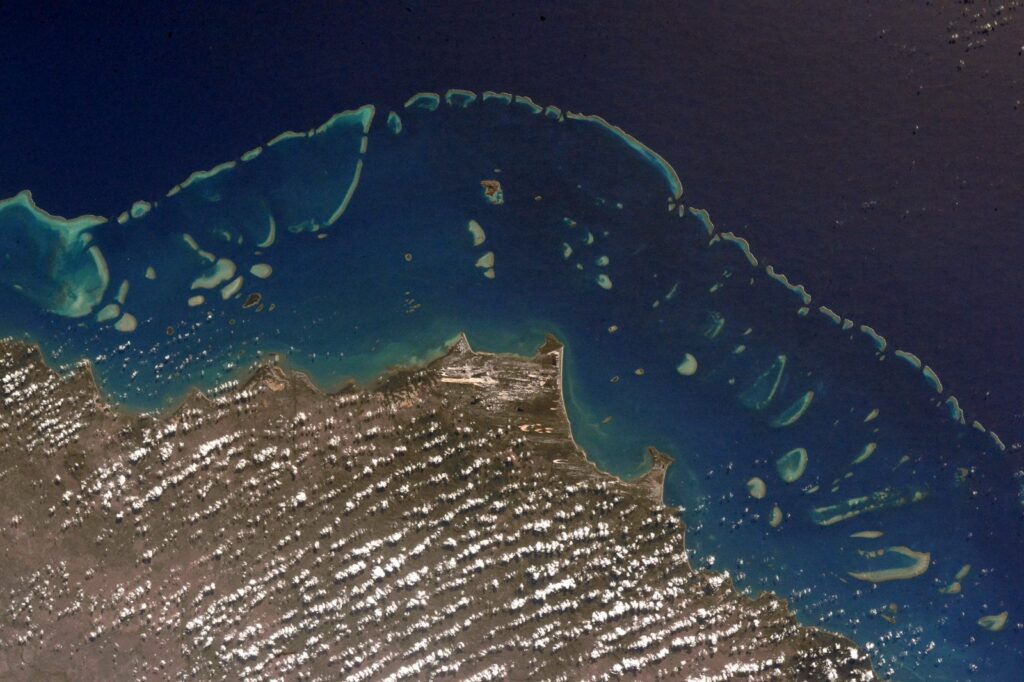
Australia, August 7, 2024 — cybernewschronicle.com — The water temperature around the Great Barrier Reef has reached a 400-year record high, causing more mass bleaching events. This alarming development has significant implications for the world’s largest coral reef system, composed of over 2,900 individual reefs and 900 islands stretching for over 2,300 kilometres.
According to Dr. Emma Kennedy, a coral reef expert, “the current situation is a major concern, and we’re working tirelessly to understand the full extent of the damage.” Located in the Coral Sea, off the coast of Queensland, Australia, the Great Barrier Reef is a complex ecosystem that supports a wide diversity of life. The reef structure is composed of and built by billions of tiny organisms, known as coral polyps.
Dr. David Wachenfeld, Chief Scientist at the Great Barrier Reef Marine Park Authority, explains that “the reef’s unique composition and vast array of species make it an invaluable resource for scientific research and discovery.” As the reef faces unprecedented challenges, researchers are racing to develop innovative solutions to mitigate the effects of mass bleaching events. Mass bleaching events occur when corals are exposed to high water temperatures, causing them to expel their algal symbionts and turn white.
This can have devastating consequences for the entire ecosystem, as corals provide vital habitat and nutrients for countless species of fish, crustaceans, and other marine life. Dr. Ruth Gates, a renowned coral reef biologist, emphasizes that “while the current situation is dire, there is still hope for the reef’s recovery.
By supporting research and conservation efforts, we can work towards developing effective strategies to protect this incredible ecosystem.” The Great Barrier Reef’s sheer size and complexity make it a challenging subject to study, but advances in technology are helping researchers to better understand the reef’s dynamics. Scientists are using cutting-edge tools, such as satellite imaging and underwater sensors, to monitor the reef’s health and track changes in water temperature and coral cover.
Dr. Chris Roelfsema, a remote sensing expert, notes that “these technologies are allowing us to gather unprecedented amounts of data, which will be crucial in informing conservation efforts and developing targeted interventions to protect the reef.” As researchers and conservationists work to address the challenges facing the Great Barrier Reef, there is a growing sense of optimism about the potential for new technologies and innovations to make a positive impact.
Dr. Ken Anthony, a coral reef ecologist, suggests that “by leveraging advances in fields like genetic engineering and marine biology, we may be able to develop new tools and strategies to help the reef recover from mass bleaching events.” While the road ahead will be long and challenging, the collective efforts of scientists, policymakers, and conservationists offer a beacon of hope for the future of this incredible ecosystem.
Consult your doctor for medical advice.




