
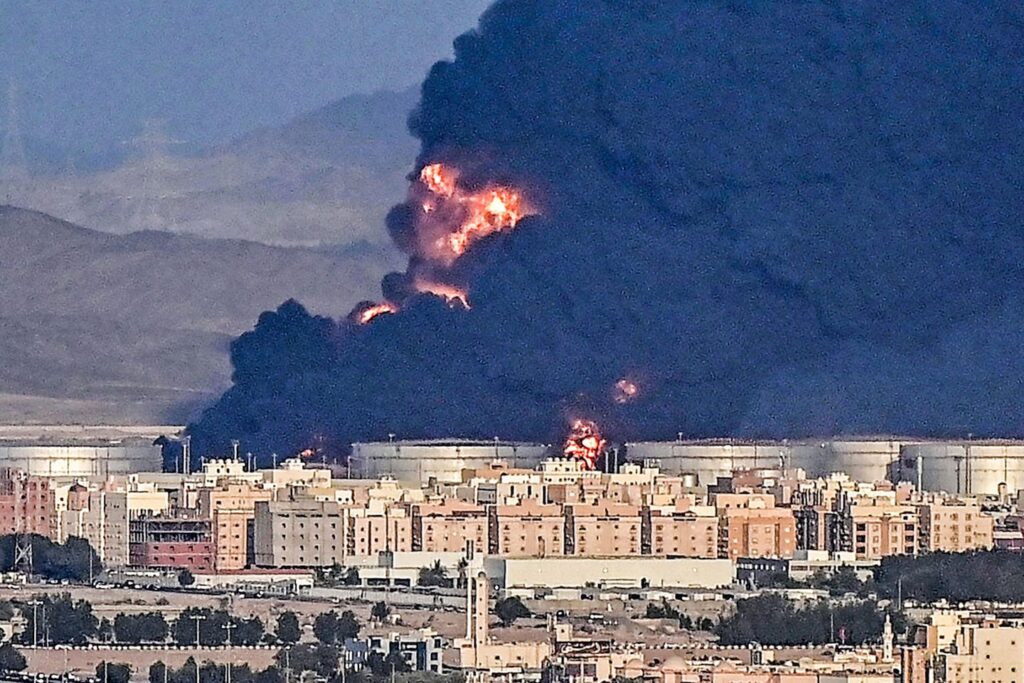
Between 4 million and 5 million barrels a day. That is how much crude the Saudi East-West pipeline had been moving in recent months, according to ship-tracking companies and analysts cited by Reuters. On Thursday morning it was hit from the air, and Saudi Arabia shut it down.
The Energy Ministry said the line was targeted in the Riyadh and Medina regions and that it had been closed as a precaution. News18, relaying Reuters, reported on September 12 that the strike was blamed on the Houthis.
A drone from Iraq
The origin of the drone is its own story. Riyadh and Baghdad both say it was launched from Iraq, where the Iran-allied Houthis operate, according to the Reuters report. Saudi Arabia chose not to retaliate at once. News18 said the kingdom wanted to give Iraqi authorities a chance to stop further launches from their territory.
The pipeline matters because of Hormuz. Riyadh had been using it to ease the pressure on energy trade from tensions in the Strait of Hormuz, and the shutdown revives fears of another disrupted shipping route while economies are still absorbing the energy price shock from the US-Israeli war on Iran.
Perim and a stalled diplomatic track
The pipeline was not the only escalation that week. On Friday the Houthis seized the island of Perim, at the mouth of the Red Sea in the Bab el-Mandeb Strait, four Yemeni government sources told Reuters. The island is also known as Mayun. The Houthis have also targeted Saudi cities and energy infrastructure, News18 reported.
Saudi Arabia asked the United States for military help. Washington already provides intelligence and technical support to the kingdom, but it turned down the request. A US official told Reuters the country was not ready at that point to take a direct part in the fighting.
Talks to settle the dispute between the US and Iran remain at a standstill. Experts quoted by News18 say trouble in the Bab el-Mandeb Strait could hand Tehran more leverage in those negotiations, as the Strait of Hormuz already has.




