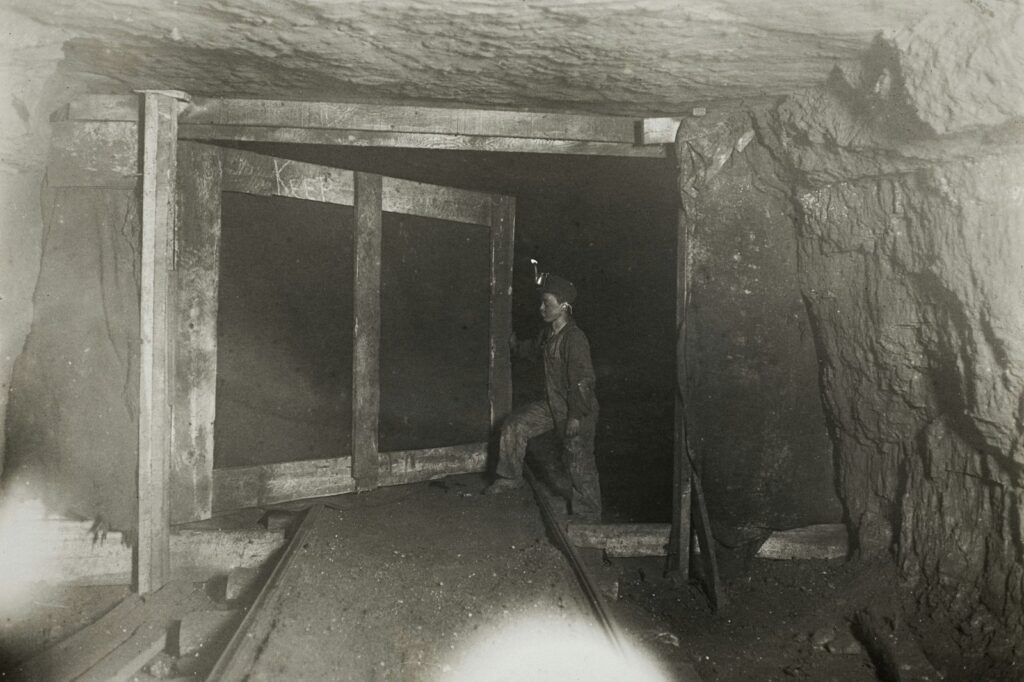
Teeth keep a diary. Enamel forms in childhood and never remodels, so the lead locked inside records what a person absorbed while growing up. Researchers have now read that record in people buried in the Peak District of central England, and it is a grim one: in the seventh century, children in mining communities carried as much lead, or more, than people in the industrial cities of 1750 to 1850.
What researchers found
The work was led by the University of Nottingham with the British Geological Survey, the University of Sheffield, York Archaeology and Castleton Historical Society. It is the first study to analyse lead contamination in the people who mined and smelted the metal in western Europe’s largest medieval lead-producing region.
The samples came from three cemeteries spanning the industry’s revival and growth: Wigber Low in the Derbyshire White Peak (seventh century), Joule Yard at Castleton (seventh to 11th centuries) and Spital Field (12th to 15th centuries). The team measured the metal in enamel to reconstruct childhood exposure from about 650 to 1500, then compared the results with populations across Britain from the Neolithic to the Industrial Revolution. Even early on, exposure was already high, long before the industry reached its biggest scale.
The teeth also settled a dating problem. Between the 16th and 19th centuries, producers repeatedly remelted waste from Roman and medieval workings, wiping out much of the physical evidence for when mining resumed after Roman Britain. The enamel gave the first definitive proof that production was established by the middle of the seventh century. Lead author Christopher Loveluck, professor of medieval European archaeology at Nottingham, said the team was “delighted to have finally confirmed definitively the date” through “evidence provided by the people themselves.”
A peak around 1200
By the middle of the eighth century, large-scale production had contaminated the wider environment around centres such as Castleton. Childhood exposure stayed high throughout the medieval period and peaked in the late 12th and early 13th centuries, matching historical records of the industry’s high point. That ties the teeth to earlier studies of Alpine ice cores and of sediment from rivers, lakes and peat bogs across western Europe, which found a rise in atmospheric lead pollution around 1200, attributed especially to British production.
Who bore the burden
Exposure varied with status. People buried with high-status grave goods, weapons among them, generally had much lower lead levels than those with plainer burials. The pattern suggests elites controlled or profited from production while poorer households did the ore processing and smelting, and their children paid for it. Isotopic analysis showed most of the individuals grew up locally, so the skills seem to have passed down within fairly stable communities rather than depending on incoming workers.
Lead can damage the nervous system, kidneys and reproductive system. Three women in the study had elevated childhood exposure and died at roughly 17 to 25. The researchers stress that this suggests an association and does not show lead caused those deaths. Pregnancy may have been a particularly risky time, since lead stored in the body can return to the bloodstream.
Dr Anna Bloxam, co-director of the Castleton excavations, said all those studied survived into adulthood, but most of the men lived to middle or old age while the women mostly died in young adulthood. “Our results indicate that in these mining communities, girls and boys alike were raised in dangerously polluted home environments,” she said, adding that this “perhaps contributed to higher rates of premature death among women of childbearing age.”
Colin Merrony of the University of Sheffield, whose earlier work identified and excavated key burial sites, said the study let researchers see “for the first time” the profound impact of lead production on individuals. The findings describe the seventh to 15th centuries, not today’s Peak District, where historic mining is well understood and monitored. The wider problem has not gone away: the Pan American Health Organization says lead affects up to 815 million children worldwide, and the World Health Organization notes that even levels below 3.5 micrograms per deciliter may be linked to lower intelligence and learning problems. A temporary display in the region this fall and winter will show the research alongside finds from Castleton.
Sources
- Medieval Children Were Exposed to Shocking Levels of Lead, 1,000 Years Before the Industrial Revolution
- Lead poisoning
- Childhood lead exposure remains a preventable health threat in the Americas
Photo: Art Institute of Chicago / Unsplash (Unsplash License)