
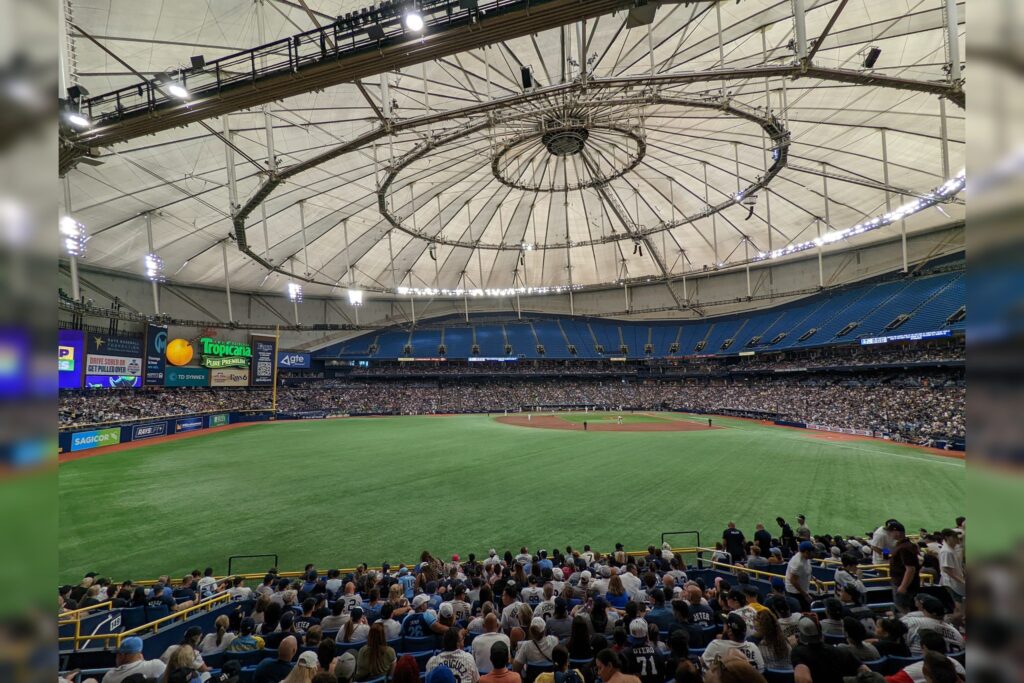
On October 9, 2024, a powerful storm system generated by Hurricane Milton delivered damaging winds to St. Petersburg, Florida, resulting in significant harm to the roof of Tropicana Field. The stadium, which serves as the home venue for the Tampa Bay Rays baseball team, now faces questions about its structural integrity and the potential disruption to future events as the city begins its damage assessment. Tropicana Field, commonly known as “The Trop,” has been a fixture in the St. Petersburg community since it opened in 1990.
Initially named the Florida Suncoast Dome, the venue has hosted a variety of events over the decades, including baseball games, college football contests, and the annual St. Petersburg Bowl from 2008 through 2017. As the only nonretractable domed stadium in Major League Baseball, it offers a sheltered environment for athletes and spectators, designed to endure diverse weather conditions.
The damage inflicted by Hurricane Milton’s winds now necessitates careful evaluation and repair. The roof damage presents a major concern for both the Tampa Bay Rays and the city of St. Petersburg. The Rays depend on the stadium for their games and training activities.
Stadium management and maintenance teams must act swiftly to assess the situation and formulate a repair strategy. This process is expected to involve collaboration with structural engineers, contractors, and other specialists to ensure safe and efficient restoration work.
The objective is to return the stadium to its original state, allowing the Rays to continue their season without interruption. As repair efforts advance, there are opportunities to integrate energy-efficient and sustainable design elements into the renovation. Incorporating renewable energy sources such as solar power and implementing energy-saving technologies could reduce the stadium’s environmental impact and operational costs. Such measures would create a more sustainable and resilient venue, better prepared for future weather events while supporting the local community.
Enhanced energy security and reduced expenses make this approach appealing for public facilities like stadiums. The St. Petersburg community is recognized for its strong environmental values, and the damage to Tropicana Field underscores the importance of protecting the natural environment.
By adopting sustainable practices and minimizing waste, individuals and organizations can contribute to a cleaner planet. As the city rebuilds, there are chances to engage with the community, promote environmental awareness, and partner with local organizations through events and initiatives that support conservation. Looking ahead, the repair and renovation of Tropicana Field will be a complex undertaking.
However, it offers an opportunity for the city and the Tampa Bay Rays to create a more sustainable stadium focused on energy efficiency, environmental conservation, and community involvement. Balancing the need for timely repairs with careful planning and sustainable design will be essential.
This approach aims to ensure Tropicana Field remains a vibrant hub of community activity while supporting environmental well-being and the needs of its users.




