
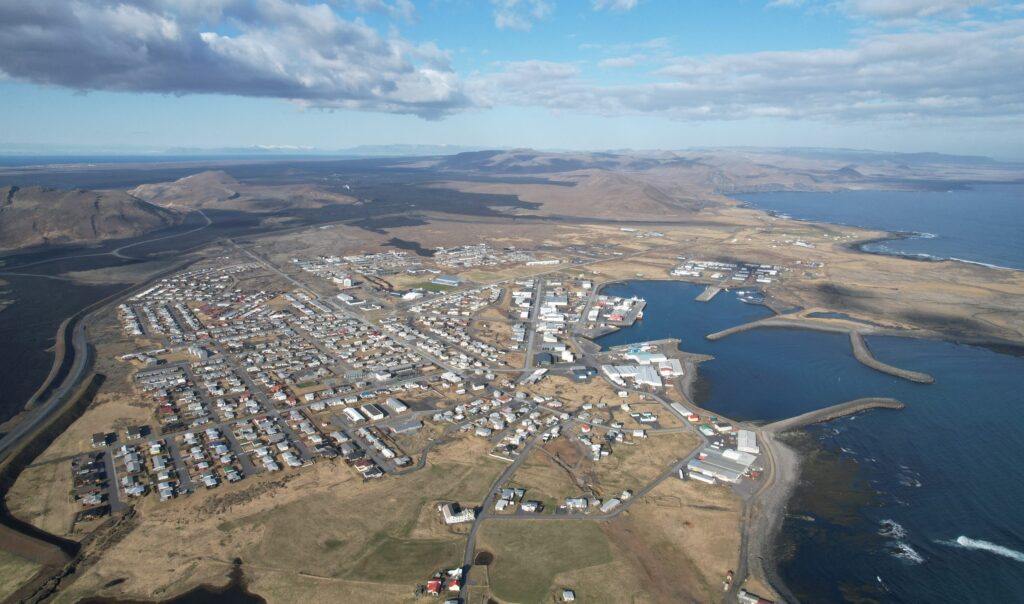
On 14 January 2024, the Reykjanes volcanic system re‑awoke, producing an eruption that opened a fissure inside the municipal boundaries of Grindavík, a town on Iceland’s Southern Peninsula. The event follows a state of emergency declared in November 2023 after a surge in seismic activity forced the evacuation of the community. Grindavík, a fishing‑dependent settlement, has long lived under the shadow of nearby volcanic centers.
In December 2023, the Sundhnúkur volcano erupted roughly three kilometres to the north‑east, heightening local concerns. The new fissure now threatens the town’s harbour – one of the few ports along this stretch of coast – and the livelihoods that revolve around the fishing fleet.
The eruption also raises questions about the stability of regional infrastructure. The Svartsengi Power Station, which supplies renewable energy to the Reykjanes area, sits close to the volcanic zone. Authorities are monitoring the plant closely to prevent any interruption that could affect Iceland’s broader energy security.
Tourism, another pillar of the local economy, may feel indirect effects. The Blue Lagoon, a geothermal spa located about five kilometres from Grindavík, has not been directly impacted by the current eruption, but ongoing tremors have prompted officials to assess potential environmental repercussions for the popular site.
Icelandic emergency services and scientific agencies are maintaining a heightened presence in the region. Their primary objectives are to safeguard residents, ensure that the harbour remains usable for essential fishing operations, and protect the Svartsengi facility from ash fall or lava intrusion. Environmental stewardship remains a central theme in the response. The Blue Lagoon’s unique ecosystem, formed by geothermal activity, is particularly sensitive to changes in water chemistry and air quality.
Officials have emphasized the need for careful management to limit any adverse impact from volcanic emissions. Beyond the immediate hazards, the eruption underscores Iceland’s reliance on geothermal energy and the importance of resilient renewable‑energy infrastructure.
While the volcanic event poses short‑term challenges, it also highlights the country’s long‑standing practice of harnessing natural heat sources for power generation. Local businesses, especially those tied to the fishing industry, are preparing for possible disruptions. The harbour’s role as a critical hub for exporting seafood makes any interruption a concern for both the town’s economy and national export figures.
Government representatives have reiterated that contingency plans are in place to keep the Svartsengi Power Station operational and to maintain energy supplies throughout the peninsula. Continuous seismic monitoring and real‑time data sharing aim to provide early warnings of any further volcanic activity that could threaten infrastructure.
As the situation evolves, the focus remains on balancing immediate safety measures with longer‑term environmental and economic considerations. The eruption serves as a reminder of Iceland’s volatile geology, the necessity of robust emergency protocols, and the value of sustainable energy practices in a region where natural forces are a daily reality.




