
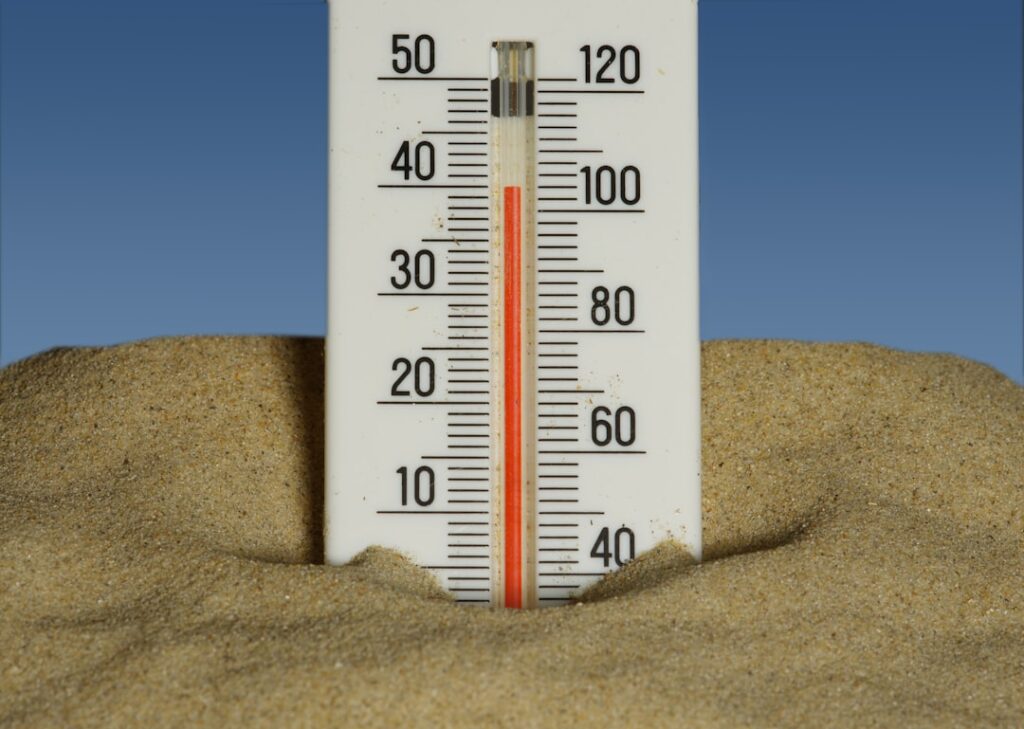
India, April 17, 2024 — cybernewschronicle.com — A faulty sensor in Delhi briefly made global headlines last month. On what is now understood to have been a routine hot day in the capital, a thermometer at the Mungeshpur weather station reported 52.9 degrees Celsius. That number, if real, would have shattered India’s all-time heat record.
It wasn’t real. The sensor was off by roughly 3 degrees.
The real temperature, still dangerous, was closer to 50 degrees. That 3-degree error tells a bigger story than any single reading could. India is in its third straight year of extreme pre-monsoon heat.
April 15 marked the start of a prolonged wave that has pushed temperatures well above normal across large parts of the country. In Churu, Rajasthan, the mercury hit 50.5 degrees Celsius — 122.9 degrees Fahrenheit.
That is the highest temperature recorded anywhere in India in eight years. It is a real number, verified, and it is the kind of number that kills. But the faulty reading in Mungeshpur is the detail that matters.
It shows how thin the line is between reliable data and a false alarm. It also shows how badly the country needs that data to be right. Heat waves in India are not new.
The pre-monsoon season, March through June, has always been brutal. April and May are the worst months.
What has changed is the recurrence. Three years running, the heat has been severe, prolonged, and widespread. Climate scientists point to rising greenhouse gas emissions.
A warming planet makes extreme heat more likely. That is not speculation.
It is the observed trend. The consequences are concrete. Churu is in the Thar Desert.
People there know heat. But 50.5 degrees is beyond what normal life is built to handle. The same is true for millions of others across northern and central India.
Many live in homes without air conditioning. Many work outdoors.
Many are old, or young, or sick. For them, a heat wave is not an abstract climate data point. It is a direct threat to survival.
That is why accurate measurement matters. A faulty sensor in Delhi could have sent officials scrambling for a response that was not needed.
Worse, it could have discredited real warnings. If people hear that a record was a mistake, they might doubt the next record too. The weather department has to get this right.
Lives depend on it. The Mungeshpur incident was caught and corrected. The sensor was identified as faulty.
The reading was adjusted. But the episode raises a question the report does not answer: how many other sensors are off by a few degrees?
In a country the size of India, with hundreds of weather stations, a single glitch is almost inevitable. But a pattern of glitches would be a serious problem. The heat wave itself is not going away.
The 50.5-degree reading in Churu is the real headline. It is the highest temperature in eight years.
That is a fact. And it fits a pattern: extreme heat, year after year, getting worse. The pre-monsoon season of 2024 is another chapter in that story.
For now, the focus is on the immediate danger. Officials are monitoring conditions. Hospitals are on alert.
But the long-term trend is clear. Heat waves in India are becoming more frequent and more intense.
The faulty sensor in Delhi was a small mistake. The bigger problem is the heat itself. And that problem is not going to fix itself.
{“@context”: “https://schema.org”, “@type”: “NewsArticle”, “headline”: “Delhi’s Record 52.9u00b0C Reading Was Due to Faulty Sensor, Agency Says”, “description”: “A faulty sensor in Delhi briefly made global headlines last month. On what is now understood to have been a routine hot day in the capital, a thermometer at the”, “datePublished”: “2024-04-17T15:00:00+00:00”, “author”: {“@type”: “Person”, “name”: “InfoPulse Today”}, “publisher”: {“@type”: “Organization”, “name”: “InfoPulse Today”}}




