
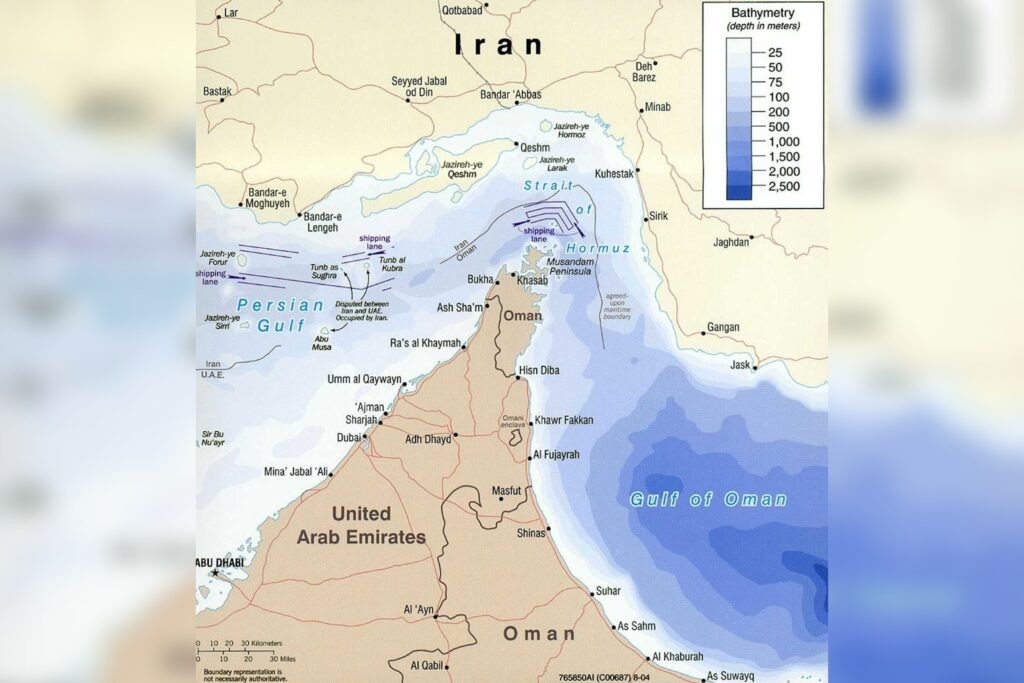
Last week, two events that seemed worlds apart landed on the same timeline. In the Persian Gulf, Iran stopped two ships from crossing the Strait of Hormuz because they didn’t follow the route Tehran demanded. In China, a company released an AI model that matches ChatGPT’s power for a fraction of the cost.
These are not separate stories. They are the same story, and it hits the pocketbooks and daily lives of billions of people.
The Strait of Hormuz is a narrow channel. A lot of the world’s oil moves through it. When Iran turns back ships, it is not a small diplomatic spat.
It is a signal. Tehran is telling the world it holds leverage over global energy supplies.
The waterway is a card Iran is willing to play. Control of the Strait has been a major hurdle in US-Iran talks. This move makes that clear.
If someone controls the only highway into town, they set the tolls. Iran just reminded everyone it holds the keys. For people in countries that import oil from the Gulf, this is a direct threat.
Gas prices can spike overnight. Heating costs can jump.
Industries that depend on stable energy prices face uncertainty. The old rules about who controls global energy are being rewritten in real time. Iran is asserting itself.
The practical upshot is that the energy transition just got a double jolt. Now the AI piece.
The Chinese model costs dramatically less than ChatGPT. That is the kind of cost reduction that changes entire industries. Cheap, powerful AI means you can optimize energy grids more efficiently.
You can predict renewable output more accurately. You can manage storage systems more intelligently. Countries that could not afford cutting-edge AI infrastructure suddenly have access to tools that can accelerate the shift away from fossil fuels.
This matters most to people in developing nations. They are the ones who suffer most from volatile oil prices and from climate change.
They are the ones who need cheap, reliable energy. Cheap AI gives them a fighting chance to leapfrog the old fossil-fuel model. It lets them build smarter grids, integrate solar and wind, and reduce dependence on oil that passes through a chokepoint controlled by a hostile power.
Think about a farmer in a village that has no steady electricity. With cheap AI, a small solar array can be managed intelligently.
Storage can be optimized. The grid, if it exists, can be balanced. The farmer is no longer at the mercy of a distant oil sheik or a Revolutionary Guard commander in the Strait.
That is the practical meaning of this double jolt. The two events are linked by a single thread: leverage. Iran is using its geographic leverage over oil.
China is using its technological leverage over AI. Both are rewriting the rules.
For the average person, the result is a world where the old certainties are gone. The price of gasoline, the reliability of the grid, the cost of heating a home — all of it is now subject to forces that are moving faster than ever. The energy transition is not a slow, gradual process anymore.
It is getting a double jolt, and the people who will feel it most are the ones who can least afford to be caught off guard.




